
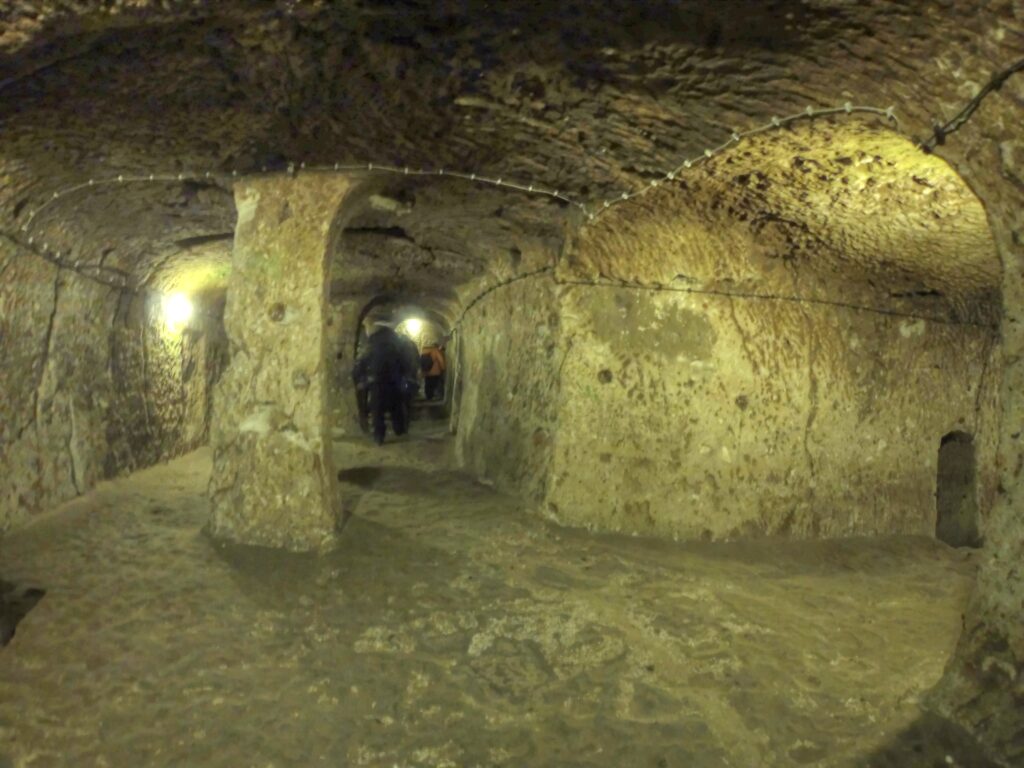
In 1963, a man in the Turkish region of Cappadocia took a sledgehammer to a wall in his home during a routine renovation. Instead of finding dirt or stone behind the plaster, he uncovered a dark, narrow corridor leading deep into the earth.
That single opening revealed Derinkuyu, an ancient, multi-level underground city engineered to conceal up to 20,000 people. This sprawling subterranean world remained completely hidden from modern society for decades. It contained complex ventilation systems, livestock stables, and heavy stone defenses.
An Accidental Discovery in Cappadocia
Following the initial breach in the basement, archaeologists and researchers descended into the tunnels. They meticulously mapped a subterranean complex reaching depths of 85 meters (279 feet) below the surface.
Excavators ultimately uncovered 18 distinct levels extending downward. The structure contained extensive living quarters, communal kitchens, storage rooms, and wine presses, all carved directly into the soft volcanic tuff rock of the region.
Engineering a Subterranean World
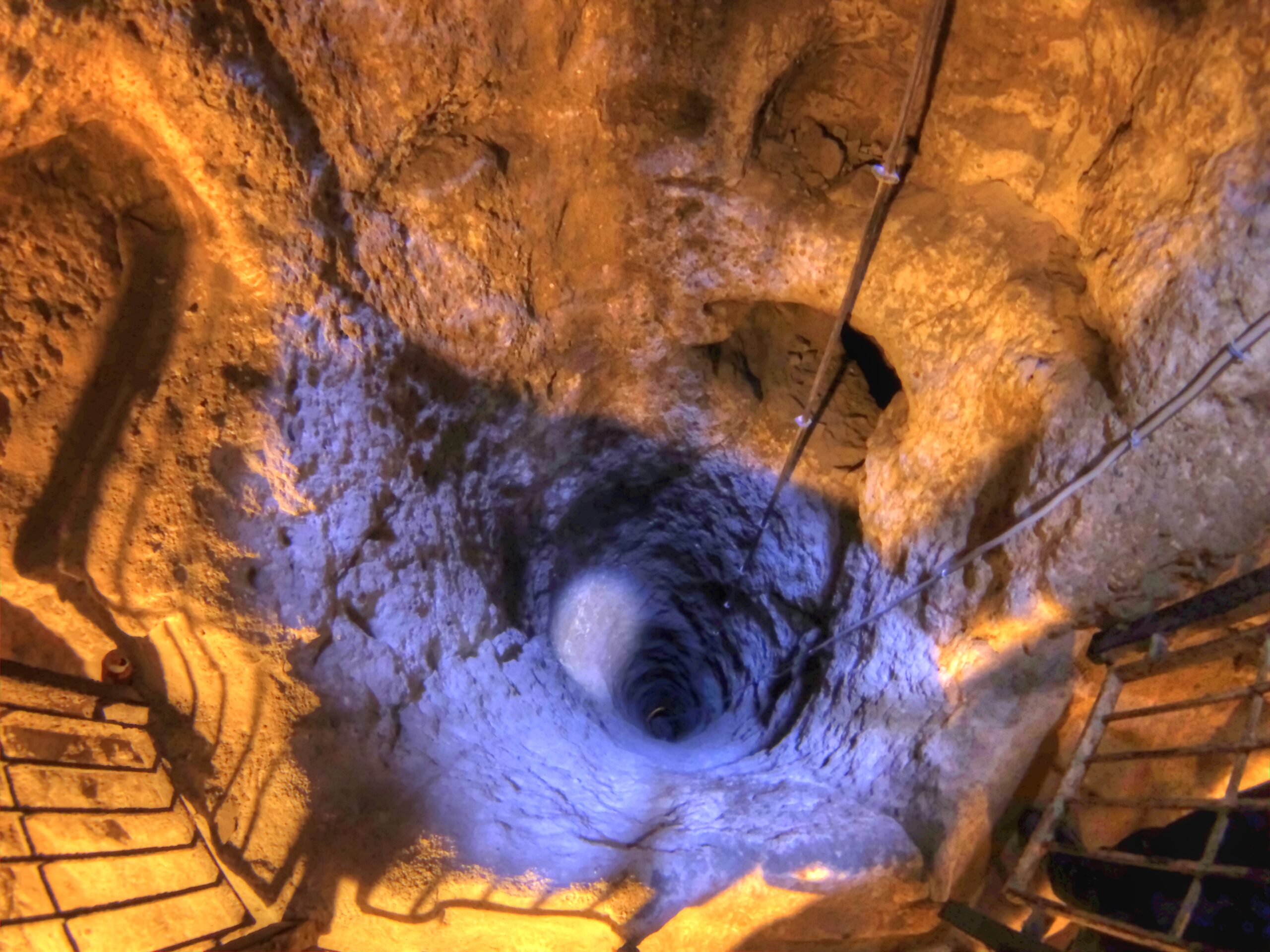
The builders of Derinkuyu designed the city to sustain massive populations during prolonged sieges. The layout features more than 50 large ventilation shafts that successfully distributed fresh air down to the lowest chambers. A central well provided fresh water to the inhabitants. This well was specifically engineered not to reach the surface, preventing enemies above ground from poisoning the water supply.
The architects also constructed livestock stalls on the uppermost levels. This placement kept the strong smell of animals away from the human living quarters while simultaneously allowing the residents to utilize the animals’ natural body heat.
Massive Stone Defenses
To secure the inhabitants against external threats, Derinkuyu utilized heavy defensive mechanisms. The entrances and corridors featured massive circular stone doors that weighed up to 500 kilograms (1,100 pounds). These heavy barriers could only be rolled open or closed from the inside using an inset handle. Furthermore, each individual level could be sealed off separately from the rest of the city.
The passageways connecting the levels were intentionally carved narrow and low. This architectural choice forced anyone entering to crouch and walk in a single file, effectively neutralizing the speed and numbers of any invading force.
Centuries of Hidden Inhabitation
Historical records and artifacts indicate that the Phrygians initially carved the first cave structures around the 8th to 7th centuries BCE. The underground city expanded significantly during the Byzantine era. During the Arab-Byzantine wars between 780 and 1180 CE, local populations used the expansive tunnel system to hide from constant military raids.
The complex eventually included a large cruciform church on the seventh level and a spacious religious school on the second level. The tunnels continued to see active use up until the early 20th century. The complex was completely abandoned in 1923 and sat forgotten until that 1963 home renovation.