
Thomas Edison is famous for the lightbulb and the phonograph, but one of his lesser-known inventions from 1876 took a completely unexpected detour. He built a motorized, high-speed puncturing tool to duplicate paperwork. It flopped in the corporate world.
Yet, this exact same piece of discarded office equipment crossed paths with a New York City tattoo artist named Samuel O’Reilly. Instead of fading into historical obscurity, Edison’s motorized mechanism sparked a revolution in an entirely different industry.
The 1876 Electric Pen and the Office Duplication Problem
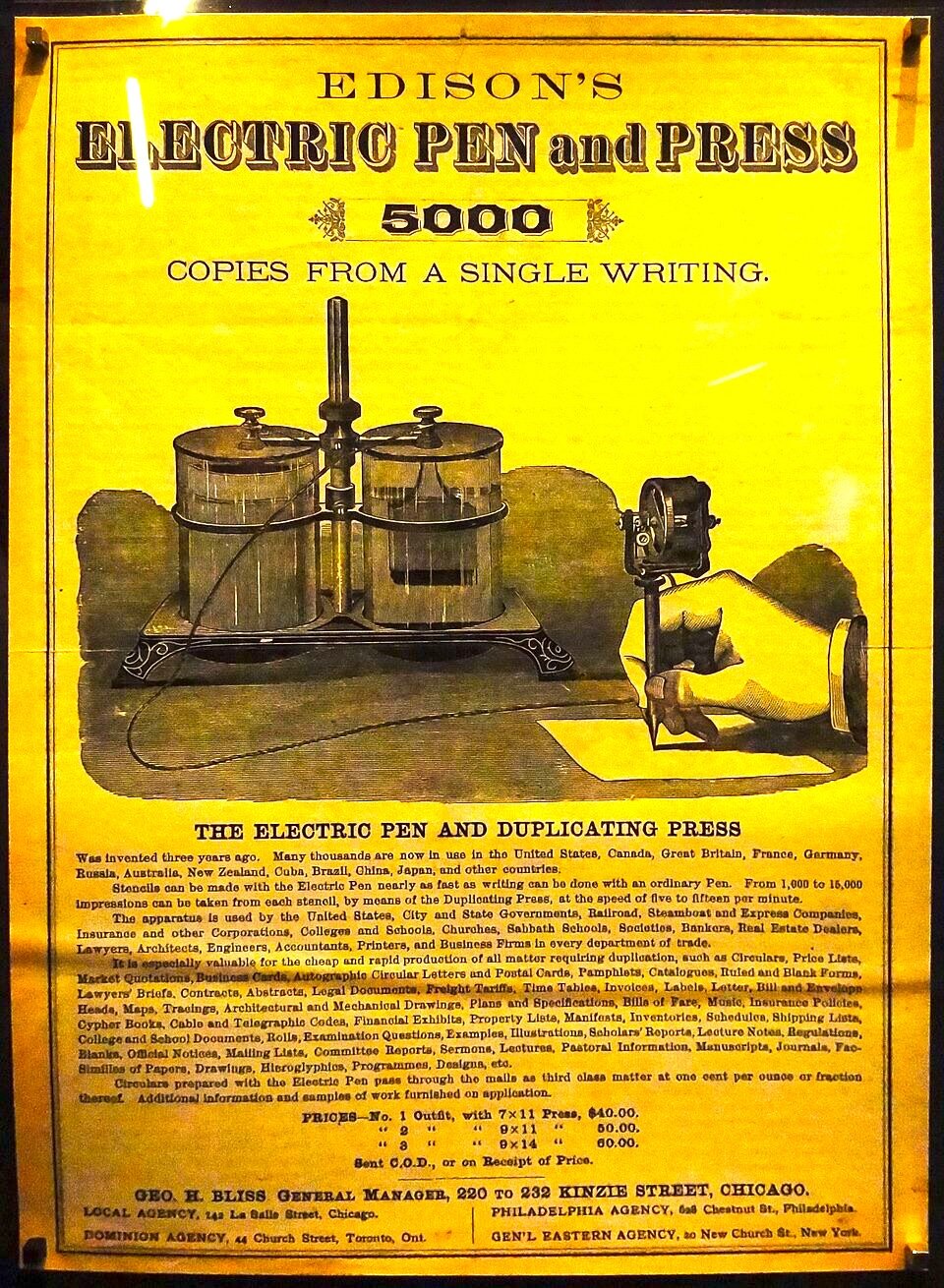
In the summer of 1875, Edison recognized that merchants and lawyers spent too much time copying documents by hand. He patented the electric pen in 1876. The system used a wet cell battery to power a small motor attached to a pen shaft.
A reciprocating needle drove up and down, puncturing a stencil at a rate of fifty times per second, or three thousand times per minute. Users wrote on a flat surface, creating a stencil made of tiny holes. An ink roller then pressed ink through the stencil onto blank paper, creating up to five thousand copies.
The Wet Cell Battery Causes a Commercial Decline
Edison successfully marketed the pen initially, selling roughly one hundred and fifty units a month across the United States, England, and Cuba. However, the device had a fatal flaw for a standard office environment. The wet cell battery required constant chemical maintenance.
Clerks and bankers found the battery upkeep messy and difficult. By 1880, mechanical pens and emerging typewriter technologies that did not require wet cell batteries overtook the market. The electric pen lost its commercial viability as a writing implement and fell out of favor.
Samuel O’Reilly Creates the First Electric Tattoo Machine
In 1891, the device found a new application. New York City tattoo artist Samuel O’Reilly saw the mechanics of Edison’s electric pen and recognized its potential for his own trade. Before this, tattoos were applied entirely by hand, a slow and painstaking process.
O’Reilly repurposed the core design of Edison’s battery-operated, perforating needle. He modified the tube assembly and the ink delivery system, patenting the very first electric tattoo needle.
A Permanent Shift in the Tattoo Industry
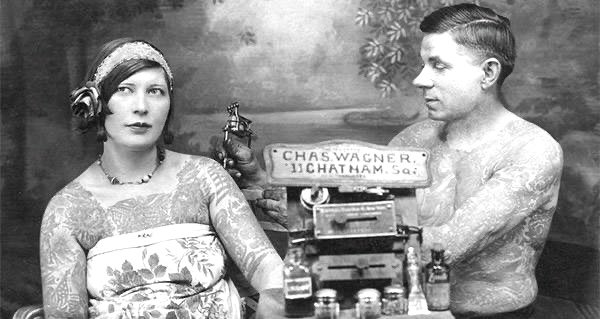
O’Reilly’s modified machine allowed for a significantly faster application of ink into the skin. During this period, tattoos were experiencing a surge in popularity, reaching even European nobility. O’Reilly capitalized on the speed and precision of the electric needle to dominate the New York market.
He operated a highly successful shop until his death in 1908. Following his passing, his apprentice, Charles Wagner, took over the operation. The fundamental mechanics of Edison’s initial office duplication tool remained the blueprint for tattoo machines worldwide.