
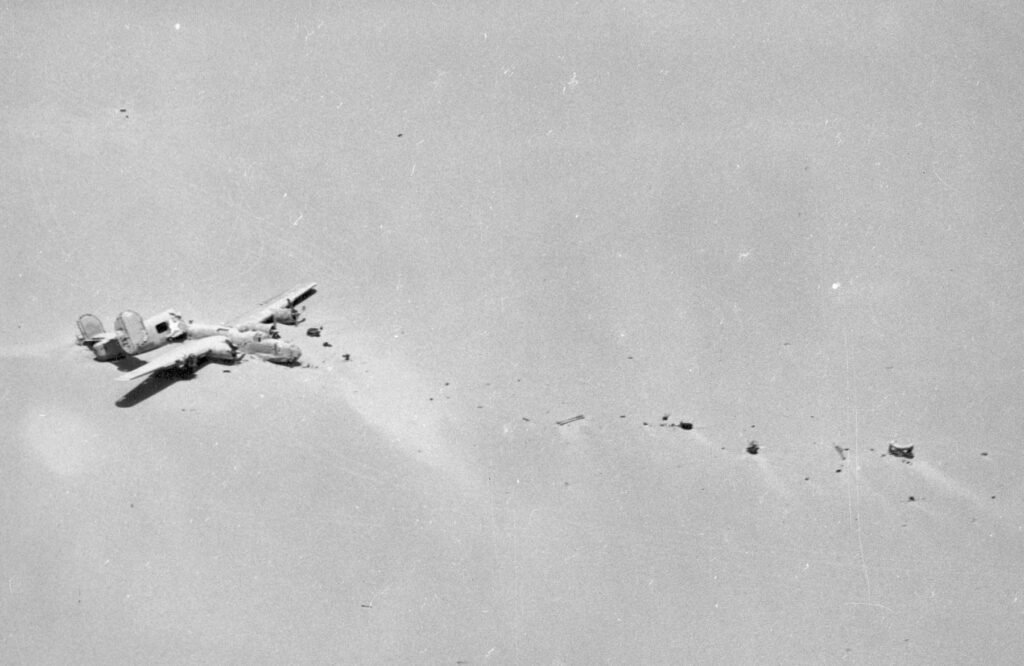
In April 1943, a newly arrived bomber crew in Libya departed for their first combat mission across the Mediterranean. They successfully bombed their target but never returned to base.
For fifteen years, the military assumed the plane and its nine-man crew had vanished into the sea. Yet, the truth was far stranger and more tragic. The plane had not crashed into the water. It had flown silently into the deep Sahara, setting off a desperate struggle for survival that remained a mystery for over a decade.
A Mission Gone Wrong
On April 4, 1943, the Lady Be Good, a B-24D Liberator, took off from Soluch Field in Libya. Its crew of nine had only been in the country for a week. Their assignment was to join a formation of bombers attacking the harbor of Naples, Italy. A severe sandstorm forced several planes to turn back, but the Lady Be Good pressed on, dropping its bombs over Naples. On the return flight, the pilot, Lt. William Hatton, radioed that his navigation equipment was malfunctioning. The base fired flares to guide them in, but the plane flew straight past the airfield and disappeared into the night.
An Accidental Discovery
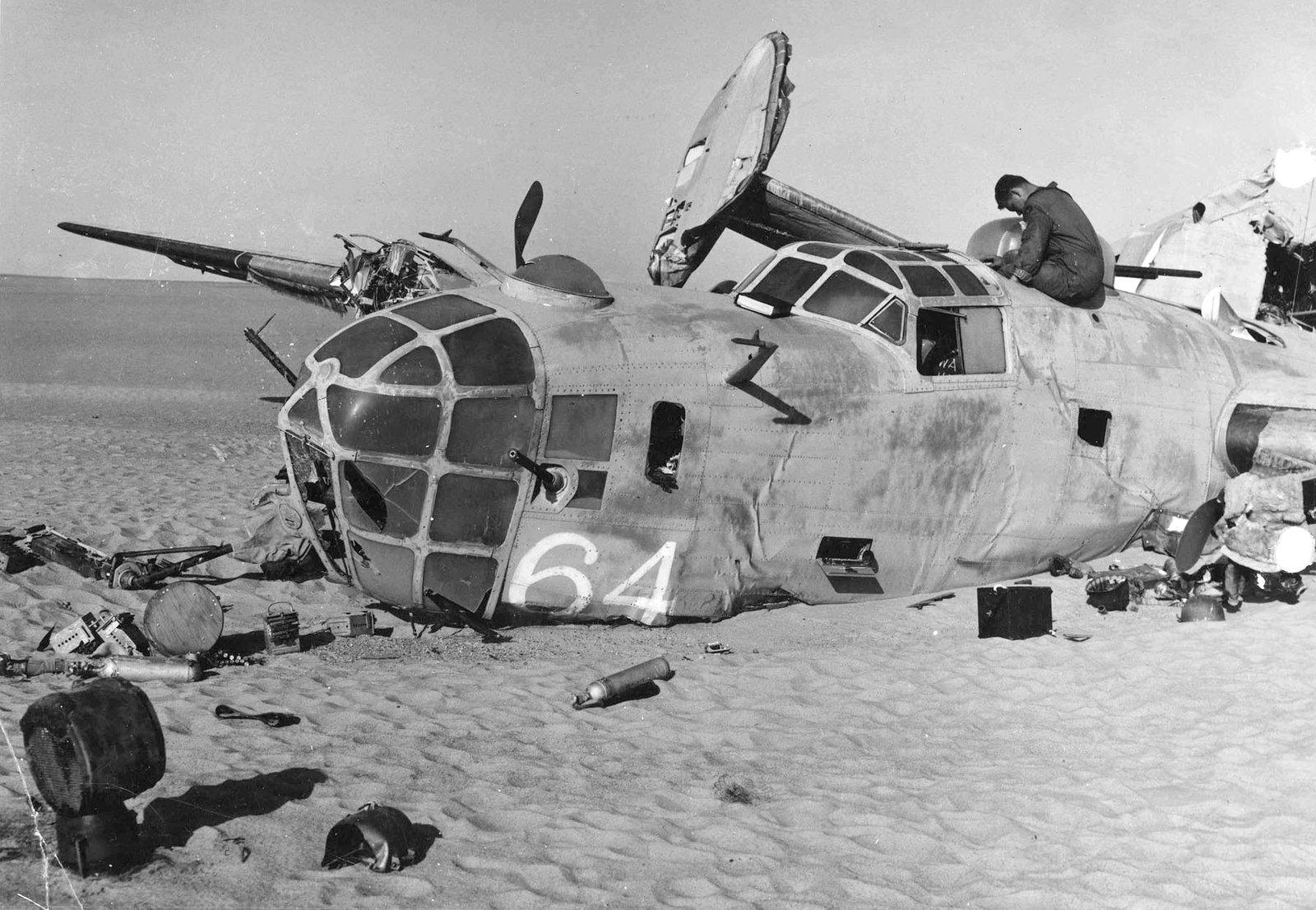
The fate of the aircraft was unknown until November 1958, when a British oil exploration team operating deep in the Libyan Desert spotted a wrecked B-24 from the air. The crash site was 440 miles southeast of Soluch Field. When a ground team finally reached the site the following year, they found the Lady Be Good broken in two but remarkably preserved by the dry desert air. The machine guns still functioned, the radio was operational, and a thermos of tea on board was still drinkable. However, the crew and their parachutes were completely missing.
The Search for the Crew
The U.S. military launched a search in 1960. In February, they found the remains of five crew members grouped together in the desert. In May, oil prospectors and a military helicopter located the bodies of two more airmen, Guy Shelley and Harold Ripslinger. They had walked further north than the others, with Ripslinger making it 26 miles past Shelley. In August, the body of the bombardier, John Woravka, was found with a parachute that had failed to fully open.
A Fatal Miscalculation
A diary recovered from co-pilot Robert Toner revealed what happened. The crew, flying at night, did not realize they had overflown the coast. Thinking they were bailing out over the Mediterranean Sea, they jumped into the pitch-black Sahara. Surviving the drop, eight men gathered together and walked northward for eight days with only one canteen of water, hoping to reach the coast. They did not know they were hundreds of miles inland. The plane they abandoned flew another 16 miles before crash-landing, taking its food, water, and working radio with it.