A Strange Observation
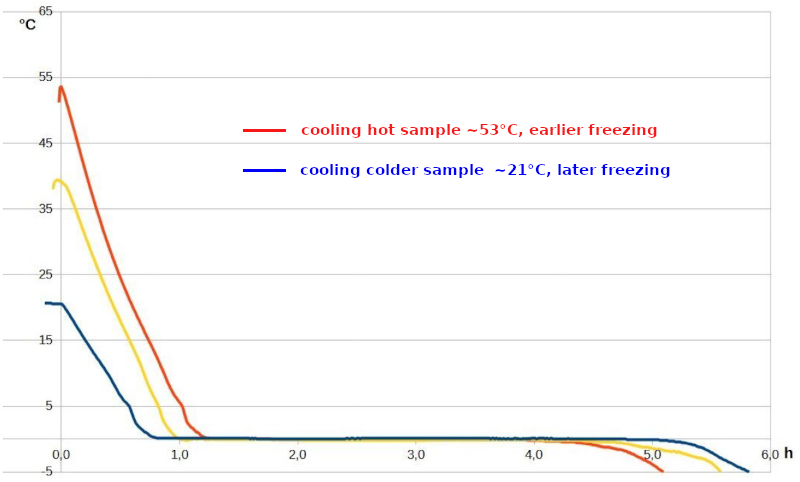
The Mpemba effect, named after Tanzanian student Erasto Mpemba, is the curious phenomenon where hot water can freeze faster than cold water under similar conditions. This puzzling observation, first made in 1963, has baffled scientists for decades, with no clear consensus on its cause.
Ancient and Modern Discoveries
This effect isn’t new. Aristotle noted that warmed water could freeze faster in ancient times, and others like René Descartes and Joseph Black mentioned similar observations. In 1969, Mpemba’s findings, initially ridiculed, were validated by physicist Denis Osborne, leading to further research.
Theories and Explanations
Various theories attempt to explain the effect, from evaporation and convection to supercooling and hydrogen bonding. Some suggest warmer water melts frost on a cooling surface, improving heat transfer. Others point to differences in dissolved gases or thermal conductivity.
Ongoing Research
Despite decades of study, the Mpemba effect remains controversial. Researchers continue to explore the effect, experimenting with different temperatures, containers, and environments. Some believe it could be explained by quantum dynamics, a new frontier for this strange phenomenon.