
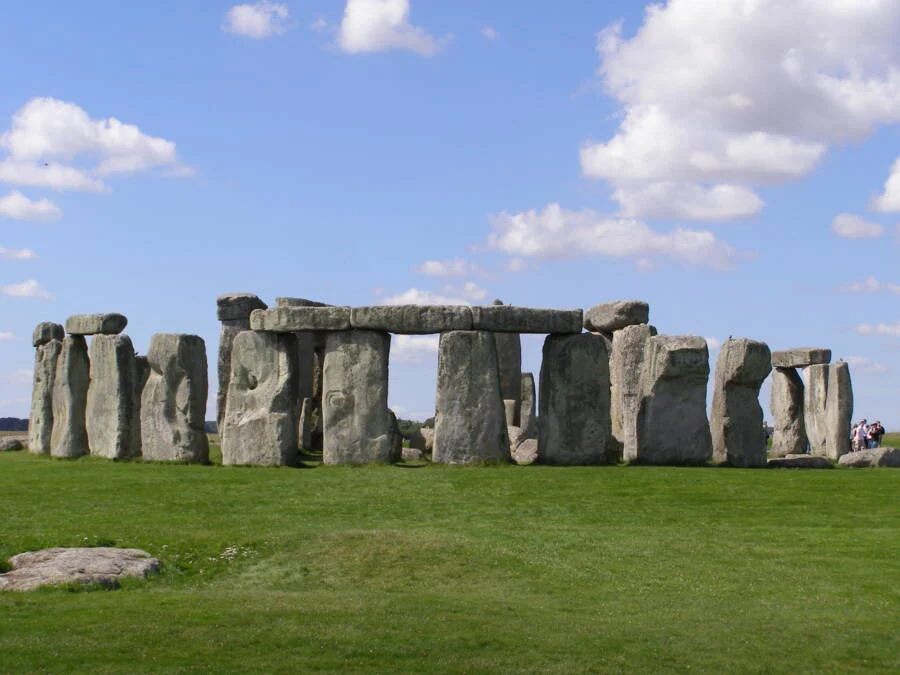
For centuries, Stonehenge was believed to be a uniquely English monument, appearing on the Salisbury Plain as if by magic. However, recent archaeological breakthroughs have revealed that the massive bluestones actually stood in a different location hundreds of years before they arrived in England.
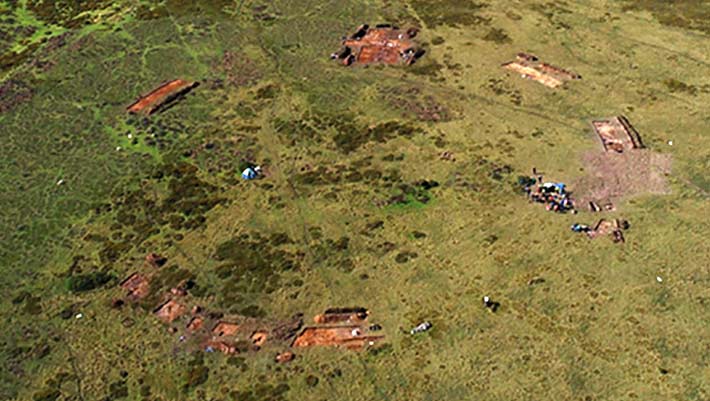
In 2021, a team led by Professor Mike Parker Pearson uncovered the remains of a prehistoric stone circle at Waun Mawn in the Preseli Hills of Wales. This site, located 175 miles or 282 kilometers away from Stonehenge, features buried stone-holes that align perfectly with the dimensions and geometry of the famous English monument.
Evidence Unearthed in the Welsh Soil
Archaeologists spent years searching for the precise origin of the bluestones. In 2017, the team identified a series of empty holes at Waun Mawn where stones had once stood. Using a technique called optically stimulated luminescence, which measures the last time soil was exposed to sunlight, they determined the Welsh circle was built around 3400 B.C.
This predates the earliest construction at Stonehenge by roughly 400 years. One specific hole at Waun Mawn contains a rock chip that matches the chemical composition of stones at Stonehenge. Furthermore, one hole features an unusual pentagonal cross-section that fits a specific Stonehenge pillar with extreme precision.
Matching the Geometry and Alignment
The physical layout of the Waun Mawn site provides further proof of its connection to the Salisbury Plain monument. Both circles share an identical diameter of 110 meters or 360 feet. Additionally, both sites were constructed to align with the sunrise on the midsummer solstice.
These shared specifications suggest that the builders utilized a specific architectural blueprint. The discovery indicates that the monument was dismantled in Wales and transported across the countryside rather than being built from scratch in England.
Medieval Folklore Meets Modern Science
While modern science led to this discovery, the findings echo a 12th-century account by Geoffrey of Monmouth. In his writings, he claimed that the wizard Merlin moved a stone circle called the “Giants’ Dance” from Ireland to England.
At the time of the monument’s construction, the region of Wales where Waun Mawn is located was considered Irish territory. While the magical elements of the folklore remain unverified, the physical movement of the stones from the west to the Salisbury Plain is now a documented archaeological fact.
The Logistics of Prehistoric Transport
The relocation of these massive pillars represents a significant feat of ancient engineering. The bluestones, some weighing up to two tons or 1,814 kilograms, were moved across rugged terrain without the use of modern machinery.
This discovery at Waun Mawn explains why only a portion of the stones at Stonehenge are bluestones, while others are local sarsen rocks. The Welsh stones arrived first, establishing the initial footprint of the site before the larger English stones were added later.