

In 1140, an army surrounded a German fortress with orders to crush the town and lock up every man inside. Surrender seemed to guarantee total ruin for the defenders of Weinsberg, a settlement located in the modern German state of Baden-Württemberg. Instead of a massacre, the conflict ended with a clever loophole that nobody on the battlefield saw coming. By taking a royal promise literally, the women of the besieged castle pulled off one of the boldest rescues in medieval European records.
The Royal Feud Behind the 1140 Siege of Weinsberg
The clash at Weinsberg grew out of a bitter succession dispute within the Holy Roman Empire. When Emperor Lothair III died in 1137, his son-in-law, Henry the Proud of the Welf dynasty, held the imperial crown jewels and inherited the family lands. Henry expected to become the next emperor. However, local princes opposed his candidacy and gathered in Frankfurt on February 2, 1138, to elect Conrad III from the rival Hohenstaufen family.
Tensions boiled over into open warfare after the new king stripped the Welfs of the Duchy of Saxony and handed the territory to Count Albert the Bear. The Saxons rebelled to defend their young prince, and Henry’s brother, Count Welf of Altorf, launched a military campaign against the crown. During the fighting at Weinsberg, the two warring factions introduced new battle shouts. The Welf troops abandoned their traditional cry of “Kyrie Eleison” in favor of their own party name, while the Hohenstaufen soldiers charged into combat shouting “Strike for Gibbelins.”
A Royal Promise and a Clever Escape Plan
As the siege dragged on, the fierce defense mounted by the Welf garrison frustrated King Conrad III. He decided to destroy Weinsberg completely and throw all of its male defenders into prison. Before the final assault began, the two sides negotiated a surrender.
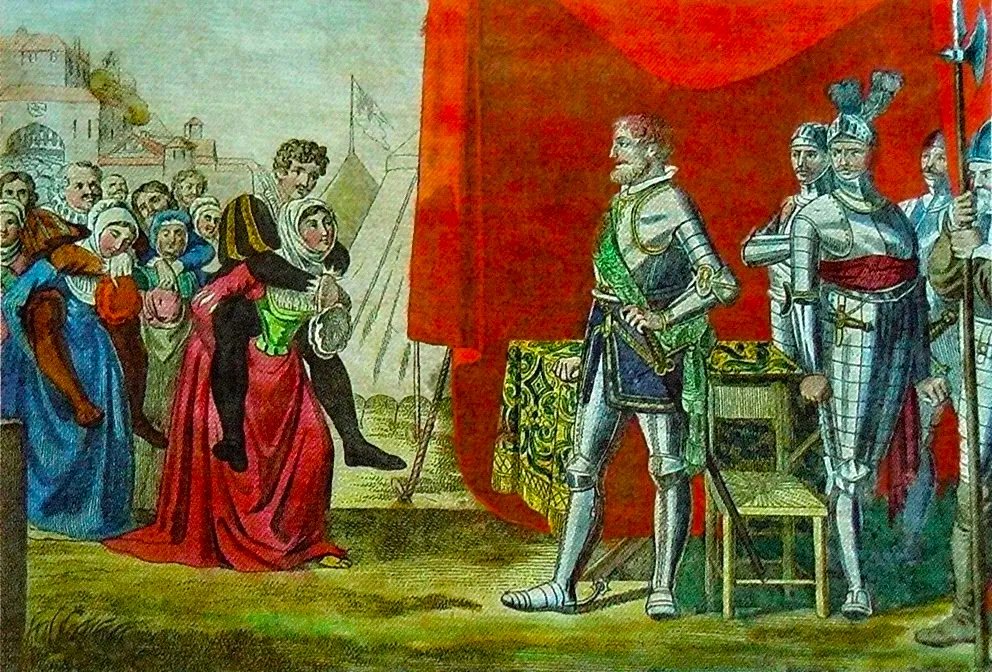
According to the Chronica regia Coloniensis, a Latin chronicle compiled in the 1170s, the king granted the women inside the walls safe passage. He told them they could leave the stronghold safely with whatever possessions they could carry on their shoulders. When the gates opened, the women left their household goods behind. Instead, they walked down from the fortress carrying their husbands and the other men on their backs.
How the Loyal Wives of Weinsberg Changed Castle History
Duke Friedrich objected to the trick and argued that the men should not be allowed to go free. King Conrad III disagreed and favored the clever maneuver, stating that a king could not go back on his royal word. The men escaped captivity, and the event became famous across German lands as the tale of the “Loyal Wives of Weinsberg” (Treue Weiber von Weinsberg).
While the Grimm Brothers later cataloged the account as entry number 493 in their collection of German legends, the physical site still bears the name of the 1140 event. Drawn in a 1515 sketch by artist Hans Baldung Grien, the ruined fortress above the town is known today as Weibertreu, which translates to “wifely loyalty.” Centuries later, the same escape method was even featured as a plot device in the 1998 movie Ever After.