
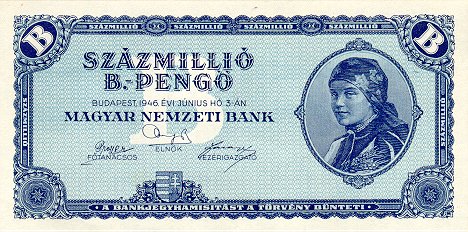
In the summer of 1946, the national currency of Hungary collapsed so completely that consumer prices doubled every fifteen hours. Citizens needed massive piles of cash just to purchase daily necessities, and the central bank was forced to print a banknote worth one hundred quintillion.
This is the factual account of the Hungarian pengő, a currency that experienced the most extreme rate of hyperinflation ever recorded in human economic history.
A Stable Beginning on the Gold Standard
Following the severe economic turbulence of the First World War, Hungary desperately needed strict financial stability. On January 1, 1927, the national government introduced the pengő to officially replace the heavily inflated korona.
The new currency was strictly pegged to the gold standard, with the exchange rate specifically defined as 3,800 pengő to exactly 1 kilogram (2.2 pounds) of fine gold. Throughout the late 1920s and into the early 1930s, it remained the most stable currency in the entire surrounding region.
The Devastation of the Second World War
The outbreak of the Second World War severely damaged the Hungarian economy. The conflict brought massive military costs, and the government essentially took total control of the national bank to print paper money proportional to their budgetary demands. Precious metal coins completely vanished from circulation.
When the global conflict finally ended, the nation’s infrastructure was completely destroyed. To restore domestic production and generate state revenue, the national government intentionally utilized massive inflation as a direct form of hidden taxation.
The Era of the Hundred Quintillion Banknote
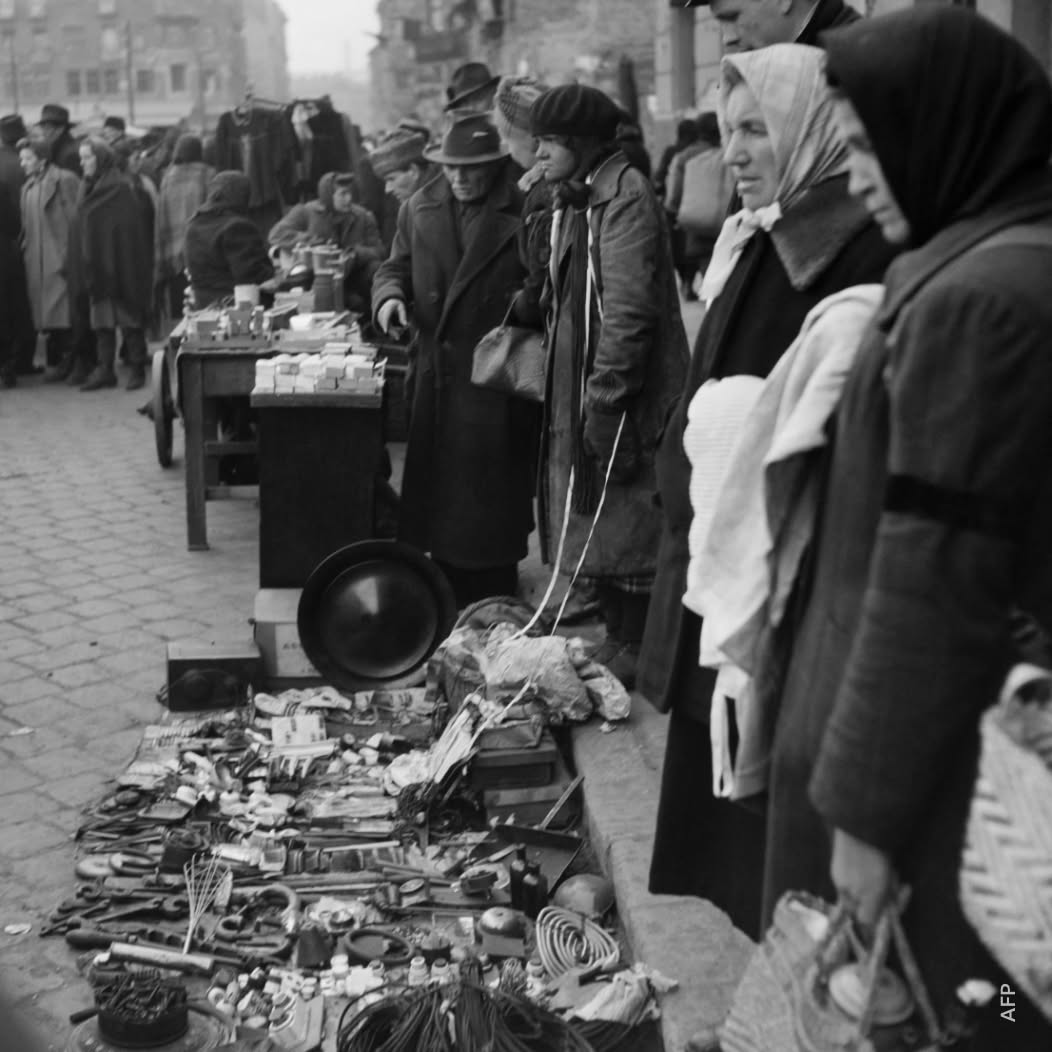
By the early months of 1946, daily prices spiraled entirely out of control. The hyperinflation rapidly exceeded the infamous economic collapse of the German mark in 1923. To simplify accounting calculations and fit all the necessary zeros on the physical paper bills, the government introduced new financial denominations.
They created the milpengő for one million pengő and the bilpengő for one trillion pengő. In July 1946, the Hungarian National Bank released a 100 million bilpengő banknote. This single printed piece of paper carried a staggering face value of 100 quintillion pengő.
The Implementation of the Hungarian Forint
The national financial system completely broke down as the pengő routinely lost 90 percent of its original purchasing value every four days. On August 1, 1946, the government abandoned the currency entirely and introduced a brand new monetary unit called the forint.
The official conversion rate was permanently set at one forint for every 400 octillion pengő. To successfully execute this exchange, financial officials simply dropped 29 zeros from the old currency. The total monetary value of all circulating pengő banknotes in the entire country was reduced to less than a tiny fraction of one new forint.