
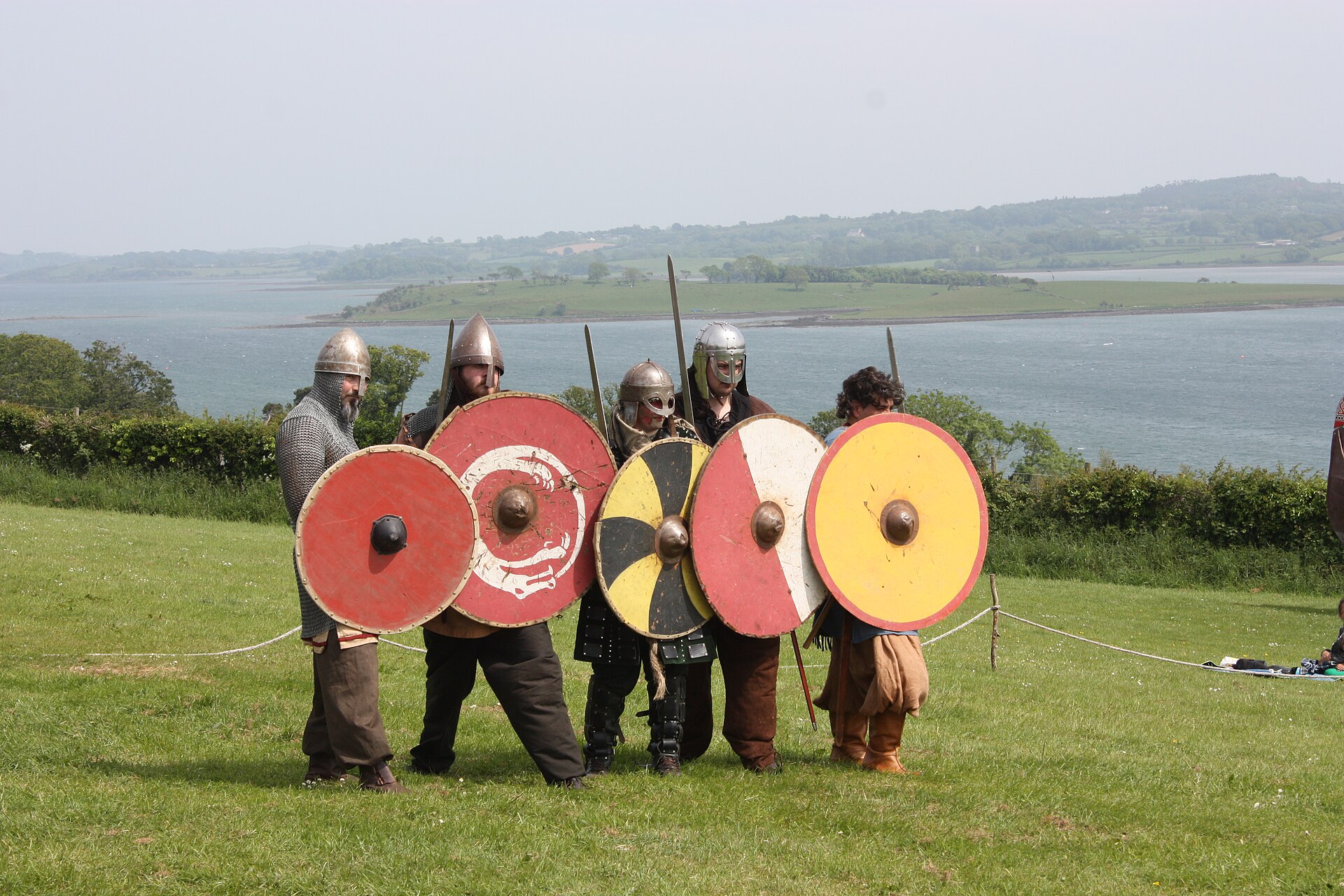
The image of the fierce Nordic warrior charging into battle with horns protruding from their headgear is famous worldwide. However, historical evidence reveals a completely different reality. Between 800 and 1050 C.E., Nordic raiders expanded across Europe, but their battle attire lacked the exact feature most people associate with them today.
The true origin of the horned headgear traces back to a theater stage rather than an ancient battlefield. The documented history of what these fighters actually wore into combat involves a theatrical invention and an archaeological discovery.
The Rarity of Authentic Armor
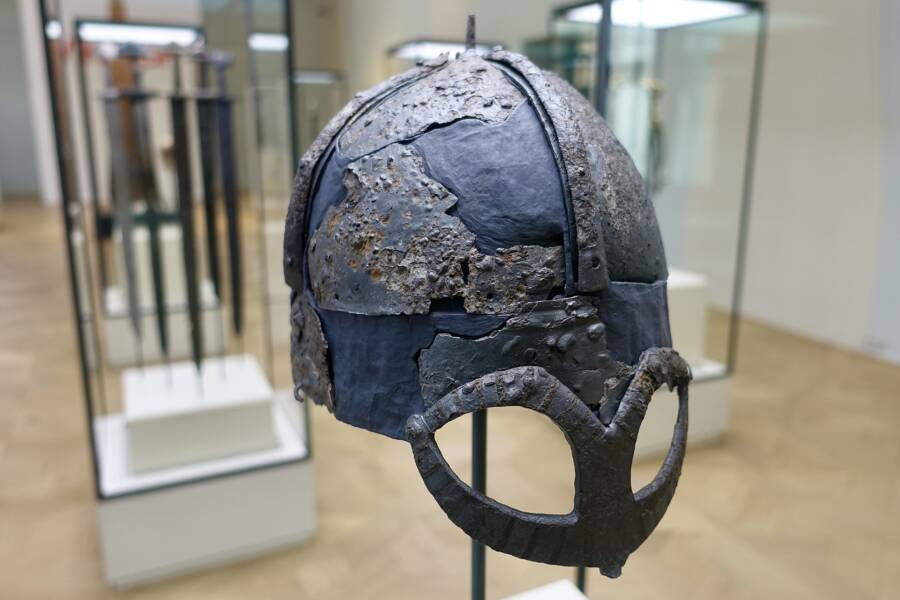
While historical accounts describe them as fearsome fighters, physical evidence of their battle gear is extremely scarce. Archaeologists have discovered only one well-preserved helmet from this specific historical period. Found in 1943 in Gjermundbu, Norway, this single artifact was buried alongside a warrior and a full set of chain mail.
The iron headpiece features a rounded dome and a guard around the eyes, but it has no horns. In close combat, protruding attachments would have provided an opponent with an easy grabbing point. Furthermore, on crowded ships measuring roughly 20 meters (65.6 feet) long, extra width on a warrior’s head would have caused severe space constraints.
A Theatrical Invention
The popular depiction of horned armor did not emerge until 1876. A German costume designer named Carl Emil Doepler created outfits for a performance of Richard Wagner’s opera, Der Ring des Nibelungen. Doepler tapped into a growing European fascination with ancient Germanic history.
He incorporated elements from much older cultures into his designs for the stage production. By placing horns on the actors, he instantly created a visual standard that spread rapidly through popular culture and sports team mascots.
Ancient Prehistoric Discoveries
While the Nordic fighters of the ninth century did not wear them, horned headpieces did exist in ancient Europe. In the 1860s, workers in London found a Celtic headpiece with horns dating between 150 and 50 B.C.E. Later, in 1942, excavators in Denmark uncovered two bronze helmets featuring curving horns dating back to 900 B.C.E.
Both of these archaeological finds predated the Nordic expansion by hundreds of years. The creators of the theatrical myth simply took these older historical artifacts and incorrectly applied them to the medieval warriors.
The Oseberg Tapestry
There is one notable exception in the historical record. In 1904, archaeologists excavated a burial ship in Oseberg, Norway, dating to 834 C.E. Inside the vessel, they found a woven tapestry depicting figures with horned headwear.
Researchers classify this textile as a depiction of a religious ceremony rather than a historical battle scene. The figures depict deities like the god Odin, rather than human fighters. No physical horned armor from this era has ever been recovered from any excavation site.