
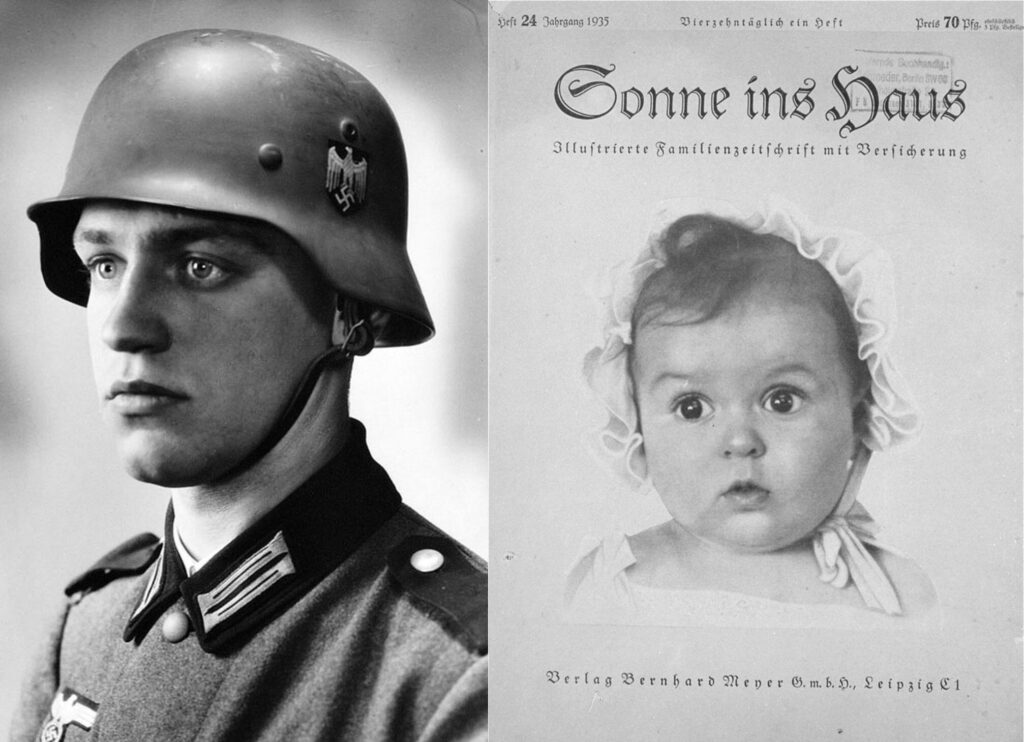
During the 1930s, the German government launched a massive propaganda campaign to promote their physical ideal. They plastered posters, magazines, and newspapers with photographs of individuals who supposedly possessed the perfect genetic traits. Two distinct faces became famous across the country.
One was a cherubic baby featured on a family magazine cover. The other was a handsome young soldier wearing a military uniform. Citizens admired these individuals, viewing them as the peak of physical perfection. However, both the baby and the soldier shared a secret identity that directly contradicted the core ideology of the government that celebrated them.
A Photographer’s Bold Prank
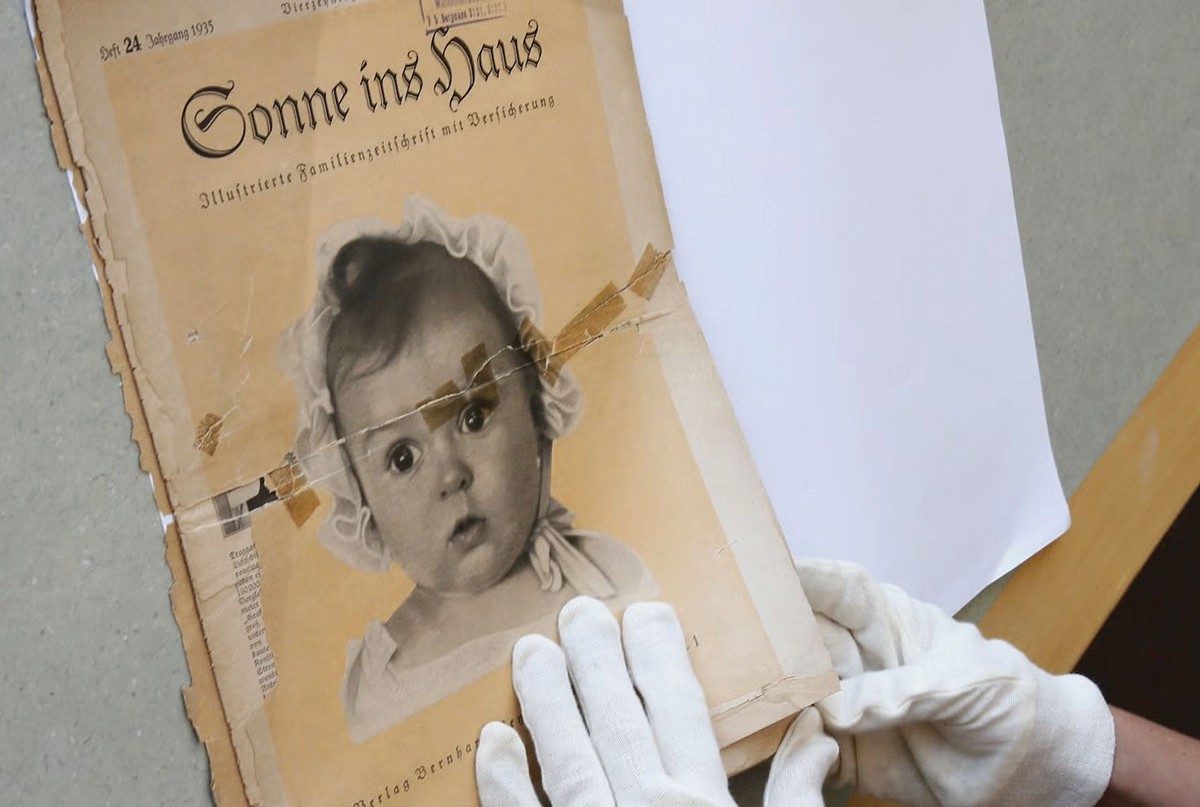
In 1935, a mother named Pauline Levinsons took her six-month-old daughter, Hessy, to a prominent photographer in Berlin. She simply wanted a professional portrait of her baby. Months later, the family was shocked to see Hessy’s face on the cover of Sonne ins Haus, a major family magazine edited by a high-ranking government official.
A national contest had been held to find the perfect baby. The photographer, Hans Ballin, deliberately submitted Hessy’s photograph to the contest knowing that the Levinsons family was entirely Jewish.
The Perfect Aryan Baby
The propaganda ministry selected Hessy’s image out of countless submissions. They distributed the publication widely, and the baby’s face appeared on postcards and in shop windows throughout the country. The Levinsons family had to keep Hessy hidden indoors for months, fearing someone would recognize her.
If authorities discovered her true identity, the family would face immediate arrest. Eventually, they fled to Paris and later relocated to Cuba, escaping Europe entirely before the outbreak of the Second World War.
The Ideal German Soldier
A few years later, a young man named Werner Goldberg was drafted into the military. In 1939, a photographer took a picture of him in his uniform. The image appeared in the Berliner Tageblatt, a widely read newspaper, with a caption declaring him the ideal German soldier.
The image was then converted into recruitment posters placed on walls across the nation. The military recruiters did not know that Goldberg’s father was Jewish, classifying Goldberg as a half-Jew under the 1935 Nuremberg Laws.
Dismissal and Survival
Goldberg served in the armed forces during the invasion of Poland. Shortly after, in 1940, the government issued an order expelling all individuals with Jewish ancestry from the military. Goldberg was dismissed from duty and returned to civilian life in Berlin.
He took a job at a clothing company and managed to rescue his father from a detention center by slipping him out of a local hospital. Both Goldberg and Hessy Levinsons Taft survived the war, outliving the regime that unknowingly published their faces as their biological standard.