
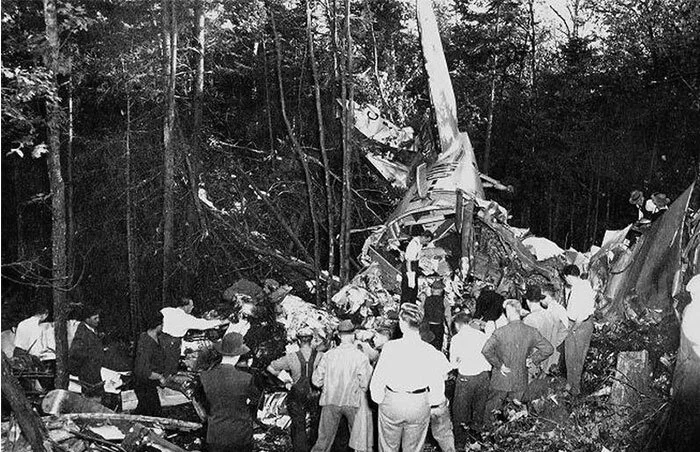
On September 9, 1949, a Douglas DC-3 aircraft departed Montreal for a routine flight to Baie-Comeau. Minutes later, a violent explosion ripped through the sky over Quebec, destroying Canadian Pacific Air Lines Flight 108. The crash killed all 19 passengers and four crew members.
Investigators realized this disaster was no mechanical failure. The scattered debris revealed a calculated murder plot driven by a dangerous love triangle and a massive life insurance policy. A simple five-minute aviation delay completely unraveled the conspirators’ plan, making this the first conclusively solved airliner bombing in aviation history.
A Lethal Love Triangle and a Deadly Plot
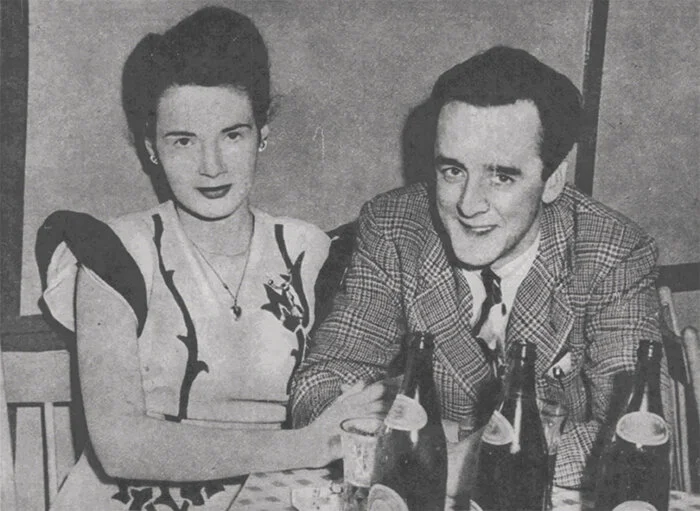
Joseph-Albert Guay, a jeweler from Quebec, was having an affair with a 17-year-old waitress named Marie-Ange Robitaille. Guay wanted to marry Robitaille but faced strict divorce laws that made separation nearly impossible. He decided the only way to be with his mistress was to eliminate his wife, Rita Morel.
Guay recruited two accomplices to help execute his plan. He enlisted Marguerite Pitre, a boarding house owner who owed him money, and her brother Généreux Ruest, a watchmaker who also faced severe financial troubles.
Constructing the Dynamite Time Bomb
Pitre visited a hardware store under a false name and purchased 20 half-pound (0.22-kilogram) sticks of dynamite. She also acquired 15 detonating caps and a 30-foot (9.14-meter) length of fuse. Ruest used his mechanical expertise to wire these components into a functioning time bomb.
Guay convinced his wife to take a holiday flight to Baie-Comeau. He gave her the explosives hidden inside a seemingly harmless package. On the day of the flight, Guay purchased a 10,000-dollar life insurance policy on his wife.
The Five-Minute Aviation Delay
Guay had carefully timed the explosive device for maximum destruction. He calculated that the bomb would detonate while the airplane was flying directly over the deep waters of the Saint Lawrence River. Plunging into the river would have washed away the forensic evidence and hidden the crime.
However, the airplane took off exactly five minutes late. The explosive detonated while the aircraft was flying over solid ground at Cap Tourmente. The wreckage crashed into the earth, allowing police to recover the bomb fragments and trace the deadly blast.
Arrests, Confessions, and Executions
Police traced the explosive package back to Pitre after receiving a tip. She confessed to delivering it but blamed Guay for the contents. Guay was arrested two weeks after the crash, tried for murder, and sentenced to death.
Before his execution on January 12, 1951, he wrote a detailed 40-page document explicitly outlining the involvement of his two accomplices. Based on this confession, authorities arrested Ruest and Pitre. Ruest was hanged in July 1952. Pitre was hanged on January 9, 1953, marking the final time a woman was executed in Canada.