
In the summer of 1957, a team of scientists in the Nevada desert accidentally launched a 2,000-pound (900-kilogram) steel cap into the sky at six times the speed needed to escape Earth’s gravity.
It was moving so fast that high-speed cameras barely caught a single blurry frame of its existence. This is the documented history of the Pascal-B nuclear test and the heavy metal plate that became the fastest human-made object within Earth’s atmosphere.
Operation Plumbbob and the Pascal-B Nuclear Test
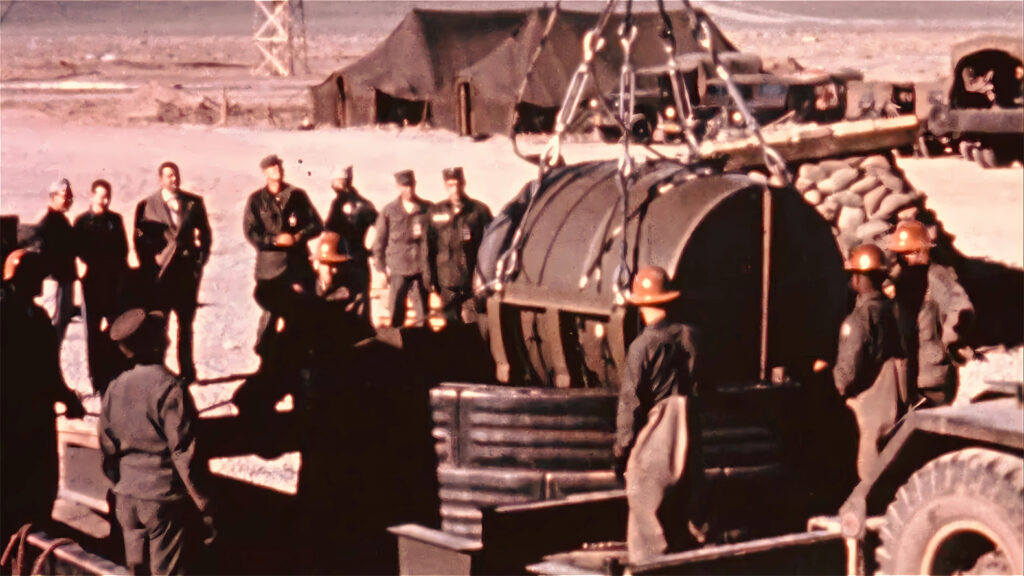
During the Cold War, the United States military conducted a series of nuclear tests in the Nevada desert under the name Operation Plumbbob. On August 27, 1957, scientists prepared for the Pascal-B test. They placed a nuclear device at the bottom of a 500-foot (150-meter) deep hollow shaft.
To contain the explosive blast, they welded a heavy steel cap over the top of the hole. This solid cap was four inches (10 centimeters) thick and weighed roughly 2,000 pounds (900 kilograms).
A Heavy Steel Cannonball Launch
The researchers wanted to measure how the explosion would affect the steel cover. Astrophysicist Dr. Robert Brownlee designed an experiment to track the cap’s movement. He placed a high-speed camera capable of shooting one frame every millisecond pointing directly at the shaft.
When the nuclear device detonated, it vaporized the concrete inside the shaft. This instantly created a massive wave of high-pressure gas that acted like an Earth-sized cannon, blasting the steel cover upward.
Capturing a Speed of 150,000 Miles Per Hour
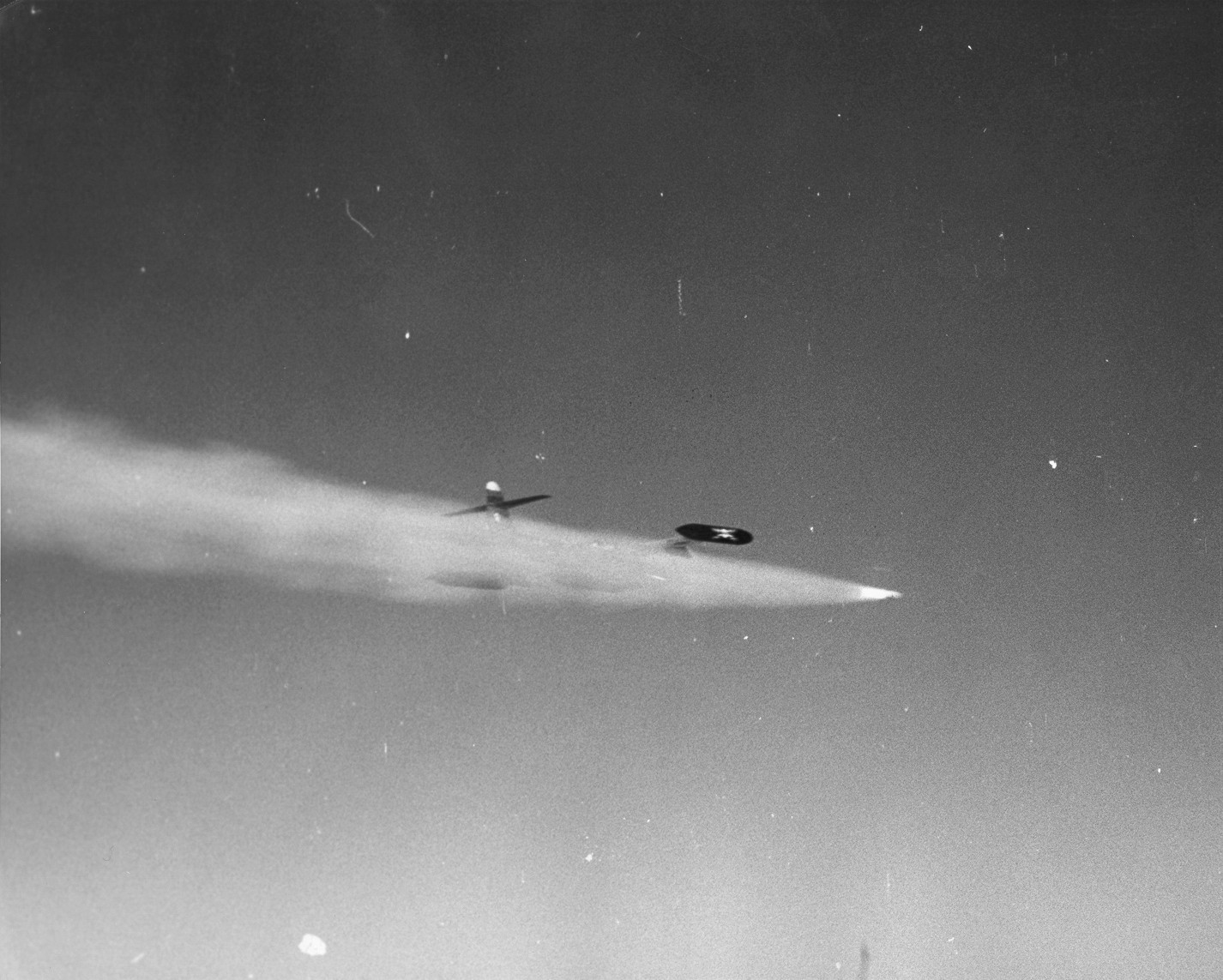
When Brownlee examined the high-speed film, the heavy steel plate appeared in only a single frame. Because it was caught on just one frame before disappearing from the camera’s field of view, Brownlee could calculate its minimum velocity.
His math showed the cap was traveling upward at roughly 150,000 miles per hour (240,000 kilometers per hour). For comparison, a spacecraft needs to reach an escape velocity of 25,000 miles per hour (40,000 kilometers per hour) to break free from Earth’s gravitational pull.
Did the Manhole Cover Reach Outer Space?
The 2,000-pound (900-kilogram) steel cap was never seen again. Despite its incredible upward speed, researchers do not believe the heavy metal plate actually reached outer space. Traveling at 150,000 miles per hour (240,000 kilometers per hour) at ground level creates extreme atmospheric friction.
The general scientific consensus states that the intense heat generated by pushing through the dense lower atmosphere completely vaporized the steel long before it could cross the boundary into space. It became expanding gas before leaving the sky.