
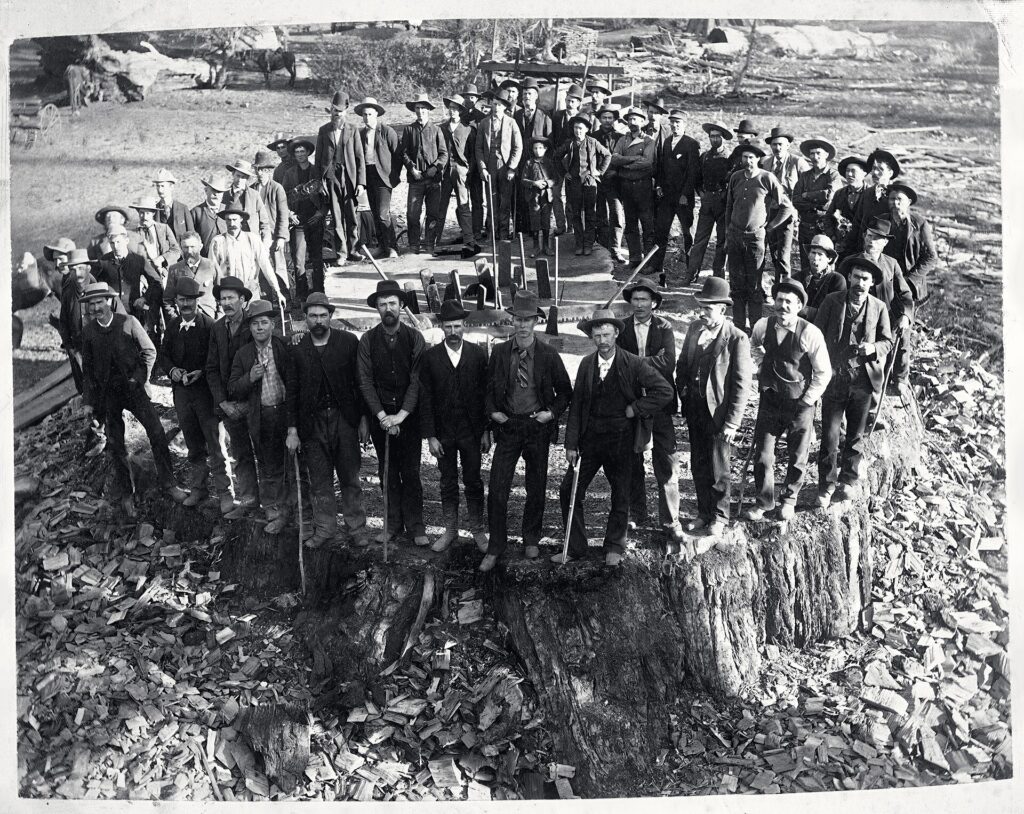
In 1891, two lumbermen stood at the base of a California sequoia and began a 13-day task. Their objective was to cut down a tree so massive that many people refused to believe it was real. Named the Mark Twain Tree, it measured 16 feet (4.9 meters) in diameter.
Reports indicated it towered 331 feet (100.9 meters) high. Its measurements were difficult to believe for nineteenth-century society. This is the factual account of why an ancient tree was cut down just to prove to the world that it actually existed.
A Skeptical Public
In the late nineteenth century, explorers in the Sierra Nevada mountains reported finding trees the size of buildings. Audiences in the eastern United States and Europe dismissed these reports as exaggerated fables. The giant sequoias grew only in specific climates, and travel to these remote groves was difficult. To combat widespread skepticism, military administrators and logging groups concluded that physical proof had to be delivered directly to the non-believers.
The 13-Day Operation
The Mark Twain Tree, located in what is now Kings Canyon National Park, was chosen for the demonstration. Although the newly established park prohibited felling trees, an exception was granted for scientific reasons. In 1891, lumbermen Bill Mills and S.D. Phips, along with two assistants, took on the task.
Armed with saws, the team hacked away at the 1,341-year-old tree. The process required intense physical labor and took 13 continuous days. Once the massive trunk crashed down, the workers prepared it for transport.
Shipping the Slabs
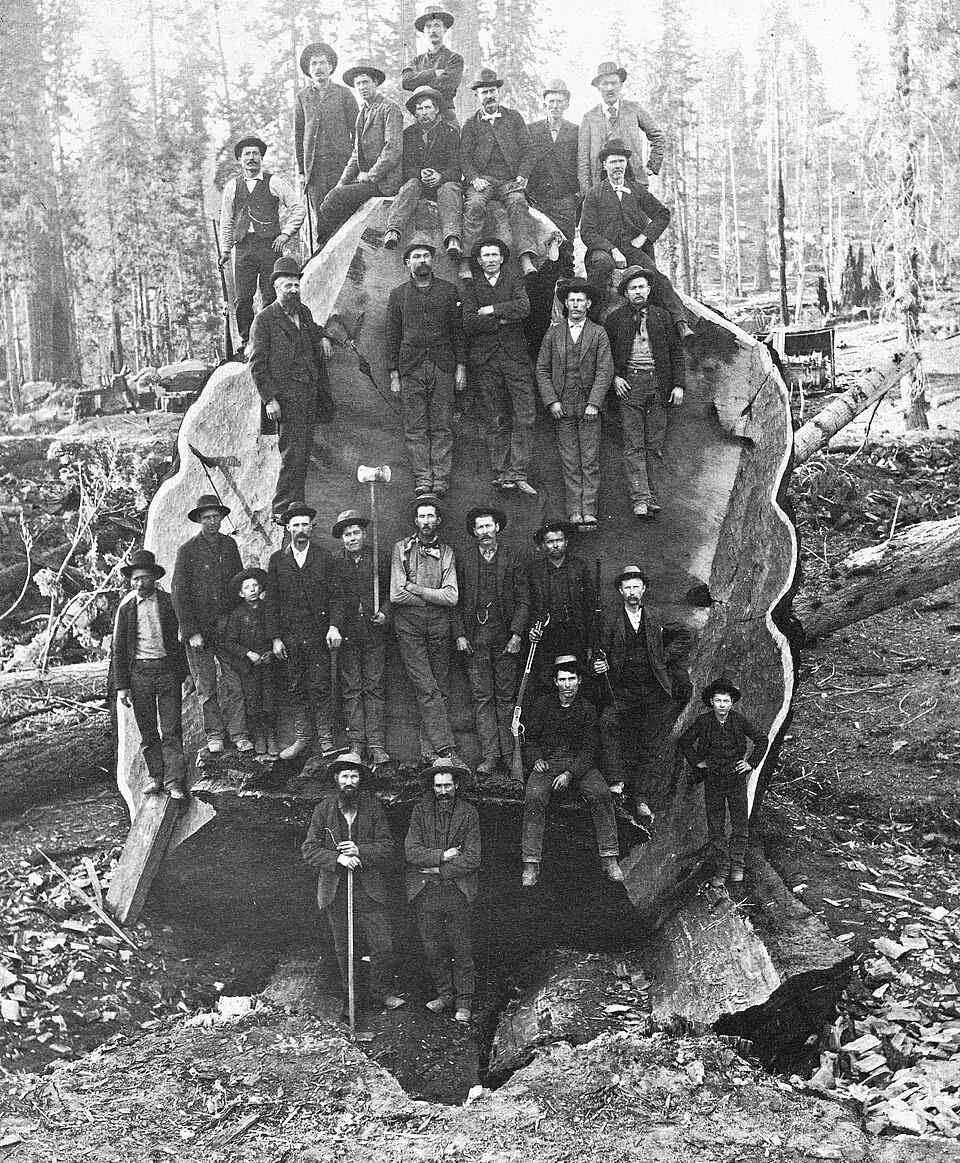
The objective was not to use the Mark Twain Tree for standard lumber. The team cut thick, cross-sectional slabs from the widest part of the trunk. Railroad president Collis P. Huntington funded the expensive transportation of these massive wooden disks.
One segment traveled to the American Museum of Natural History in New York City. Another slab was shipped across the Atlantic Ocean to the Natural History Museum in London. When these enormous tree rings were exhibited, they successfully dispelled doubts regarding the size of the sequoias.
The Stump Today
The remains of the tree are known as the Big Stump. It still sits in its original location within Kings Canyon National Park in California. Visitors walking along the Big Stump Trail can climb a small set of wooden stairs built onto the 16-foot (4.9-meter) wide surface. The New York and London museum exhibits also remain on display. The historical records, photographs, and the physical stump provide a complete factual account of the 1891 logging event.