
There is a single calendar date that repeatedly altered the course of a nation. Across the span of roughly a century and a half, the 9th of November witnessed empires fall, glass shatter, and a concrete divide crumble. One specific 24-hour window became the recurring stage for massive historical shifts in Germany.
The events of this single day span executions, revolutions, failed uprisings, devastating violence, and spontaneous border openings. The sequence begins in the mid-nineteenth century and extends to the late twentieth century, with each event unfolding entirely independent of the others.
Executions and the Fall of an Empire
On November 9, 1848, authorities executed Robert Blum in Brigittenau near Vienna. He was a democratic politician who fought in the revolutions of 1848.
Seventy years later, on November 9, 1918, Chancellor Prince Max von Baden announced the abdication of Emperor Wilhelm II. Shortly after, Philipp Scheidemann stood at a window of the Reichstag and proclaimed the German Republic. The monarchy collapsed entirely, making way for a completely new democratic government in the aftermath of World War I.
A Failed Coup and Devastating Violence
Exactly five years after the republic was proclaimed, on November 9, 1923, Adolf Hitler and his followers marched through Munich. They attempted an armed coup to overthrow the Weimar Republic. This event became known as the Beer Hall Putsch. Armed police forces fired on the marchers. The clash resulted in the deaths of sixteen party members and four police officers. Hitler was arrested and imprisoned.
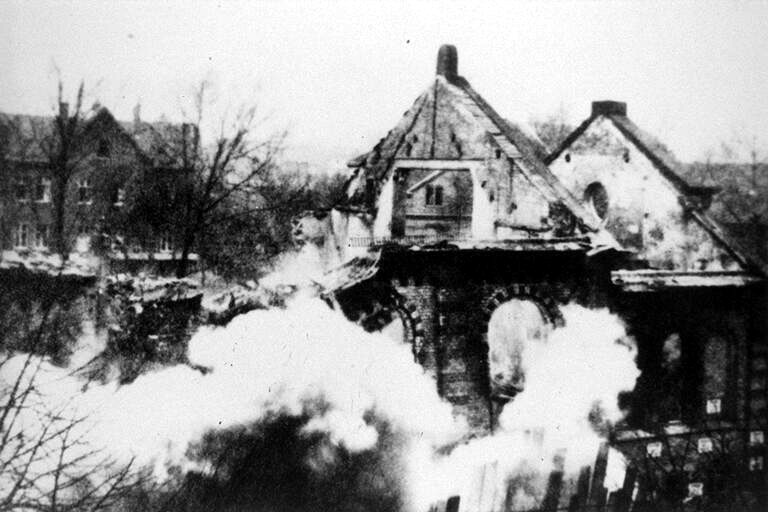
On November 9, 1938, the Nazi regime orchestrated violent pogroms against Jewish people across Germany. Paramilitary forces and civilians destroyed thousands of Jewish-owned businesses, homes, and hospitals. Attackers burned over 260 synagogues to the ground. Firefighters received explicit orders to intervene only if flames threatened adjacent properties. Authorities arrested roughly 30,000 Jewish men and sent them to concentration camps.
The Collapse of a Concrete Divide
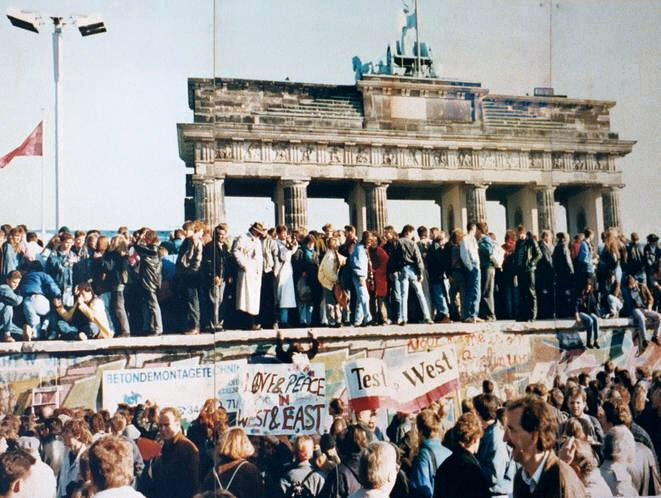
Decades later, a physical barrier divided East and West Berlin. The wall measured roughly 155 kilometers (96.3 miles) in total length. On the evening of November 9, 1989, East German official Günter Schabowski held a live press conference. He read aloud a newly drafted regulation allowing East German citizens to travel across the border.
When a reporter asked when the rule took effect, Schabowski looked at his papers and answered that it was immediate. Thousands of East Berliners rushed to the border crossings. The border guards were overwhelmed by the massive crowds and lacked clear operational orders. The commanding officers eventually opened the gates. People from both sides climbed the concrete structure and began dismantling it with pickaxes.