
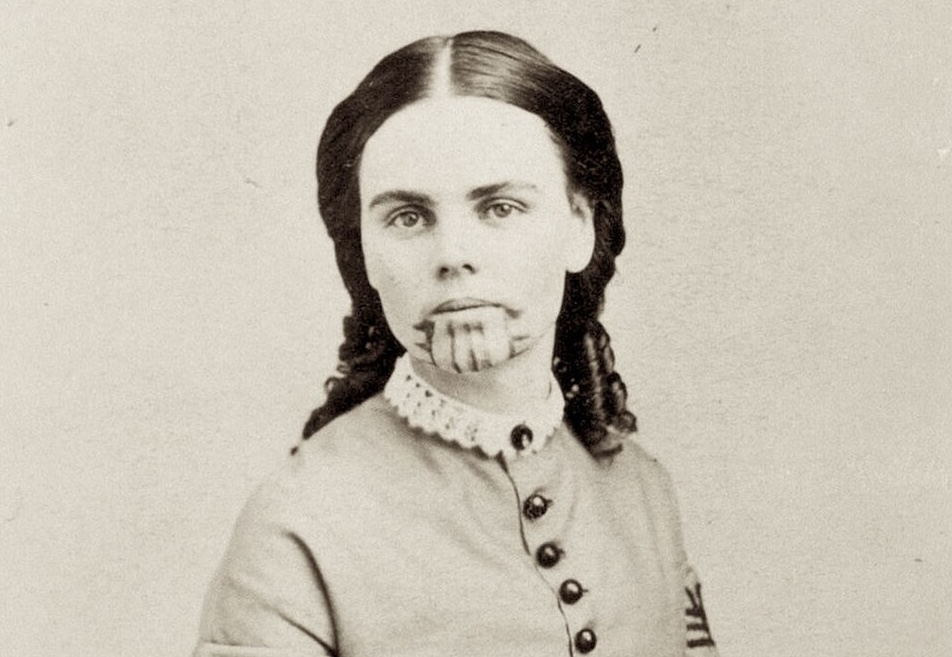
In 1851, a pioneer family traveling through the unforgiving landscapes of the American Southwest met a sudden, brutal fate, leaving a young girl captive in an unfamiliar world. The true story of Olive Oatman involves abduction, starvation, an unforgettable blue chin tattoo, and a shocking return to Victorian society.
This historical account reveals the raw reality of the 19th-century frontier, where a teenager was traded between tribes and marked for life before stepping back into the civilization she thought she had lost forever.
The Ambush on the Gila River
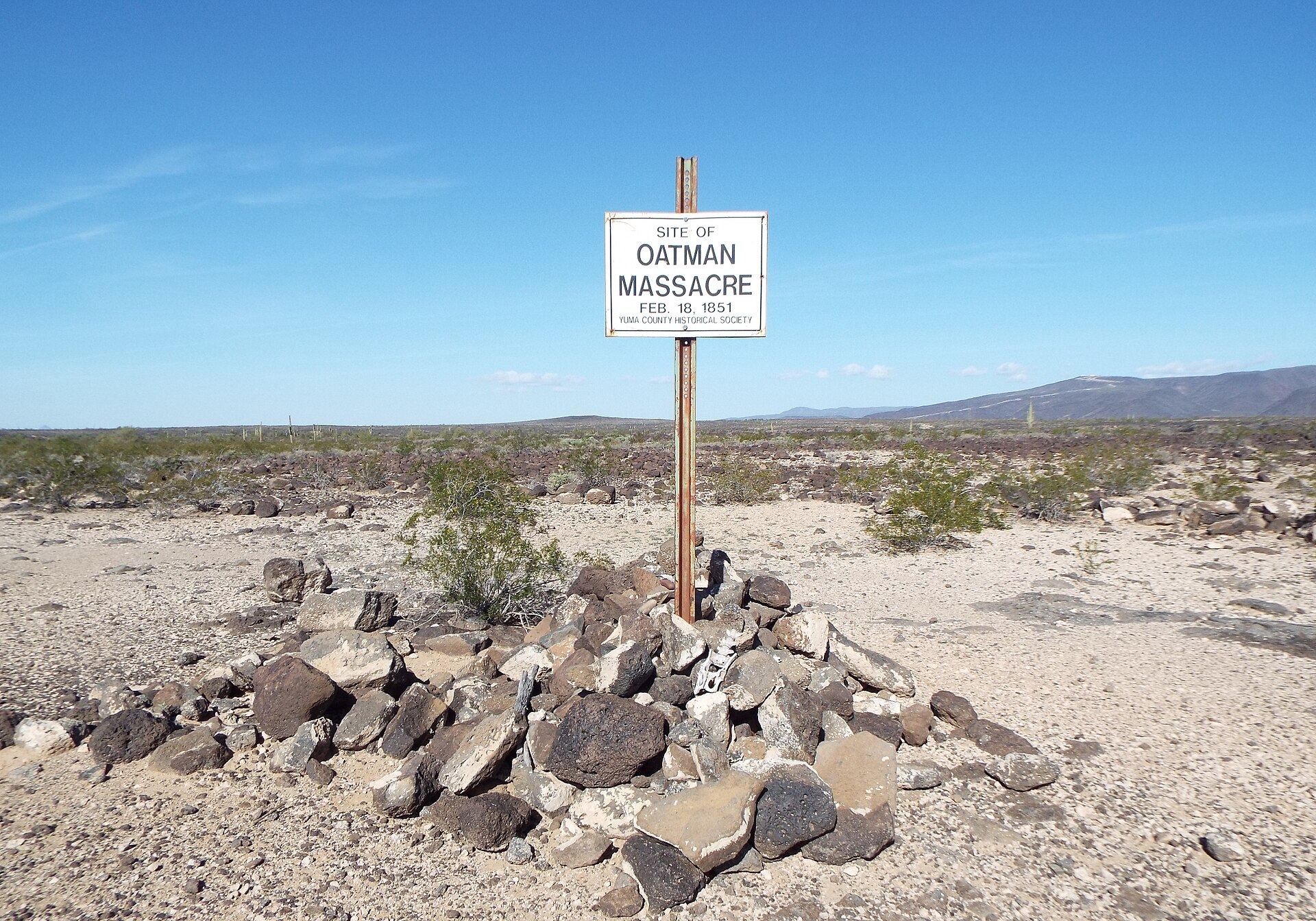
In February 1851, Roys and Mary Ann Oatman led their large family across the arid plains toward California. Near the Gila River in present-day Arizona, about 80 miles (128.7 kilometers) from Fort Yuma, a group of Native Americans, identified by historians as Tolkepayas or Western Yavapai, approached their camp.
The encounter turned violent quickly. The attackers killed Olive’s parents and four of her siblings. Her brother Lorenzo, left for dead, eventually recovered. The attackers took 13-year-old Olive and her 7-year-old sister Mary Ann captive, marching them barefoot across the harsh terrain for several days.
Captivity and the Mohave Trade
For a year, the two sisters worked as slaves for the Yavapai, performing grueling tasks under the desert sun. Eventually, a group of Mohave people visited the Yavapai camp and offered two horses, vegetables, and blankets in exchange for the Oatman girls.
The Mohave walked the girls to their village near the Colorado River. Here, the girls were adopted by the tribal chief, Espanesay, and his family. The Mohave tattooed both girls on their chins and arms using cactus ink. These striking blue markings indicated they belonged to the tribe and ensured they would be recognized in the afterlife.
Drought and a Devastating Loss
Life with the Mohave was relatively better than with the Yavapai, but nature proved unforgiving. A severe regional drought struck the area, decimating the tribe’s food supply. Crops failed, and foraging yielded little nourishment. Between 1855 and 1856, many tribal members starved to death.
Ten-year-old Mary Ann Oatman succumbed to the severe lack of food and died. Olive survived the famine, remaining with the Mohave and continuing to live according to their customs for another year.
The Ransom and Return
Rumors of a white woman living with the Mohave eventually reached Fort Yuma. In 1856, a Yuman messenger arrived at the Mohave village offering blankets and a white horse in exchange for Olive. The Mohave accepted the trade. Nineteen-year-old Olive traveled to Fort Yuma, reuniting with her brother Lorenzo.
She returned to white society wearing a bark skirt and bearing the stark blue facial tattoos of the Mohave. She later toured the country sharing her experiences in lectures, married a rancher, and moved to Texas. She died of a heart attack in 1903 at age 65.