
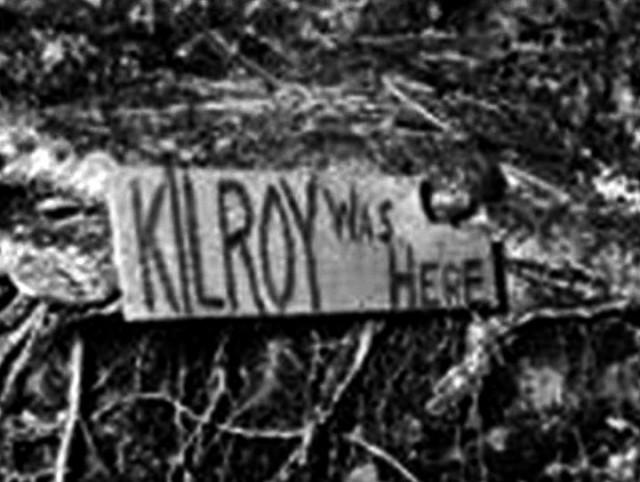
During the height of World War II, American soldiers landing on heavily fortified beaches and securing classified enemy bunkers kept discovering the exact same strange graffiti. A bald figure with a large nose peered over a wall, accompanied by three simple words: “Kilroy was here.” This doodle appeared in the most inaccessible, highly guarded locations across the globe, baffling military commanders and enemies alike. The true origin of this global phenomenon started far away from the front lines in a bustling American shipyard.
The Shipyard Inspector James J. Kilroy
In 1946, the American Transit Association ran a radio contest to uncover the real Kilroy. James J. Kilroy, a shipyard inspector who lived roughly 20 miles (32.1 kilometers) away from his workplace, stepped forward with an account that researchers accept as the most credible origin. During the war, Kilroy worked at the Fore River Shipyard in Massachusetts. His job involved checking the number of rivets driven by workers. To ensure he was not counting the same rivets twice, he marked the checked steel plates with chalk.
A Simple Mark Becomes a Phenomenon
Workers being paid by the rivet sometimes erased standard chalk marks to get paid double. To stop this, Kilroy began marking the plates with a more permanent yellow crayon, writing the phrase “Kilroy was here.” Due to the urgency of the war, ships departed the yards before the interiors were painted. As a result, thousands of troops boarded transport vessels and discovered this phrase in entirely sealed, inaccessible compartments like ammunition rooms and boiler spaces.
The Graffiti Spreads Across the Globe
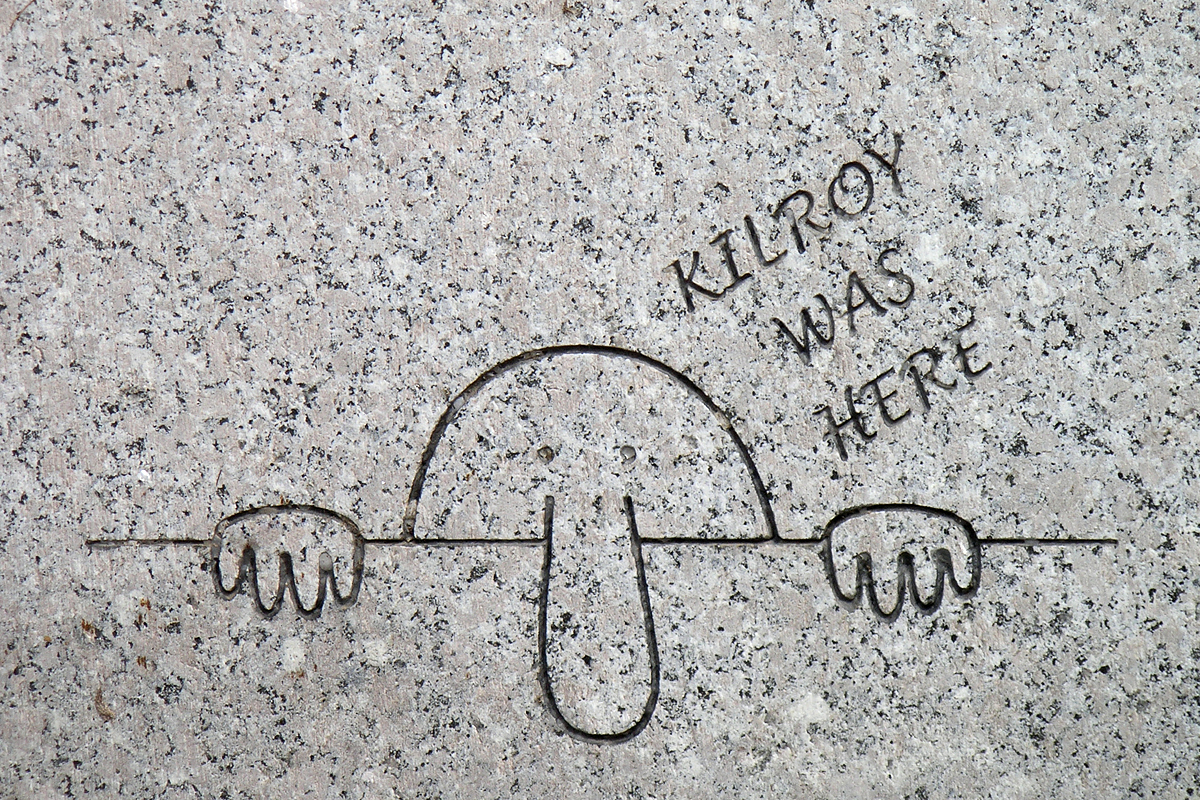
Soldiers completely misunderstood the origin of the phrase. They treated the mysterious Kilroy as a super-soldier who always arrived first. As troops moved across Europe and the Pacific, they began replicating the doodle. The character, often drawn with a large nose hanging over a wall and fingers clutching the ledge, merged with a pre-existing British doodle known as Mr. Chad. Soldiers drew the figure on bridges, ruined buildings, and captured enemy equipment.
Baffling World Leaders and Commanders
The graffiti appeared in highly restricted areas. During the Potsdam Conference in 1945, an outhouse was built exclusively for the use of Harry Truman, Winston Churchill, and Joseph Stalin. The first person to use the facility was Stalin, who emerged and reportedly asked his aides who Kilroy was. The drawing also appeared on the Arc de Triomphe in Paris and the Marco Polo Bridge in China. The drawing simply multiplied wherever the American military traveled.