
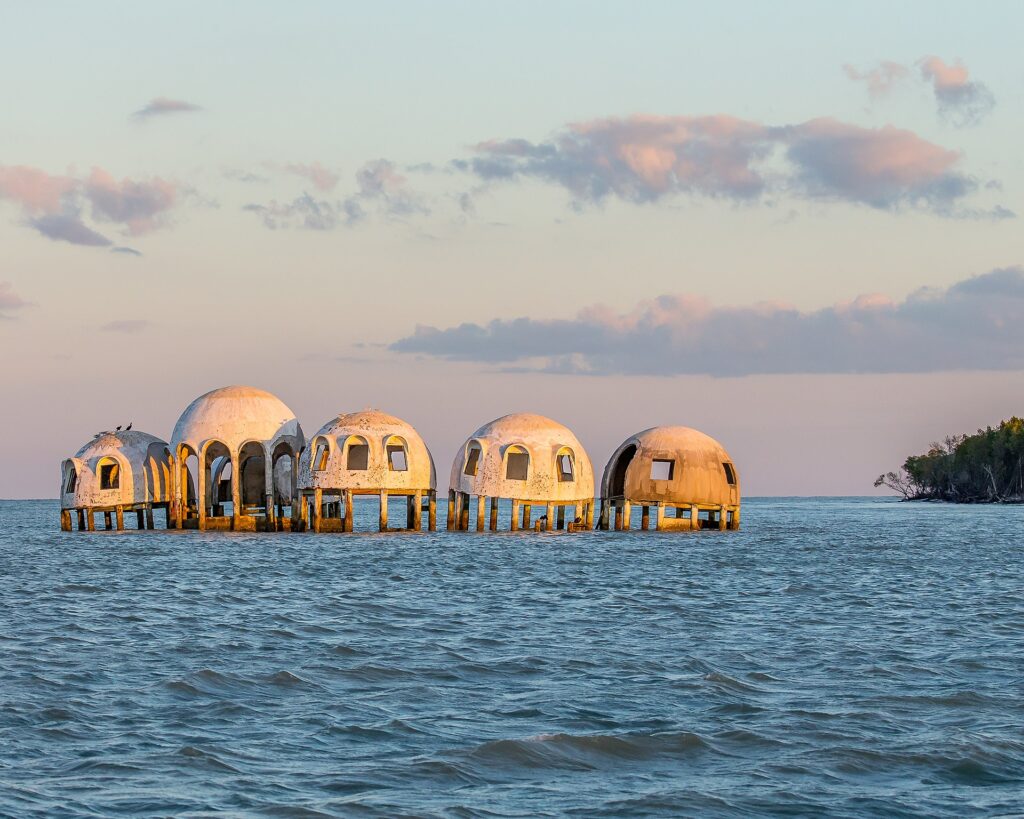
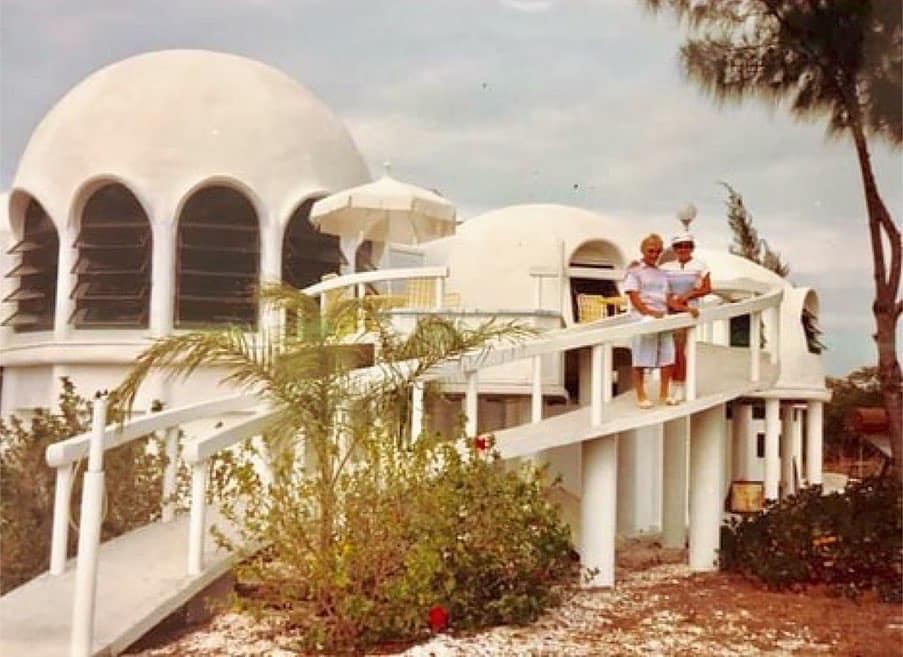
In the early 1980s, an eccentric inventor named Bob Lee set out to construct a revolutionary vacation home off the coast of Marco Island, Florida. His vision involved a cluster of six white, igloo-shaped domes connected by wooden walkways.
This structure, known as the Cape Romano Dome House, became a focal point of maritime curiosity as it stood isolated on a shifting coastal landscape. Designed for self-sufficiency, the property featured solar power and a sophisticated rainwater collection system. It was an ambitious experiment in engineering that combined local sand with concrete to create a hurricane-resistant habitat.
A Futuristic Vision on the Gulf
Spanning approximately 2,400 square feet (223 square meters), the home offered a distinct aesthetic. Bob Lee, a retired oil businessman, infused the property with clever inventions. He sought to create a living space that could thrive despite the harsh Florida climate. For a few years, the house functioned as a vacation spot for his family. They eventually moved there full-time, experiencing life on the edge of the Gulf of Mexico. At night, the absence of ambient light made the location feel detached from the modern world. However, the geographic conditions that made the site unique also ensured its eventual displacement.
Engineering Against the Elements
The structure was built to withstand powerful storms. When Hurricane Andrew struck in 1992, the outer shells of the domes held firm. However, the windows shattered and the interior suffered extensive damage. The Lee family abandoned the residence shortly thereafter. In 2005, a new owner purchased the domes for $300,000 with plans to move them to a safer location. These efforts stalled due to regulatory hurdles and environmental changes. Just one month after the purchase, Hurricane Wilma brought winds of 120 miles per hour (193 kilometers per hour), which accelerated the erosion of the surrounding beach.
The Changing Coastline
As the years progressed, the Gulf of Mexico reclaimed the ground beneath the stilts. What was once dry land transformed into an aquatic environment. By 2014, the domes sat roughly 100 feet (30.5 meters) from the shore. Two years later, that distance increased to 200 feet (61 meters). Local officials eventually declared the site uninhabitable and issued fines for the deteriorating condition of the property. The domes became a site for marine life, with diverse species seeking shelter within the partially submerged concrete forms.
Returning to the Sea
The final chapter for the structure arrived in stages. Hurricane Irma struck in 2017, dislodging two of the six domes into the ocean. The remaining units endured until September 2022. When Hurricane Ian passed through the region, the storm’s intensity caused the final domes to sink beneath the surface. Today, the location remains an underwater feature of the Florida coast. The innovative project that began as a vacation home for an inventor is now entirely submerged.