
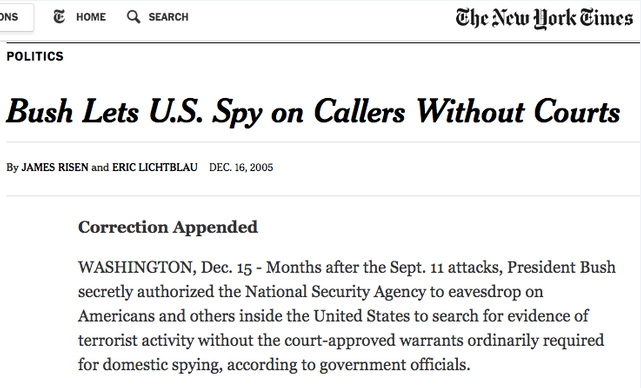
In the immediate aftermath of the September 11 attacks, the United States government authorized a highly classified intelligence program operating deep within the National Security Agency. Hidden completely from public view, this operation vacuumed up the private communications, internet activity, and financial transactions of millions of ordinary citizens without conventional warrants.
Known internally by a closely guarded code name, this massive data collection effort eventually sparked a dramatic hospital room standoff between top government officials. The operation was called Stellar Wind, and its existence remained completely hidden for years.
The Birth of a Massive Database
In late 2001, President George W. Bush secretly authorized the President’s Surveillance Program. A core component of this overarching initiative was Stellar Wind. The National Security Agency began collecting vast amounts of metadata and content from telephone calls, emails, and internet browsing histories.
Major telecommunications companies cooperated with the government, routing domestic and international data directly into massive National Security Agency databases. Analysts then utilized advanced data mining techniques to search for foreign intelligence targets, operating outside the traditional bounds of the Foreign Intelligence Surveillance Court.
A Rebellion in the Justice Department
By early 2004, legal concerns about the program reached a boiling point inside the Department of Justice. Jack Goldsmith, the head of the Office of Legal Counsel, concluded that specific parts of Stellar Wind violated federal law. Deputy Attorney General James Comey, acting as Attorney General while John Ashcroft was hospitalized with severe pancreatitis, officially refused to reauthorize the program.
On March 10, 2004, White House Counsel Alberto Gonzales and Chief of Staff Andrew Card rushed to the intensive care unit at George Washington University Hospital. They intended to bypass Comey and get Ashcroft to sign the reauthorization papers directly from his hospital bed.
The Hospital Room Standoff
Comey and Federal Bureau of Investigation Director Robert Mueller raced to the hospital, arriving just before the White House officials. When Gonzales and Card entered the room and asked Ashcroft to sign the classified documents, the severely ill Attorney General lifted his head from his pillow.
He formally refused to sign the papers, stating that Comey possessed the authority as Acting Attorney General. The White House briefly continued the program without Justice Department approval, prompting Comey, Ashcroft, Mueller, and several other top officials to immediately draft resignation letters.
Exposure to the Public
Faced with the very real threat of mass resignations at the highest levels of law enforcement, President Bush agreed to modify the intelligence operation to meet the strict legal requirements set by the Justice Department. The American public remained completely unaware of Stellar Wind until December 2005, when reporters published an exposé based on leaks from Justice Department lawyer Thomas Tamm.
Further details about the massive scale of the data collection emerged later in 2013, when former contractor Edward Snowden leaked highly classified documents revealing the full scope of the domestic surveillance operations.