
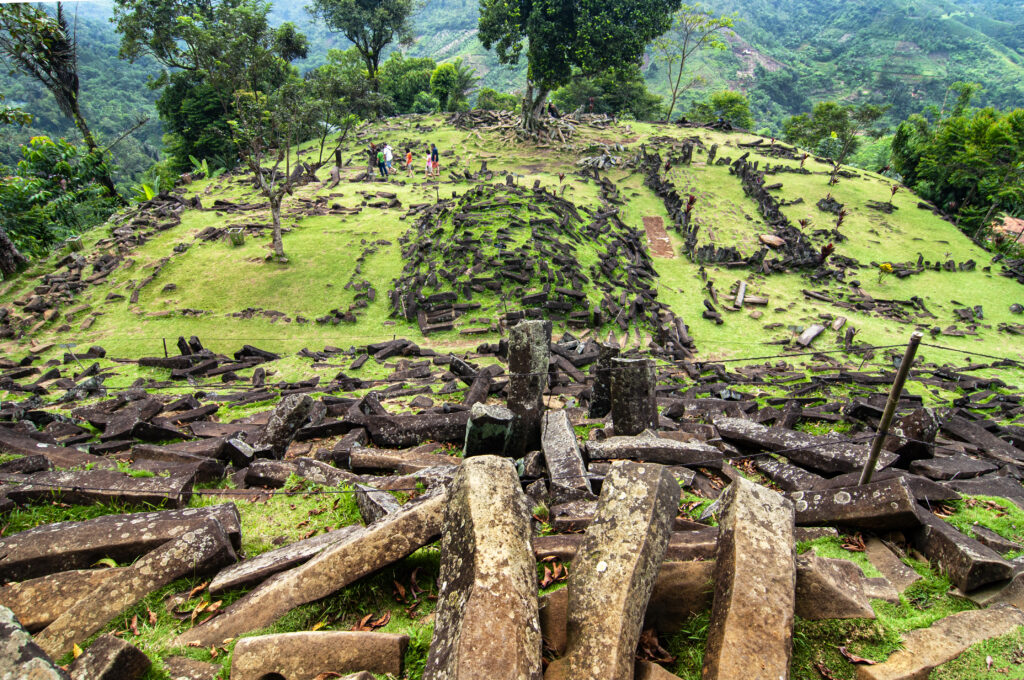
Deep in the highlands of West Java, Indonesia, a colossal structure composed of volcanic rock rests atop an extinct volcano and sits at the center of a major scientific dispute. The site of Gunung Padang features thousands of stacked stone blocks that researchers have investigated to determine if it is a standard prehistoric site or the oldest man-made pyramid in the world.
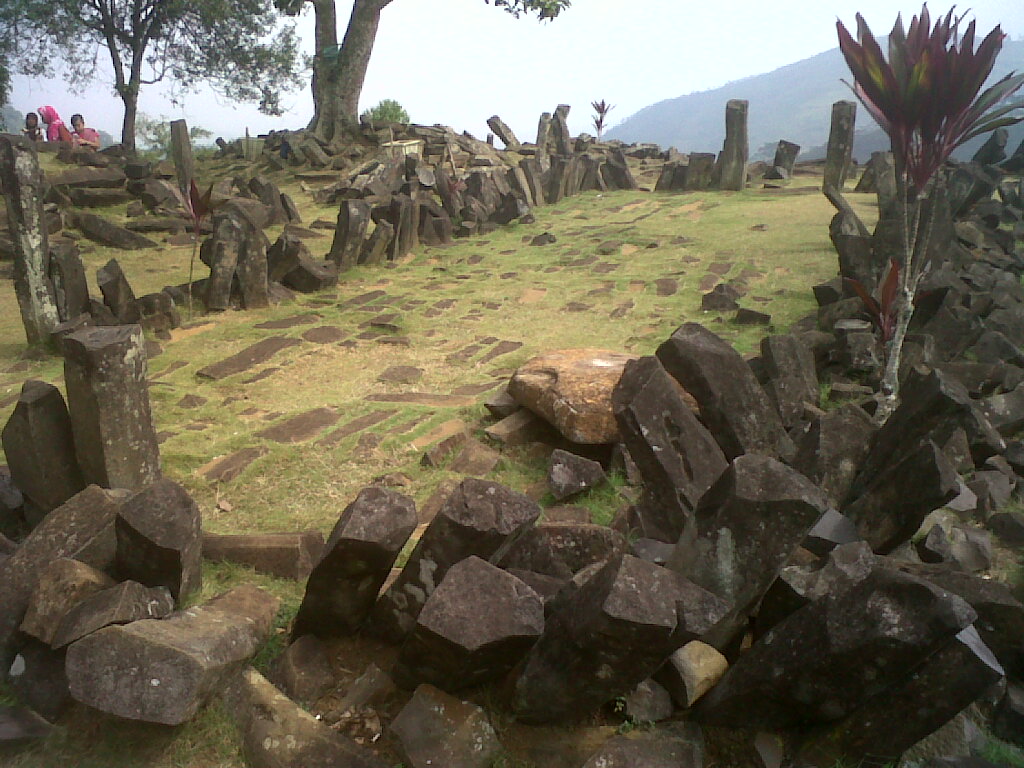
First documented in 1890 by a Dutch historian, the complex is accessed by a steep central stairway of 370 steps. This demanding ascent has an inclination of 45 degrees and stretches for a length of 110 meters, or 361 feet. At the summit, the ground is covered with massive, hexagonal stone columns of volcanic origin, arranged horizontally and vertically to form distinct terraces and retaining walls.
The Pyramid Hypothesis
For decades, researchers studied the visible stone structures at the top of the hill. In recent years, a team led by Indonesian geologist Danny Hilman Natawidjaja proposed that Gunung Padang is not a natural hill with ancient stones on top.
They claimed that the entire landmass is an enormous man-made pyramid built in multiple stages. According to their geological surveys and ground-penetrating radar scans, the structure consists of several distinct layers created by different groups of people over thousands of years. They stated that the oldest parts of the structure were constructed between 25,000 and 14,000 years ago.
Excavating the Deep Layers
The researchers argued that ancient people carved geometric shapes into the natural volcano crater. Between the years 7900 BCE and 6100 BCE, builders added bricks and rock columns. Later, an unknown group of people intentionally covered the earlier work with a layer of dirt.
Finally, between 2000 BCE and 1100 BCE, more topsoil, stone terracing, and other architectural elements were added to the surface. If verified, these specific dates would make the site the oldest known pyramid on Earth, predating the structures in Egypt by many millennia.
The Academic Retraction
The claims about Gunung Padang sparked an immediate debate within the archaeological community. Other scientists heavily criticized the excavation methods and the conclusions drawn from the radiocarbon dating. Traditional archaeological studies of the site found pottery fragments that dated only to a range between 45 BCE and 22 CE, which is roughly 2,000 years ago.
Critics argued that the deep layers of rock and clay were formed by natural weathering and tectonic activity rather than human construction. As a result of these disputes over the geological data, a major academic journal formally retracted the 2023 paper that claimed Gunung Padang was a 25,000-year-old pyramid.