
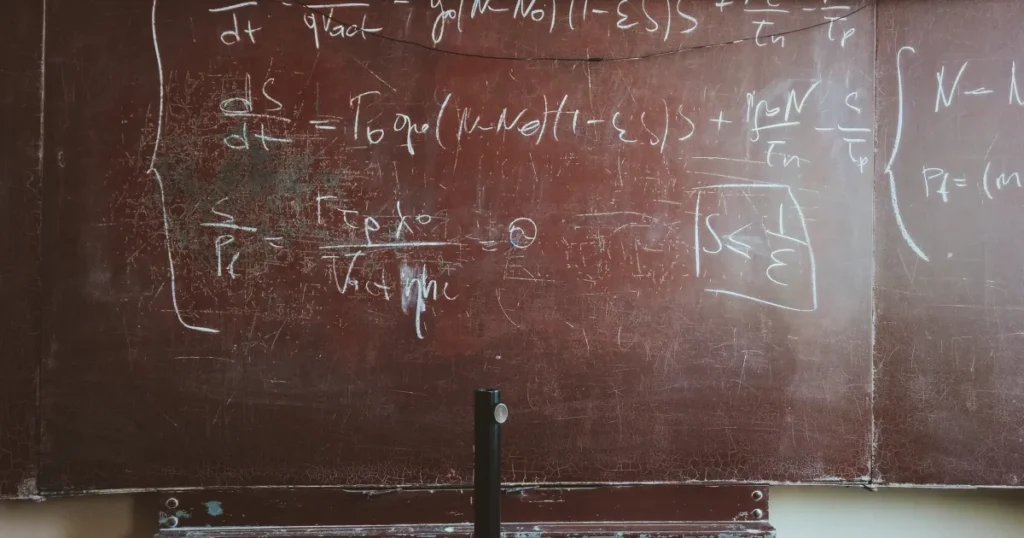
In 1939, a university student made a simple scheduling mistake that led to a major mathematical discovery. Arriving late to a statistics lecture, he copied down what he assumed was a routine homework assignment. He completed the work, completely unaware that he had just solved two of the most famous open problems in statistical theory.
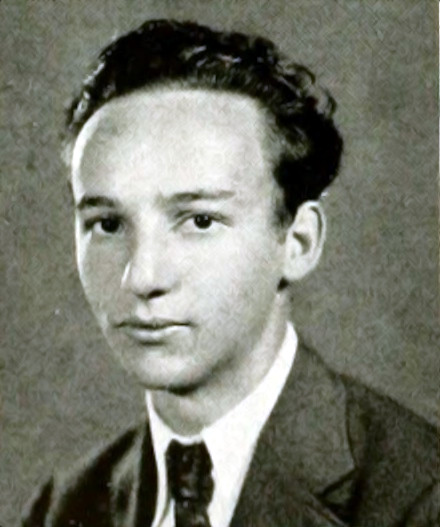
The student was George Bernard Dantzig, and his accidental breakthrough at the University of California, Berkeley—located about 13 miles (20.9 kilometers) from San Francisco—is a highly documented event in academic records. The exact sequence of events reveals how a basic misunderstanding resulted in a massive mathematical leap.
A Late Arrival to Jerzy Neyman Class
George Dantzig was enrolled as a doctoral student studying statistics under Professor Jerzy Spława-Neyman at the university. One day in 1939, Dantzig walked into his classroom after the daily lecture had already begun. Neyman had written two statistical equations on the blackboard.
Believing he had missed the initial verbal instructions, Dantzig quickly copied the two equations onto his notebook paper. He simply assumed these equations were the mandatory weekly homework assignment.
The Unusually Hard Homework Assignment
Dantzig took the problems home and worked on them over the next few days. According to his own accounts, he found the assignment to be a little harder than usual.
He spent time working on the equations and eventually completed the solutions. He returned to his professor’s office a few days later and handed in his work. He apologized to Neyman for missing the deadline and dropped the papers on the professor’s desk.
A Sunday Morning Surprise from the Professor
Six weeks later, Dantzig received an unexpected visitor. On a quiet Sunday morning, Neyman rushed to Dantzig’s house. The professor excitedly informed his student that the supposed homework assignment was actually a presentation of two famous unsolved problems in statistics. Mathematicians around the world had tried and failed to solve them for many years. Neyman had already prepared one of Dantzig’s solutions for official publication in a mathematical journal.
Years later, another researcher named Abraham Wald was preparing to publish a paper with a conclusion for the second problem. Upon learning of Dantzig’s earlier solution, Wald added Dantzig’s name as a co-author on the publication.
The Binder That Replaced a Doctoral Thesis
When Dantzig began searching for a formal topic for his doctoral thesis in 1946 after returning from civilian work during World War II, Neyman provided a very simple directive. The professor told him to take the two solved problems, wrap them in a binder, and submit them.
The university accepted the binder as his complete thesis, and Dantzig officially received his Ph.D. without having to write a traditional dissertation. The events of that year were documented by Dantzig himself and eventually inspired scenes in popular films like Good Will Hunting.