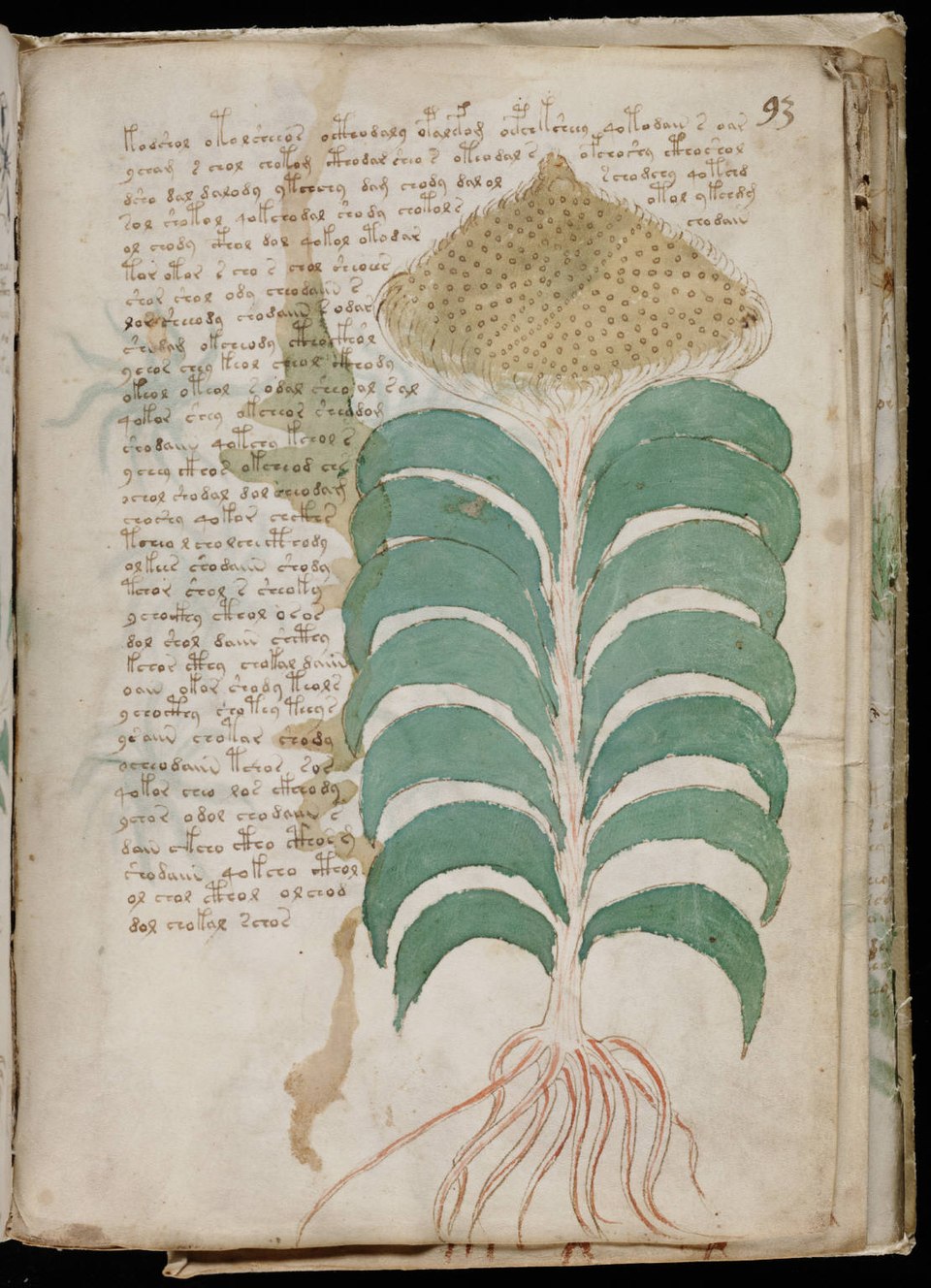
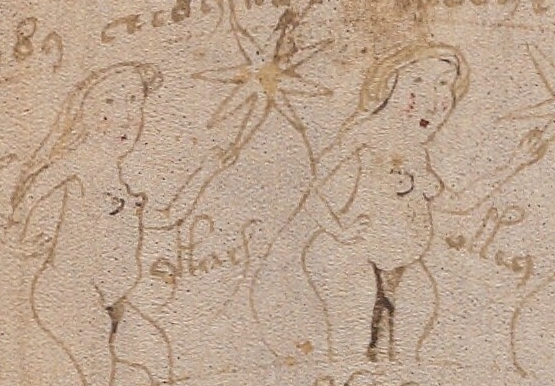
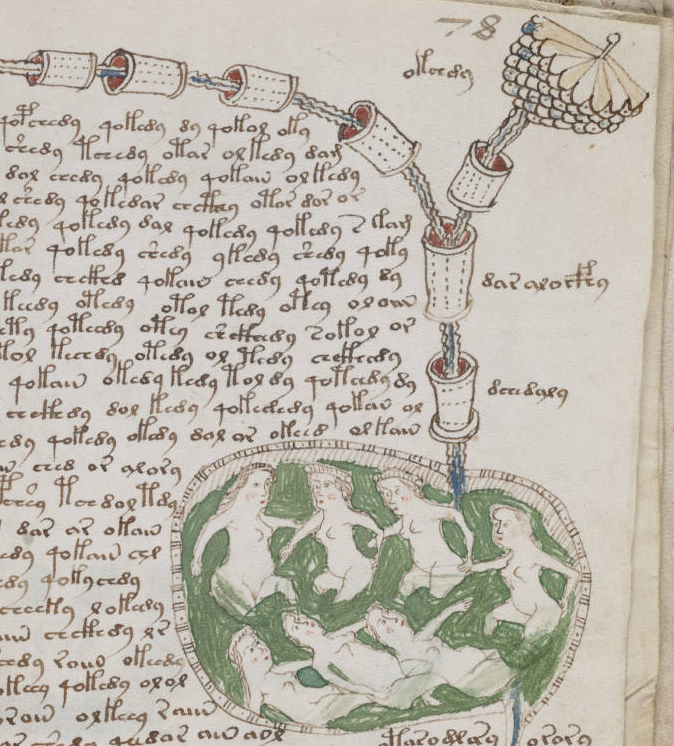
Deep inside the Beinecke Rare Book and Manuscript Library at Yale University sits a 15th-century codex that has baffled cryptographers, military codebreakers, and linguists for over a century. Consisting of roughly 240 pages, this volume is handwritten entirely in a baffling, unknown language and is filled with bizarre illustrations of fictitious plants, nude figures bathing, astrological drawings, and dragons.
Since a Polish book dealer acquired the text in 1912, no one has been able to decipher a single word of what is now known as the Voynich Manuscript. The manuscript holds secrets that span from a Siberian work camp escapee to a Holy Roman Emperor, presenting a puzzle that remains unsolved to this day.
A Revolutionary Book Dealer Discovers a Rarity
The manuscript bears the name of Wilfrid Voynich, a man with a tumultuous past. Born Michał Habdank-Wojnicz in 1865, he was arrested by Russian police in 1885 for his revolutionary activities and sent to a Siberian work camp.
Voynich escaped in 1890, eventually settling in London where he opened an antique bookstore in 1898. In 1912, a group of Jesuits from Italy’s Ghislieri College began auctioning library books, and Voynich acquired several volumes, including the strange, heavily illustrated codex.
The Unbreakable Code of “Voynichese”
Following Voynich’s death, the book passed through several hands before antique dealer Hans P. Kraus donated it to Yale University in 1969. Cataloged as “MS 408,” the thick codex features fold-out diagrams and a completely unidentified script dubbed “Voynichese”.
Scholars have proposed numerous theories regarding the text’s contents. Some researchers argue it is a women’s health manual, while others suggest it is a strange adaptation of Turkish, Hebrew, or Latin. Conversely, physicist Andreas Schinner applied statistical analytics to the text and concluded it was merely a random string of characters, proposing the manuscript is an elaborate medieval hoax.
Tracing the Imperial Origins
While the language remains unread, modern analysis has uncovered details about the book’s physical history. Radiocarbon dating confirmed the manuscript was created in the early 1400s, ruling out the possibility that Voynich forged the item himself.
In 2023, researcher Stefan Guzy investigated a 17th-century cover letter from royal doctor Johannes Marcus Marci to Jesuit scholar Athanasius Kircher. By analyzing imperial account books, Guzy traced the manuscript to Holy Roman Emperor Rudolf II, who purchased a collection of texts for 600 gold coins between 1576 and 1612 from a physician named Carl Widemann.
A Puzzle Available to the World
Despite uncovering the manuscript’s imperial ownership, the trail of its true author remains completely dark. In 2020, Yale University uploaded the entire Voynich Manuscript to its online digital library. For the first time in over 600 years, the complete 240-page document is fully accessible to anyone on the planet, waiting for someone to finally crack the code.