
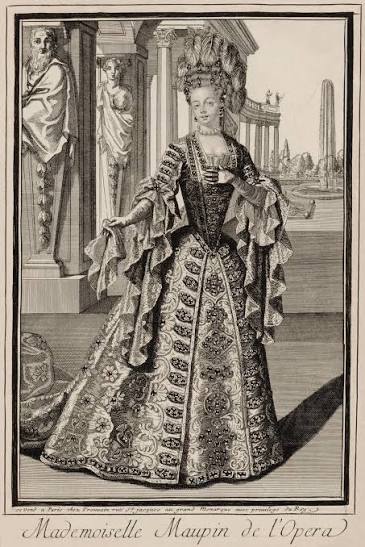
In 17th-century France, a teenager disguised in men’s clothing broke into a convent, stole a deceased nun’s body, and set a room ablaze to escape with the woman she loved. This was a real chapter in the life of Julie d’Aubigny, known in the theaters of Europe as Mademoiselle Maupin.
From crossing swords with noblemen in midnight street fights to performing at the Paris Opera, d’Aubigny lived a life of constant, unpredictable action. Her highly documented historical account through deadly duels, daring escapes, and musical stardom reads like an adventure novel, yet every detail actually happened.
A Childhood Forged by the Sword
Born in 1673, Julie d’Aubigny grew up in the court of King Louis XIV. Her father trained the court pages and took charge of her education. He taught her traditional academic subjects alongside extensive fencing training. By age 12, she gained a high level of competence with a blade and successfully competed against men.
At 14, she became the mistress of Louis de Lorraine, Count d’Armagnac. In 1687, the Count arranged her marriage to the Sieur de Maupin. Her new husband was promptly sent to southern France for an administrative position, while she was kept in Paris.
Duels, Disguises, and a Convent Escape
That same year, d’Aubigny fled Paris with Séranne, an assistant fencing master wanted by police for killing a man in an illegal duel. The couple survived by giving fencing exhibitions and singing in local taverns. Traveling in male clothing, d’Aubigny joined a Marseille opera company.
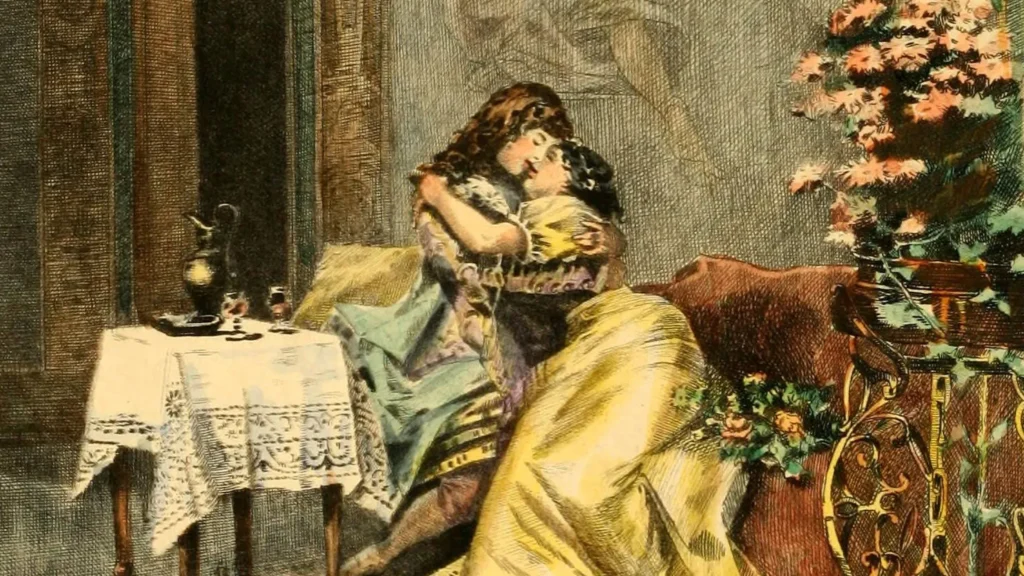
She began a relationship with a young woman whose parents quickly intervened by sending her to a convent in Avignon. D’Aubigny followed, entering the facility as a postulant. To escape together, d’Aubigny stole a dead nun’s body, placed it in her lover’s bed, and started a fire. The plot was uncovered, and a tribunal sentenced d’Aubigny in absentia to death by burning.
Center Stage at the Paris Opera
Evading the authorities, d’Aubigny headed to Paris. Along the way, she met the Comte d’Albert, who mistook her for a man. They duelled; d’Aubigny won, wounded him, and then nursed him back to health. Reaching Paris, she successfully joined the Paris Opera, debuting in 1690.
Performing as Mademoiselle de Maupin, she sang regularly, prompting the composer André Campra to write specific contralto roles for her in 1702. Throughout her operatic career, she wore male clothing in public and fought multiple duels, famously fighting three noblemen in a single evening after kissing a young woman at a ball.
Final Years and Seclusion
In the early 1700s, d’Aubigny lived with Madame la Marquise de Florensac. Following Florensac’s death in 1705, d’Aubigny permanently retired from the opera stage. She completely left public life and took refuge in a convent, remaining there until she died in 1707 at the age of 33.