
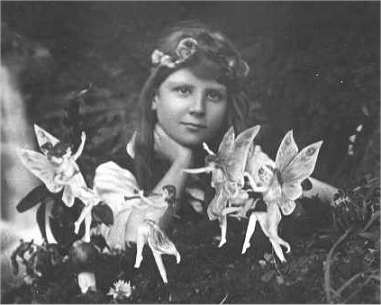
In the summer of 1917, two young cousins living in the English village of Cottingley borrowed a camera and returned with a photograph that captured the world’s attention. Nine-year-old Frances Griffiths and sixteen-year-old Elsie Wright presented an image showing Frances surrounded by dancing fairies.
Over the next four years, the girls produced a series of five photographs that ignited intense public debate, drew the attention of leading photographic experts, and completely convinced the famous author of Sherlock Holmes. The truth behind the creation of these images remained a closely guarded secret for over six decades.
Photographs by the Garden Stream
Frances and Elsie spent much of their time playing near Cottingley Beck, a stream at the bottom of the Wright family garden. When questioned by their mothers about returning with wet clothes, the girls stated they went there to see fairies. To back up their claim, they borrowed Arthur Wright’s Midg quarter-plate camera.
They returned with a photograph showing Frances behind a bush with four winged figures. Two months later, they took a second photo showing Elsie holding out her hand to a gnome measuring exactly 1 foot (30 centimeters) tall. Arthur Wright dismissed the pictures as cardboard cutouts and refused to lend them the camera again.
Expert Examinations and Spiritualist Beliefs
Elsie’s mother, Polly Wright, believed the photographs were authentic. In 1919, she showed them at a Theosophical Society meeting in Bradford. The images quickly reached Edward Gardner, a leading member of the society. Gardner took the negatives to Harold Snelling, a photography expert, who declared them to be straightforward, unfaked photographs of whatever was in front of the lens.
Gardner and others sought further verification from Kodak, whose technicians stated the pictures showed no signs of tampering but declined to issue a certificate of authenticity. Another company, Ilford, reported evidence of faking.
Sir Arthur Conan Doyle Enters the Scene
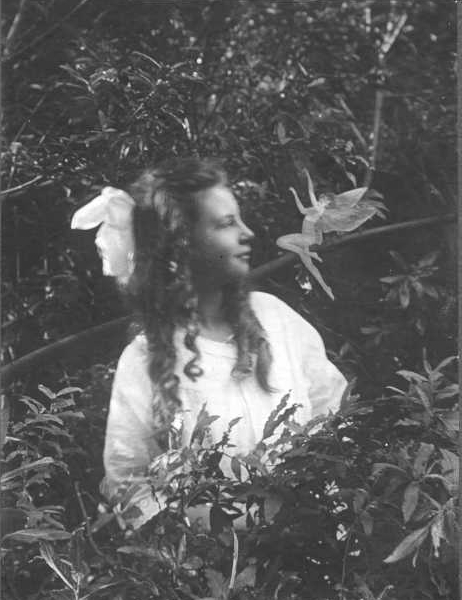
Sir Arthur Conan Doyle learned of the photographs in 1920. He was writing an article about fairies for The Strand Magazine and contacted the Wright family for permission to use the images. In July 1920, Gardner traveled to Cottingley with two new cameras and secretly marked photographic plates.
The girls were left alone and produced three more pictures. Doyle published his article in December 1920, presenting the photographs as physical facts. The publication sold out rapidly, and public reaction was heavily divided.
The 1983 Cardboard Confession
Public interest peaked and eventually subsided after 1921. In 1983, Elsie and Frances publicly admitted that they had faked the images. They explained that they had copied fairy illustrations by Claude Shepperson from a 1914 publication called Princess Mary’s Gift Book.
Elsie added wings to the drawings, and the girls cut out the cardboard figures. They used hatpins to prop the paper fairies up in the grass and disposed of the props in the stream after taking the pictures. While Elsie stated all five photographs were fakes, Frances maintained until her death that the fifth and final photograph was genuine.