
In April 1912, an allegedly unsinkable British ocean liner traveling at 23.6 miles per hour collided with a massive block of ice in the freezing waters of the North Atlantic Ocean.
The catastrophic impact tore open the ship’s starboard side, sending roughly 1,500 people to the ocean floor in less than three hours. The frozen object responsible for this maritime disaster did not just appear overnight. The iceberg that sank the RMS Titanic took a 15,000-year journey across the globe to reach that exact coordinate.
Born on the Ilulissat Ice Shelf
The formation of the Titanic iceberg began approximately 15,000 years ago. Snow fell over sheets of ice in modern-day Greenland, eventually compacting into a solid glacier that slowly moved toward the coast. In 1909, the same year the White Star Line began building the RMS Titanic in Belfast, the iceberg broke off into the ocean.
Experts identify its origin as the Ilulissat ice shelf. It drifted north toward the North Pole before the Labrador current dragged it south. Most icebergs melt within two years, and between one and four percent pass through the warmer waters of the Gulf Stream. This specific iceberg continued south, arriving off the coast of Newfoundland by the spring of 1912.
Ignored Warnings and a Midnight Collision
On April 10, 1912, Captain Edward Smith guided the Titanic out of Southampton, England, carrying an estimated 2,240 passengers and crew members. Four days into the maiden voyage, other vessels, including the SS Californian and the SS Mesaba, sent telegrams warning the Titanic about dangerous ice in the shipping lanes.
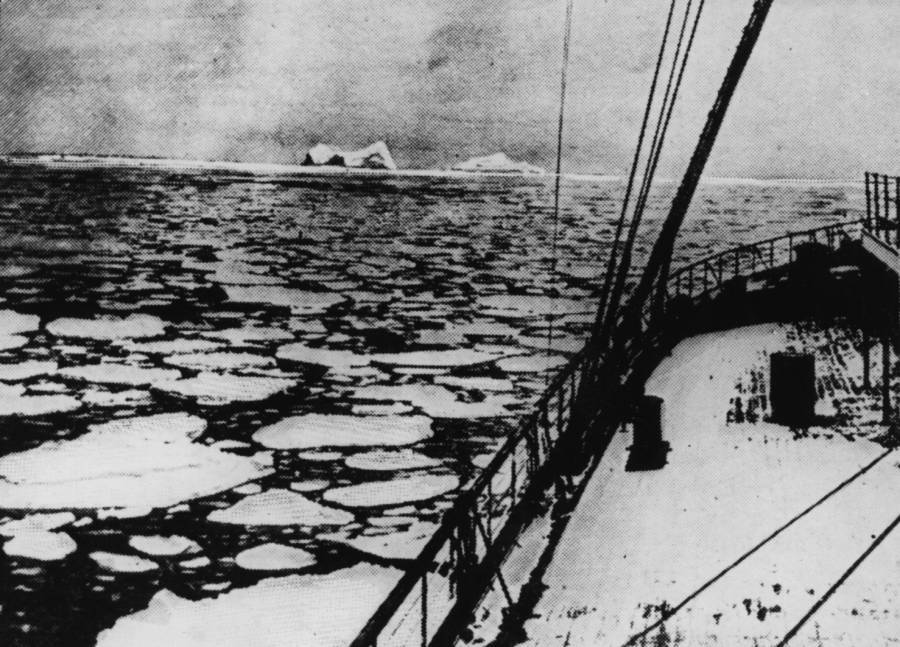
The busy radio operator, overwhelmed with telegrams, reportedly responded, “Shut up! I am busy.” At 11:39 p.m., a lookout named Frederick Fleet spotted the 50-to-100-foot-tall, 400-foot-long ice mass. Less than a minute later, the speeding ship struck the ice. Modern research indicates low-quality rivets and a coal fire may have worsened the damage. Over the next two hours and forty minutes, the vessel sank. Only 706 people survived.
The Photographs and the Final Melt
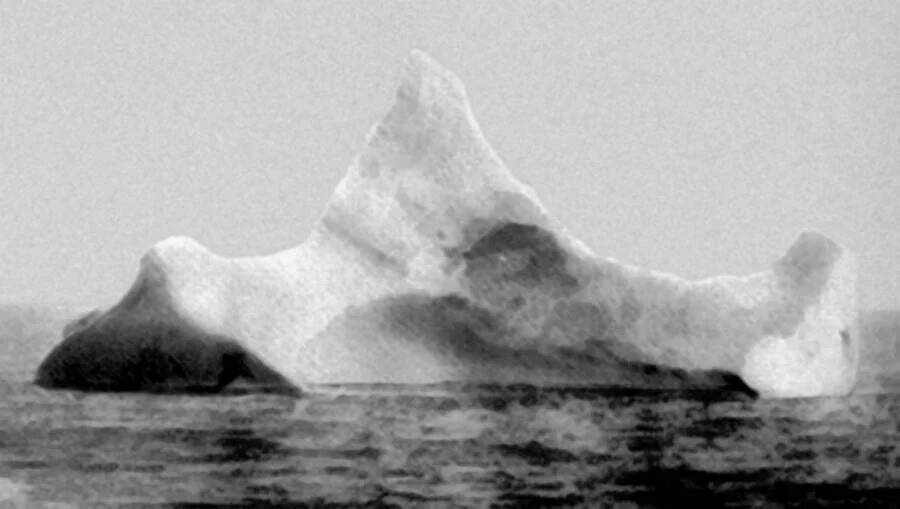
Days later, the German steamer Bremen arrived at the debris field. Passengers saw bodies and wreckage floating near the iceberg. A man named Stephan Rehorek photographed the ice mass, which matched a survivor’s description of it looking like the Rock of Gibraltar.
Several more possible photos of the iceberg exist, but people would not document it for long. While the Titanic sank 13,000 feet below the surface, the iceberg continued to float. Encountering warm ocean temperatures, the massive block of ice melted completely into the sea about two weeks after the disaster. Following the event, world leaders established the International Ice Patrol to monitor sea lanes for identical threats.