
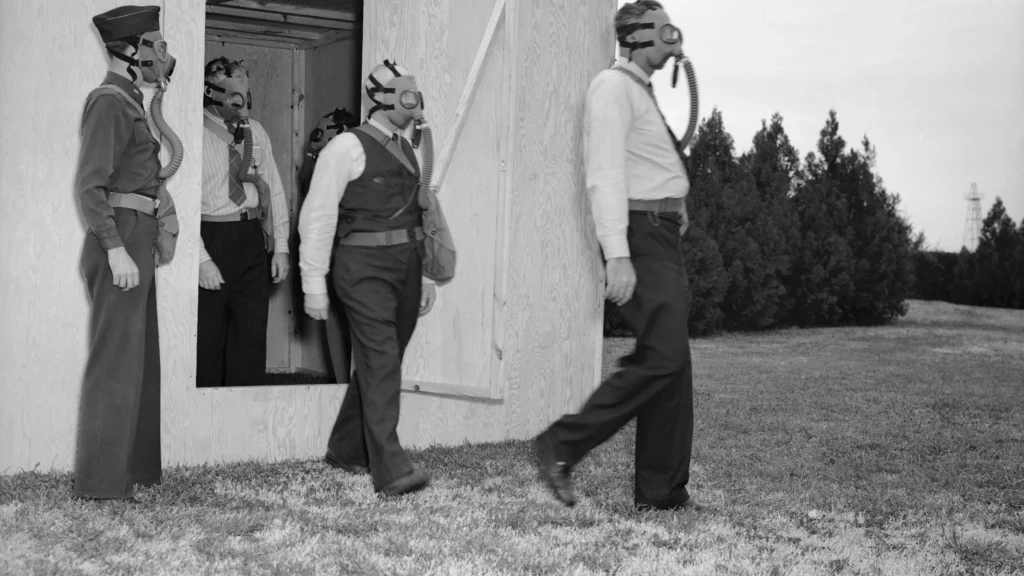
In the late summer of 1944, the town of Mattoon, Illinois, became the center of a baffling series of events. Over a span of two weeks, more than two dozen residents reported being paralyzed by strange, sweet-smelling gases pumped into their homes in the dead of night.
Victims woke up to bouts of coughing, nausea, and vomiting, while the suspected assailant vanished. Fortunately, no one died or suffered serious medical consequences. The frantic search for this phantom attacker gripped the town, pitting terrified citizens against skeptical police forces. Was there a man prowling the streets with a spray gun, or did panic consume the community?
The First Strange Odors
The first recorded event occurred on August 31, 1944. Urban Raef woke up early in the morning feeling weak and nauseated after smelling a strange odor. His wife attempted to check the kitchen stove for a pilot light issue but found herself partially paralyzed and unable to leave her bed.
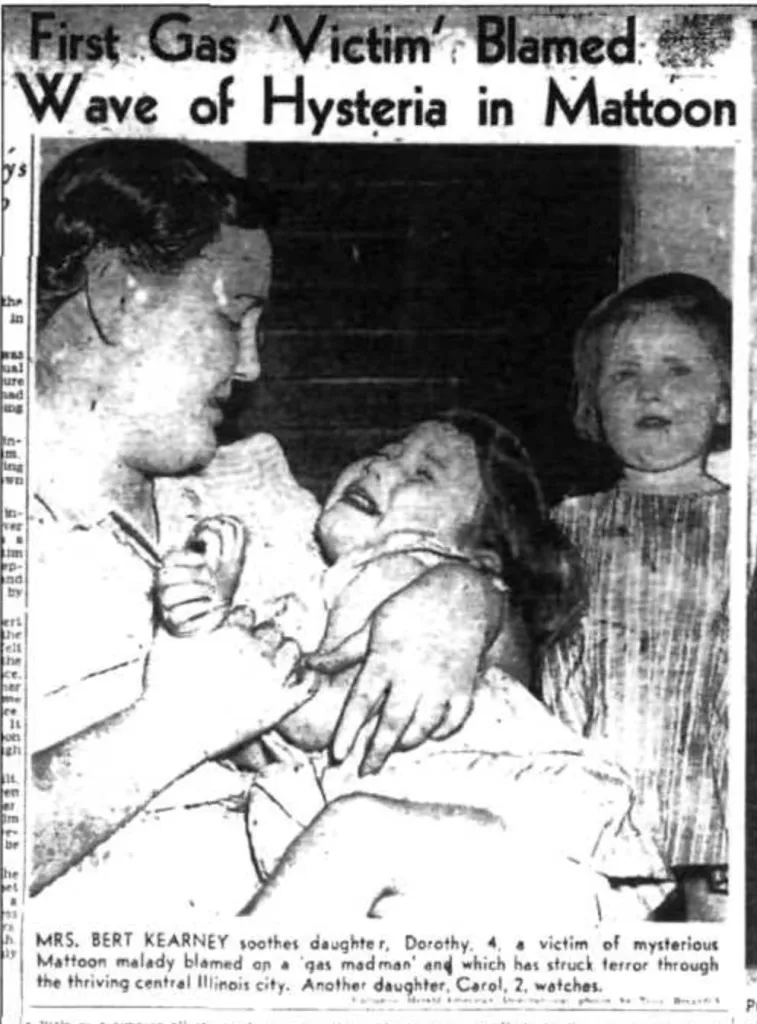
The following night, Aline Kearney reported smelling a strong, sweet odor outside her window. She began to lose feeling in her legs, prompting her sister to call the police. Her husband, Bert Kearney, returned home later to find a tall, thin man in dark clothing hiding near their window. The man fled, but this specific description soon dominated local media reports.
Panic and Physical Evidence
In the days following the Kearney incident, a surge of similar reports flooded the police department. On September 5, Beulah Cordes discovered a white cloth on her porch. Upon smelling it, she experienced an effect similar to an electric shock, followed by a burning sensation in her throat and temporary leg paralysis.
A used skeleton key and an empty lipstick tube were found nearby. As reports escalated, terrified residents formed armed groups known as chasers to hunt down the suspect. This widespread panic forced the police to arrest some chasers to prevent civilians from getting accidentally shot.
Industrial Waste or Mass Hysteria?
By September 12, the police had received so many false alarms that they reduced the priority of these emergency calls. Police Chief C. E. Cole stated that the symptoms were likely caused by carbon tetrachloride or trichloroethylene, toxic chemicals carried on the wind from local industrial plants.
The Atlas-Imperial factory denied these claims, stating their workers would have fallen ill first. Thomas V. Wright, the Commissioner of Public Health, announced that the town was sick with hysteria. Following these statements, reports of the attacks rapidly declined. In 1945, researcher Donald M. Johnson published a study classifying the Mattoon events as an outbreak of mass hysteria.