
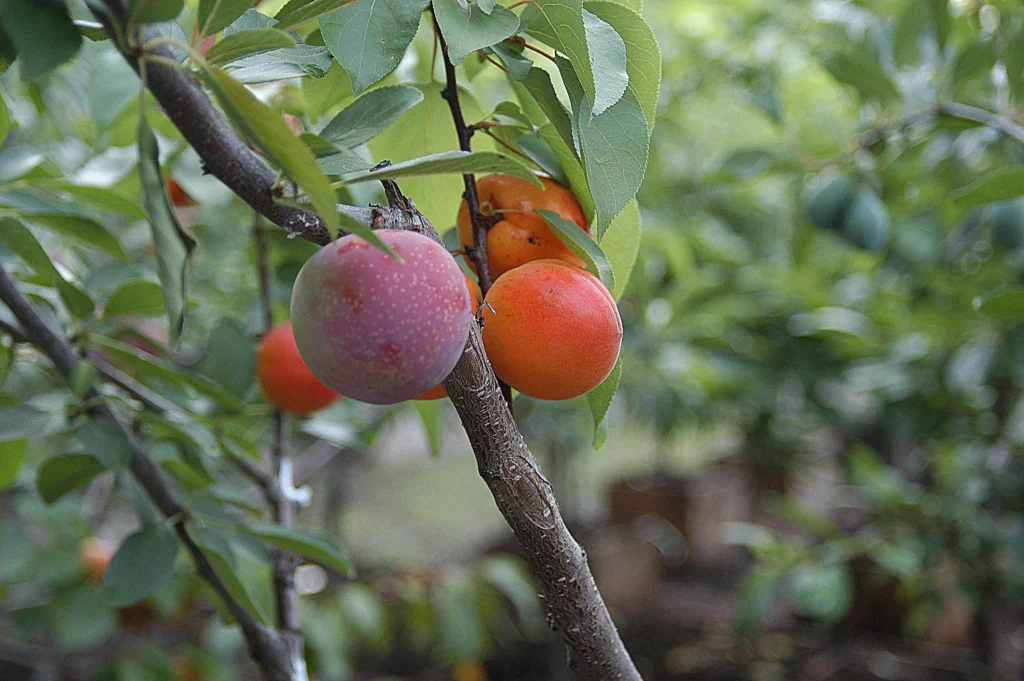
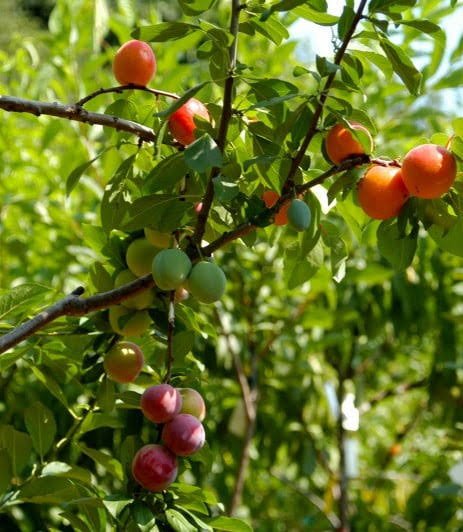
A single tree blossoms into a patchwork of pink, crimson, and white flowers every spring. By summer, its branches do not yield just one harvest. Instead, this single trunk produces peaches, plums, apricots, nectarines, cherries, and almonds simultaneously.
This plant is a verifiable botanical reality that exists in multiple locations across the United States. Known as the Tree of 40 Fruit, it is the result of a precise agricultural technique and the effort of a university professor who worked to consolidate hundreds of rare stone fruit varieties.
Saving Rare Stone Fruit Varieties
The project began in 2008. Sam Van Aken, an art professor at Syracuse University, learned that an orchard at the New York State Agricultural Experiment Station was slated for closure due to funding cuts. This specific orchard housed hundreds of antique and native varieties of stone fruits, many of which were no longer grown commercially.
To prevent the loss of these specific plant variations, Van Aken purchased the lease to the orchard. His solution to preserving the different fruit varieties was to merge them onto a single root system.
The Agricultural Process Of Chip Grafting
To construct the tree, Van Aken utilized a centuries-old horticultural method known as chip grafting. This process involves taking a sliver of a branch that includes a bud from one of the heirloom fruit trees. Van Aken then makes a matching incision into the branch of a rootstock tree, often a sturdy plum or peach variety.
He tapes the new bud tightly into the cut and leaves it to heal through the winter. As the tree heals, the vascular systems of the two plants fuse. By the following spring, the grafted branch grows as a natural part of the host tree, producing the exact fruit of the original donor plant.
A Precisely Charted Harvest
Creating a single tree that holds 40 different varieties takes about five years of continuous grafting and pruning. Van Aken maps out each tree, charting when each specific variety blossoms and bears fruit. Because different stone fruits ripen at different times, the tree provides a continuous, rolling harvest from July through October.
The branches are arranged so the fruit production moves evenly across the canopy rather than weighing down one specific side.
Expanding The Botanical Project
Since the initial success of the first plant, Van Aken has produced over two dozen of these multi-fruit trees. They have been planted in public parks, community gardens, and museum courtyards across the United States, including locations in Arkansas, Kentucky, Maine, Massachusetts, New Jersey, New York, and Pennsylvania.
Each individual tree contains a different combination of stone fruits, specifically selected to thrive in the local climate where it is planted.