
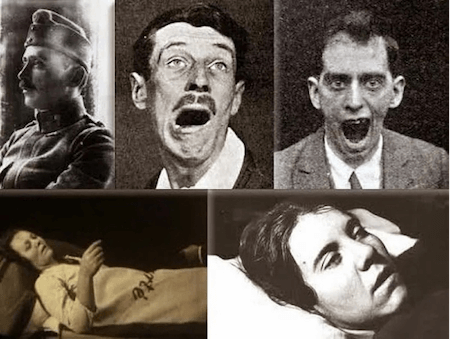
Between the mid-1910s and the 1930s, a terrifying neurological disease silently infected over one million people across the globe and killed an estimated 500,000 victims. Known as encephalitis lethargica or sleepy sickness, this illness swept through populations during the height of World War I and the 1918 Spanish flu pandemic.
Medical professionals found themselves completely helpless as patients developed erratic symptoms ranging from fevers to permanent paralysis. Many survivors were left frozen in statue-like states with active minds, creating one of the most baffling medical mysteries in history.
The Emergence of a Mysterious Disease
Austrian neurologist Constantin von Economo first identified the illness in 1917 after examining patients in Vienna who displayed extreme lethargy alongside conflicting neurological symptoms. Around the same time, French physician Jean-René Cruchet reported similar cases among military patients in France.
Approximately one-third of those infected died during the acute phase, primarily from respiratory failure caused by neurological dysfunction. Because the outbreak coincided with the Spanish flu pandemic, researchers initially suspected a connection between the H1N1 virus and encephalitis lethargica, but no direct link was ever proven.
Victims Trapped Inside Statue-Like Bodies
While one-third of infected individuals recovered without complications, another third suffered a far more devastating long-term fate. Months or even decades after their initial infection, these survivors developed post-encephalitic parkinsonism.

This irreversible condition left victims with rigid muscles, immobile faces, and an inability to speak or move normally. Though entirely incapable of interacting with the world, their conscious minds remained awake and functional. Decades later, neurologist Oliver Sacks treated patients with the drug Levodopa, triggering temporary awakenings before severe side effects forced doctors to stop.
Disturbing Personality Changes in Children
The disease produced particularly strange effects when it infected children between five and ten years old. Young victims underwent drastic personality changes, displaying extreme restlessness, lying, and violent outbursts. As these children reached adolescence, their impulsive behavior worsened into acts of cruelty and self-mutilation.
Patients frequently expressed genuine remorse for their destructive actions, explaining that uncontrollable physical impulses drove their behavior. Eventually, many of these individuals also developed chronic parkinsonism, locking them into physical immobility.
An Unexplained Medical Disappearance
Medical literature recorded around 80 different experimental treatments by 1929, yet none proved effective at stopping the illness. Then, as suddenly as it had arrived, the global epidemic began to dwindle in the late 1920s. Fewer than 80 scattered cases have been published worldwide since 1940.
To this day, scientists have never discovered the origin or cause of encephalitis lethargica, leaving the disease without a known cure.