
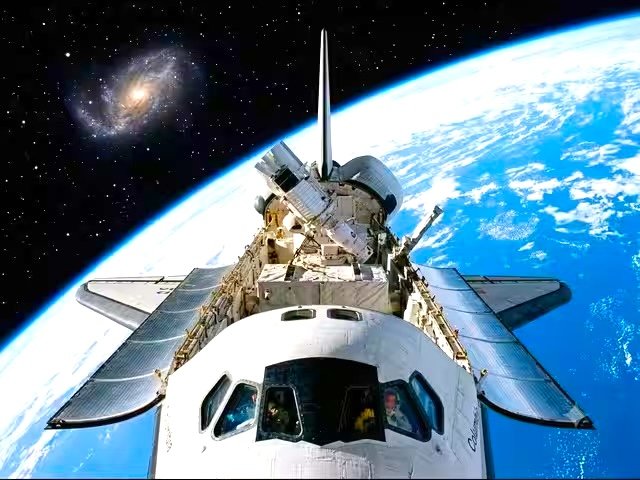
In 1991, the NASA Space Shuttle Columbia launched into orbit at an altitude of roughly 175 miles (282 kilometers), carrying almost 2,500 highly unusual passengers sealed in bags of artificial seawater. Scientists sent moon jelly polyps into a microgravity environment for a nine-day mission to observe their biological development.
When the shuttle finally landed back on Earth, the initial population had exploded to 60,000 marine animals. The results of their return trip revealed exactly what happens to a living organism when it grows up completely isolated from the gravitational pull of our planet.
A Shared Biological Trait
While marine invertebrates look nothing like human astronauts, the two species share a specific biological mechanism for navigating their surroundings. Jellyfish rely on statoliths, which are gravity-sensing organs located on their main body. These organs contain calcium sulfate crystals surrounded by a pocket of specialized hair cells.
When a jellyfish turns in the water, the crystals roll and trigger the hairs to send signals to neurons, telling the animal which way is up. Humans possess a nearly identical orientation system in the inner ear utilizing calcium carbonate structures. Researchers wanted to know if this gravity-enabled system would form correctly without Earth’s gravity.
Floating in the Incubator
Led by Dorothy Spangenberg, the Jellyfish-in-Space Experiment started at the Kennedy Space Center. The team packed 2,478 healthy Aurelia aurita polyps into the shuttle. Throughout the nine-day mission, these polyps stayed inside a temperature-controlled incubator. Astronauts on board worked to accelerate their growth.
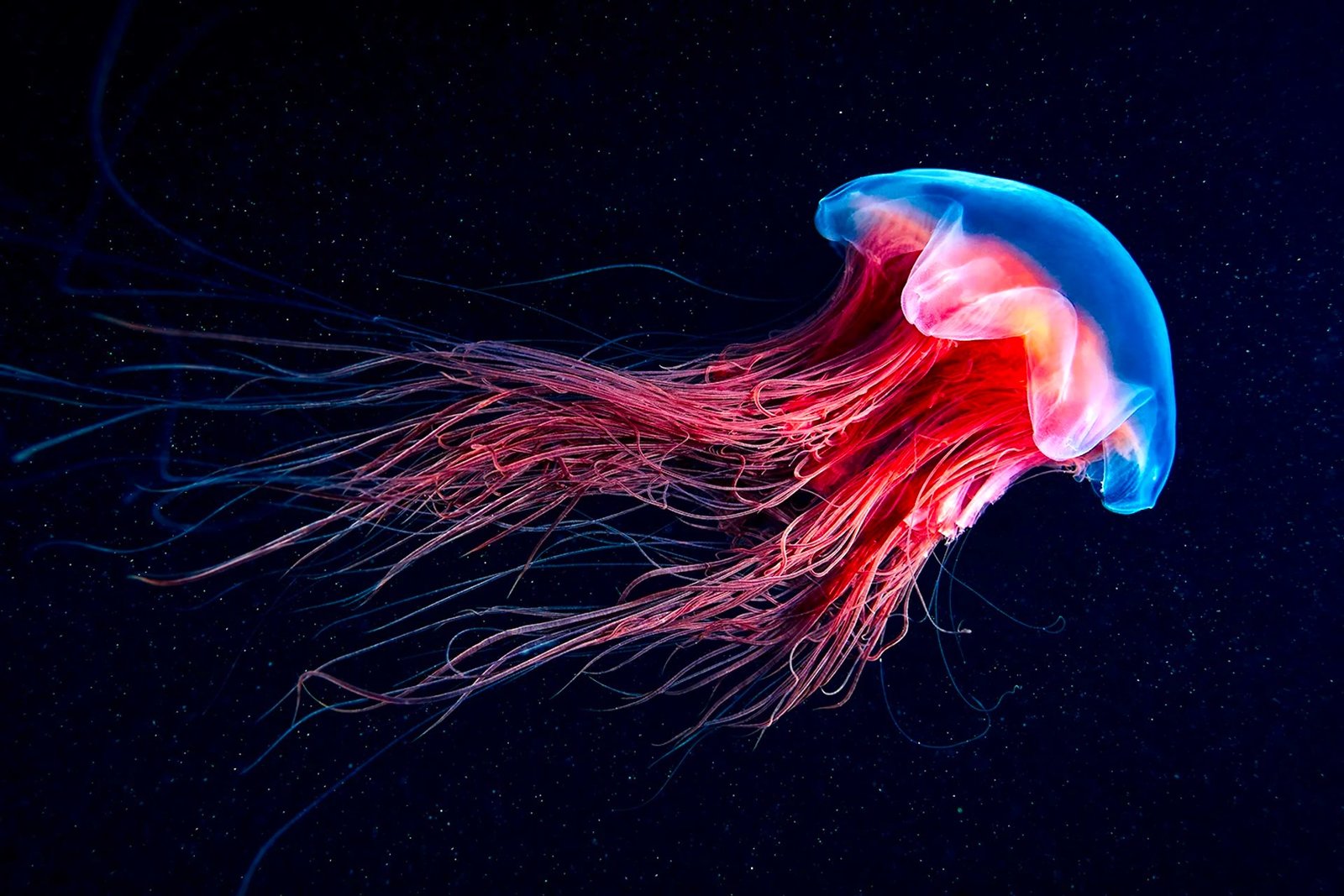
While they orbited, scientists kept a control group of jellyfish on the ground under identical temperature conditions. The organisms in space developed rapidly, producing around 60,000 fully formed jellyfish before the shuttle made its descent.
A Dizzying Return
Under microscopes, the space jellies looked normal. They possessed the exact same number of limbs and the identical physical structure as the control group on Earth. However, returning to normal gravity proved highly disorienting for the animals. The space-developed jellyfish suffered from severe vertigo and struggled to swim.
Researchers observed pulsing abnormalities in 18.3 percent of the space jellies, compared to just 2.9 percent of the ground control group. The gravity-sensing crystals had formed in space, but the animals’ neuromuscular systems could not process the sudden heavy pull of Earth.
Life Cycle Alterations
The microgravity environment triggered other biological changes during the flight. Male space jellies exhibited a slightly shorter lifespan than their earthly counterparts. Furthermore, the number of embryos that successfully hatched during the mission decreased.
The 60,000 jellyfish that arrived back on the ground had developed the physical tools needed for orientation, yet their complete inability to function under normal gravitational pressure provided direct data on the biological mechanics of development in low-Earth orbit.