
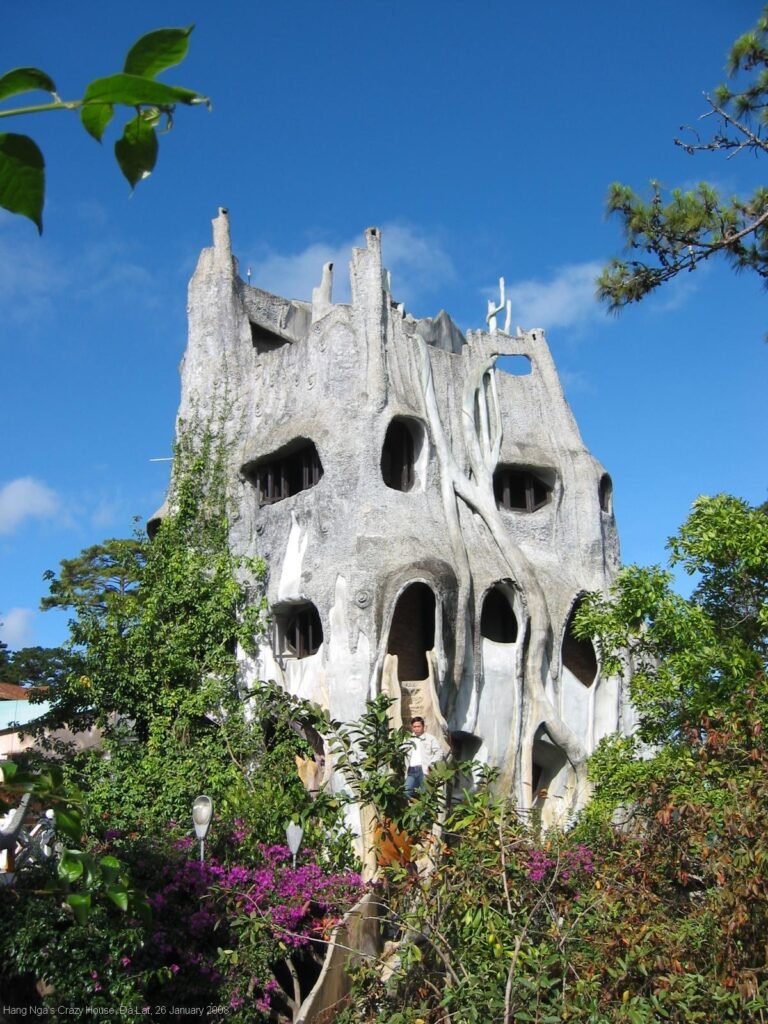
In the central highlands of Vietnam stands a bizarre concrete structure shaped like a giant banyan tree, complete with spiderweb windows, cave corridors, and glowing animal eyes. Built without conventional blueprints and fiercely opposed by local authorities, the Hằng Nga guesthouse in Đà Lạt gained worldwide attention for its eccentric form.
Designed by architect Đặng Việt Nga, the unconventional project pushed its creator into deep financial debt, triggered years of bureaucratic standoffs, and ultimately secured approval from the nation’s highest officials.
Painting Blueprints and Rejecting Right Angles
Đặng Việt Nga, daughter of former Vietnamese leader Trường Chinh, earned her doctorate in architecture from the University of Moscow. When constructing her personal project in Đà Lạt, she abandoned standard architectural plans. Instead, Nga created paintings and hired non-professional local craftsmen to transform her canvas designs into concrete structures.
The five-story exterior features uneven window openings and concrete branches that wrap around walls and stretch past the roof. Lacking traditional right angles, the organic design drew inspiration from Catalan architect Antoni Gaudí and Đà Lạt’s natural landscape.
Inside the Ten Themed Animal Rooms
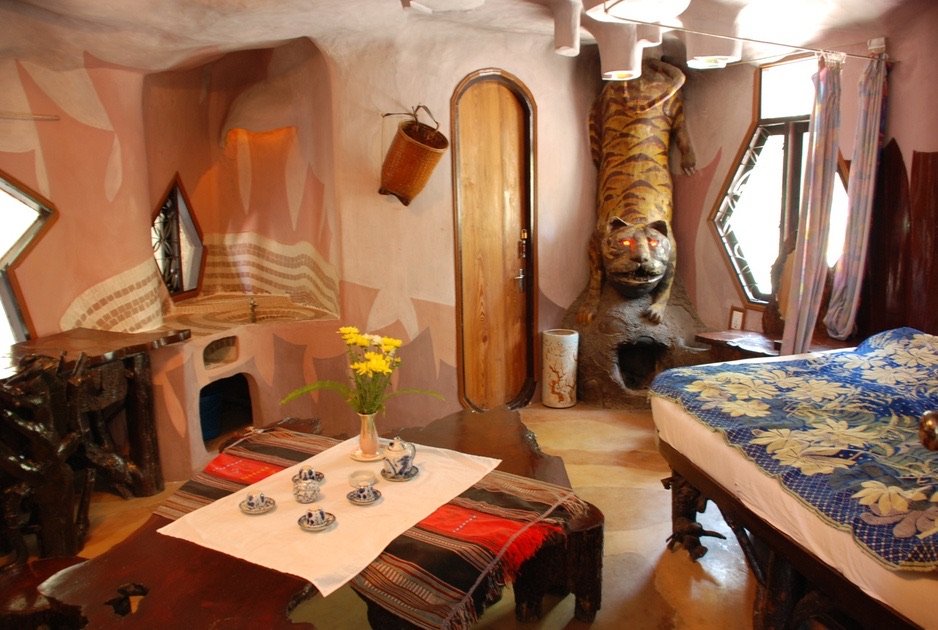
The guesthouse features ten themed rooms, each centered on a specific creature with built-in furniture molded directly into nonlinear walls. The tiger room showcases a sculpted feline with glowing red eyes. The kangaroo room incorporates a fireplace set inside the animal’s belly, while the eagle room features a fireplace shaped like an enormous egg. Nga connected each room to national characteristics, linking the tiger to the strength of the Chinese, the eagle to the power of Americans, and the ant to the hard work of the Vietnamese.
Debt Troubles and Commercial Opening
Constructing the sprawling organic complex created severe financial strain, leaving Nga with over 30 million Vietnamese dong in debt. To alleviate this burden, she converted the private house into a commercial guesthouse in late 1990. Early visitors nicknamed the building the “Crazy House,” a moniker Nga soon adopted.
By January 2020, entry fees reached 60,000 VND per visit, with room rates ranging from 290,000 to 630,000 VND for domestic travelers and 29 to 63 US dollars for foreign guests.
Local Resistance and National Approval
The unusual structure sparked immediate controversy. The Đà Lạt People’s Committee opposed the project for years, rejecting Nga’s building proposals over concerns regarding structural integrity, safety, and its ad-hoc design. Funded by loans from friends and family, Nga continued her work.
She eventually petitioned the national government in Hanoi, securing official endorsement to continue construction without local restrictions. In 2009, the Chinese People’s Daily named the property one of the world’s ten most bizarre buildings.