
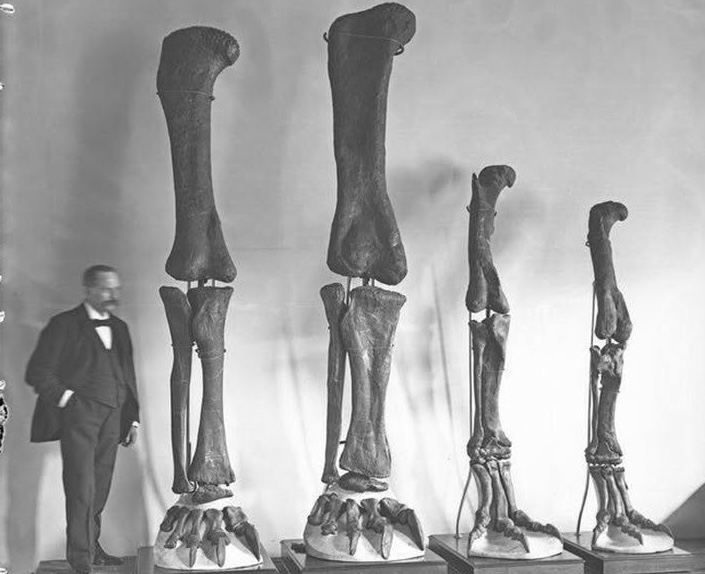
In the late 19th century, the American West became the battleground for a ruthless scientific conflict that featured dynamite, bribery, and destroyed fossils. Two wealthy paleontologists engaged in a decades-long feud to claim paleontological supremacy, exhausting their massive fortunes in a bitter race to unearth the largest prehistoric creatures.
This fierce competition, known as the Bone Wars, initiated a massive excavation effort across Wyoming, Colorado, and Nebraska, ending only when both men were completely penniless.
A Scientific Friendship Turns Sour
Edward Drinker Cope from the Academy of Natural Sciences and Othniel Charles Marsh from Yale University actually began their careers amicably, even naming species after one another after meeting in Berlin in 1864. However, their relationship rapidly deteriorated.
The tension escalated when Marsh publicly humiliated Cope by pointing out a severe anatomical error in Cope’s reconstruction of the Elasmosaurus, noting that Cope had accidentally placed the creature’s skull on its tail. In retaliation, Cope began hunting in Marsh’s established digging sites.
Spies, Bribes, and Smashed Fossils
By 1877, the discovery of massive bone beds at Como Bluff, Wyoming, ignited an all-out excavation frenzy. Marsh and Cope heavily funded separate field teams, leading to extreme tactics. Workers from both camps regularly spied on each other, stole workers, and intercepted mail.
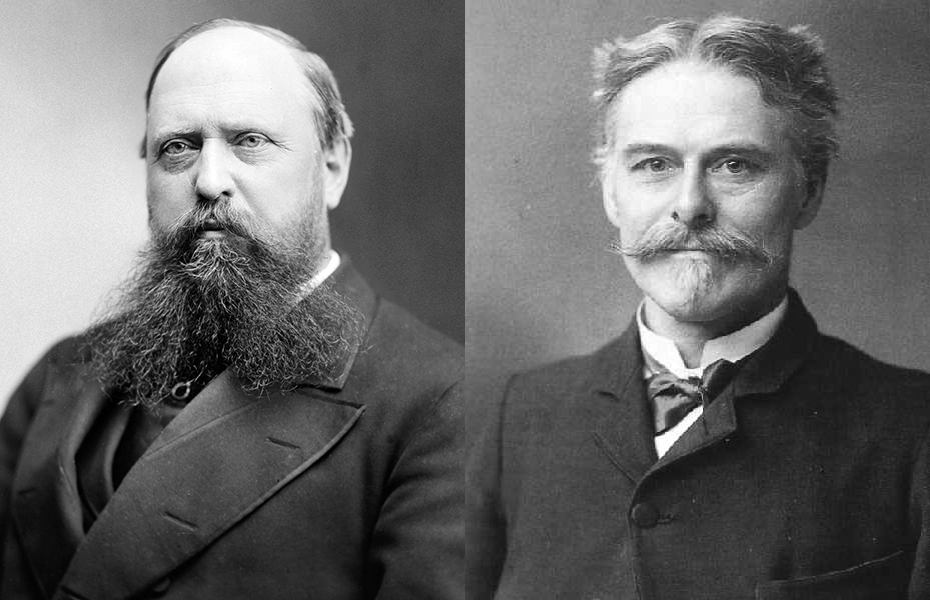
When digging sites dried up or faced the threat of discovery by the rival camp, field crews smashed fossils and filled in quarries with dirt and rock to prevent the other side from acquiring the bones. On at least one occasion, competing digging crews threw rocks at each other.
The Feud Hits the Press
The battle eventually moved from the dirt quarries of the West to the newspapers of the East. In an attempt to destroy Marsh’s professional standing and cut off his federal funding, Cope enlisted a journalist to publish scandalous accusations in the New York Herald.
The articles accused Marsh of financial mismanagement and plagiarism. Marsh fired back with his own fierce rebuttals, keeping the public fight going for weeks. The public warfare shocked the scientific community and damaged both of their reputations.
The High Cost of the Dinosaur Rush
The Bone Wars concluded with the death of Cope in 1897. Both men had completely depleted their wealth. Cope was forced to rent out his home and sell parts of his collections, while Marsh had to mortgage his house and ask Yale for a salary. Despite their utter financial ruin, Marsh discovered 80 new dinosaur species, while Cope found 56.
Their intense competition directly produced the first discoveries of famous dinosaurs like the Stegosaurus, Triceratops, and Allosaurus, leaving behind thousands of unopened boxes of fossils.