
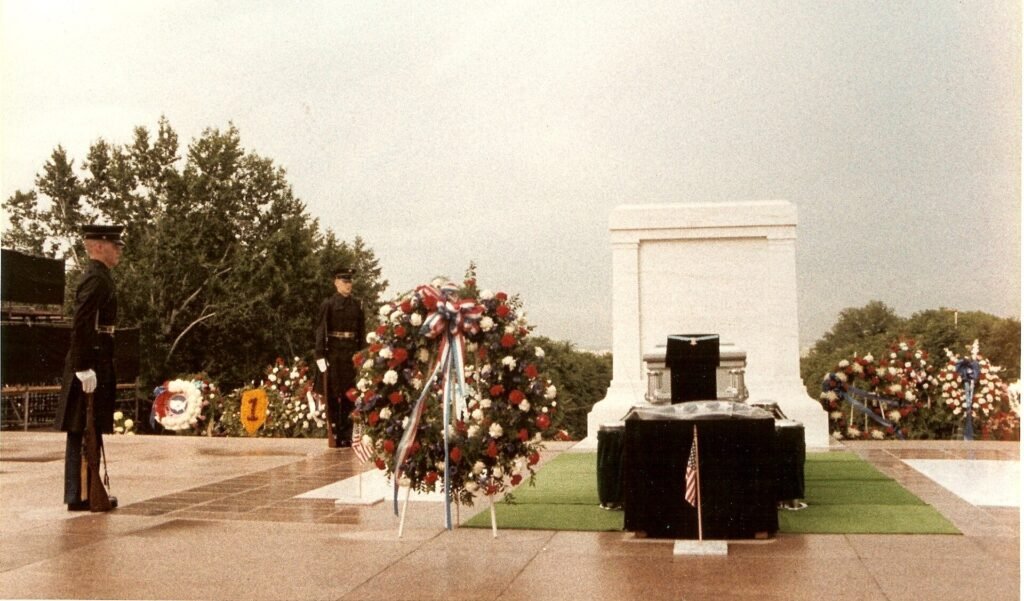
On November 11, 1921, a casket containing the unidentified remains of an American soldier from World War I was lowered into the ground at Arlington National Cemetery. Today, a massive marble block sits above that first grave, joined by the remains of unidentified service members from World War II and the Korean War.
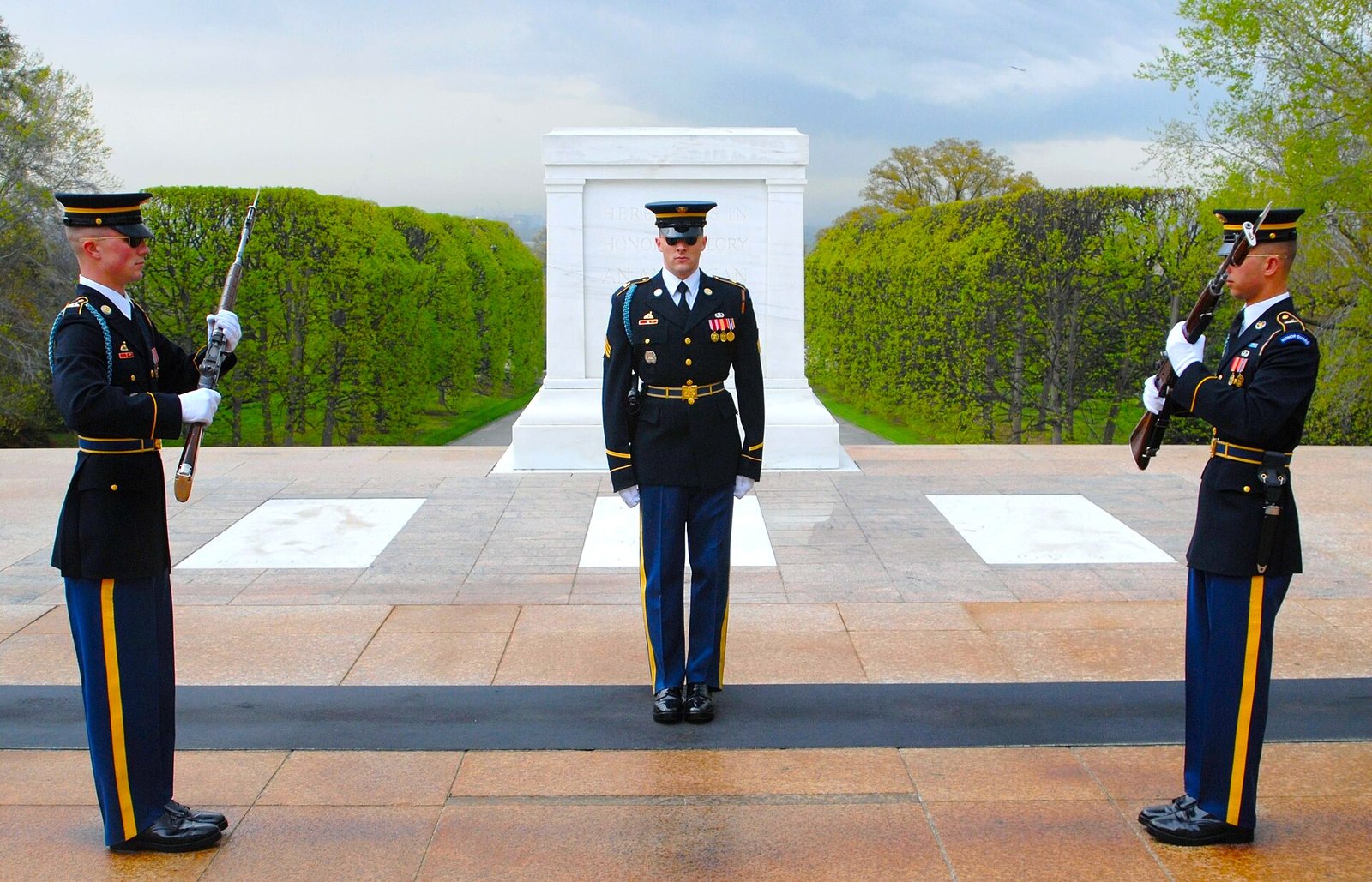
A lone sentinel walks a precise 21-step path across a rubber mat, turning exactly 21 seconds at a time. The site is never left unwatched. From the struggle to cut the heavy stone out of a Colorado mountain to the 24-hour patrol that has operated since 1937, the history of the Tomb of the Unknown Soldier is defined by precise actions and undeniable historical facts.
Moving a 56-Ton Marble Block
Congress approved a completed structure for the grave in 1926. Quarrying the Yule marble block for the center required three separate attempts in a Colorado mountain. Seventy-five men worked to separate a 124-ton piece of stone, which was cut down to 56 tons using a wire saw. The block was shipped to Vermont for fabrication.
Assembly at Arlington began in September 1931. The Piccirilli Brothers carved the stone under the direction of sculptor Thomas Hudson Jones.
Selecting the Unknown Soldiers
In 1921, Sergeant Edward F. Younger selected the World War I soldier by placing white roses on one of four caskets in France. In 1958, Navy Hospital Corpsman 1st Class William R. Charette selected the World War II soldier from two caskets aboard the USS Canberra.
Army Master Sergeant Ned Lyle selected the Korean War soldier in Hawaii. In 1984, a Vietnam War soldier was added. However, scientists used mitochondrial DNA testing in 1998 to identify those remains as First Lieutenant Michael Blassie. His remains were returned home, and the Vietnam crypt remains vacant.
The 24-Hour Guard Duty
A military watch began in 1926. Since midnight on July 2, 1937, the watch has operated continuously, 24 hours a day, without interruption. Soldiers from the 3rd U.S. Infantry Regiment conduct this duty.
Guards walk a 21-yard path in 21 steps, wait 21 seconds, and repeat the pattern. Sentinels wear shoes with metal plates to create a distinct clicking sound. Guards must pass a 100-question test and memorize 17 pages of cemetery history.
Repairing Decades of Marble Damage
A 1963 report documented horizontal cracking in the main block. By 1974, cracks extended 40 feet around the stone. Initial reports suggested replacing the monument completely.
Following objections from the National Trust for Historic Preservation and a congressional amendment in 2008, the U.S. Army Corps of Engineers decided to repair the existing stone instead. In October 2011, experts completed filling the cracks and announced the repair project a success.