
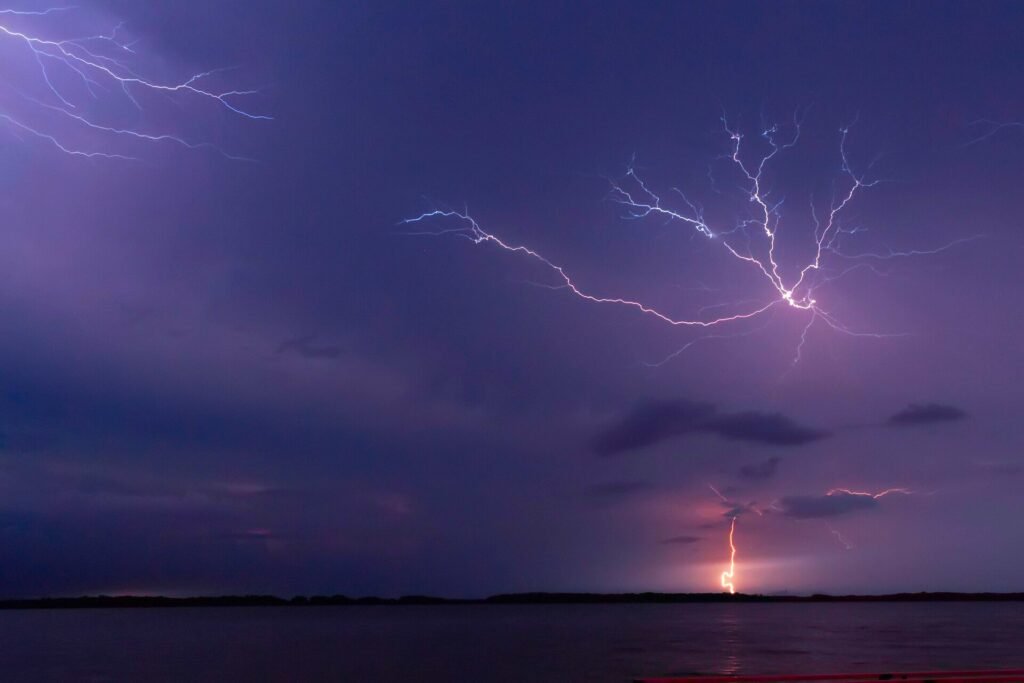
What if a thunderstorm never stopped? In one specific region of South America, the night sky erupts with up to forty flashes per minute, illuminating the darkness for nine hours a day, nearly one hundred and sixty nights a year.
This atmospheric event produces the highest concentration of electrical strikes anywhere on Earth. Located over a massive Venezuelan lake, this continuous storm baffled early explorers and modern researchers alike. Here is exactly how geographic conditions created the most electrifying location on the planet.
A Natural Navigation Beacon
Known locally as the “House of Thunder” in the language of the indigenous Barí people, the Catatumbo lightning occurs where the Catatumbo River flows into Lake Maracaibo. The flashes are so consistent that colonial Portuguese and Spanish sailors routinely relied on them to navigate the dark coastal waters.
Naturalists and geographers documented the massive storms in the nineteenth century, noting that the continuous bright flashes acted exactly like a lighthouse for approaching ships. The intense electrical storm originates from clouds positioned over one kilometer in the air.
Colliding Winds and Towering Mountains
The geographic layout of the Lake Maracaibo basin creates an environment designed for constant thunderstorms. Warm, humid winds blow across the massive lake and the surrounding swampy plains. This heat and moisture are forced directly into the high ridges of the Andes and the Perijá Mountains that enclose the plain on three sides.
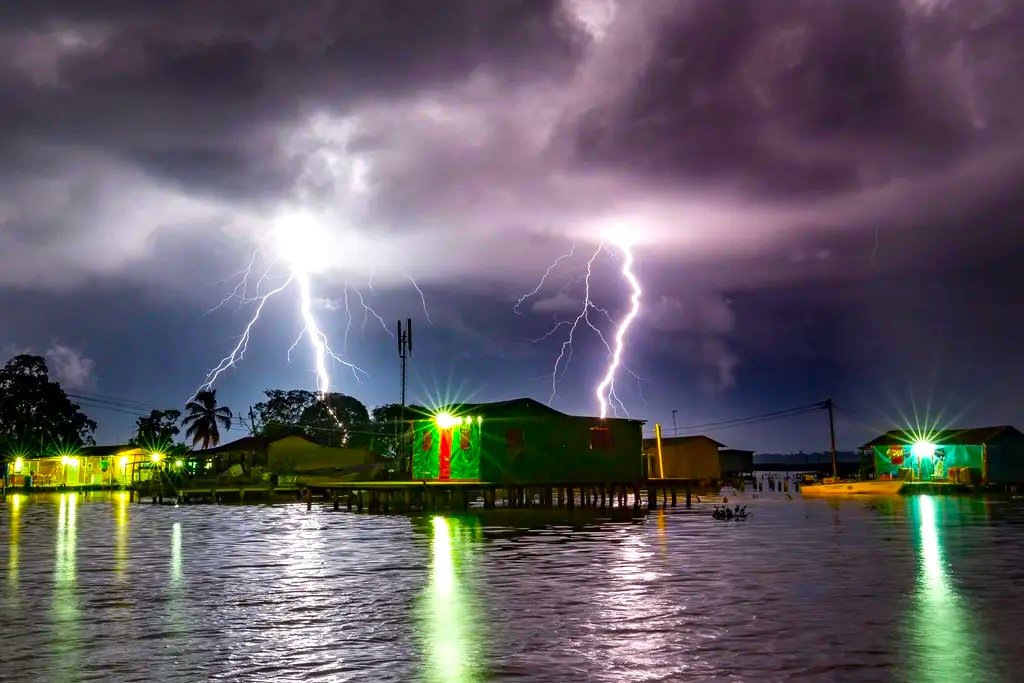
When these warm air masses collide directly with the mountain ridges, intense electrical charges form and instantly destabilize the atmosphere. During the summer months, this process even triggers dry lightning without producing any rainfall.
Investigating the Electrical Epicenter
For decades, researchers proposed various hypotheses to explain the sheer volume of strikes. In 1991, Russian researcher Andrei Zavrotsky mapped the storm epicenters and proposed that cold and warm air currents meeting around the area caused the phenomenon.
Later studies between 1997 and 2000 suggested that vast methane gas deposits from local bogs and oil fields fueled the flashes. However, meteorological data soon contradicted the methane model, as it did not match the observed seasonal variability of the strikes.
Modern Meteorological Forecasting
Today, scientists use satellite data and atmospheric variables to understand the phenomenon. Researchers found that the lightning’s variability is tied to the Inter-Tropical Convergence Zone, El Niño, and local winds. By analyzing the Lake Maracaibo Low-Level Jet, meteorologists can now successfully predict the lightning activity up to a few months in advance.
NASA confirmed the area sees around two hundred and fifty instances of lightning per square kilometer every year, confirming its status as a unique atmospheric anomaly.