
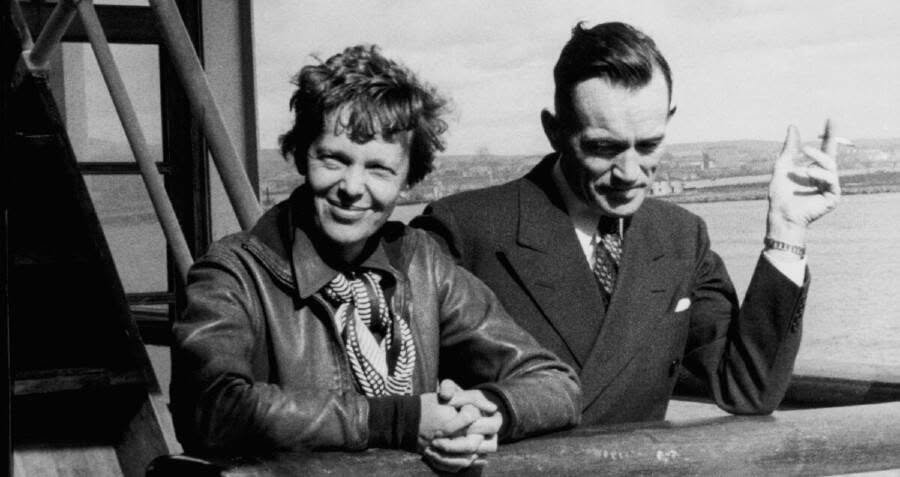
On July 2, 1937, a famous aviation journey ended in an unsolved mystery. A Lockheed Electra aircraft disappeared over the Pacific Ocean, taking pilot Amelia Earhart and her navigator. While public attention focused on Earhart, the man behind her held the map dictating their route.
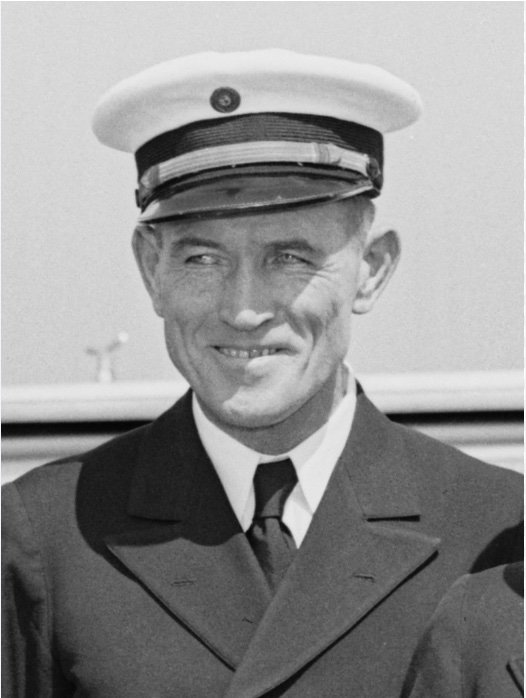
His name was Fred Noonan, an orphan turned sea captain who became a highly sought-after aerial navigator. This is the factual account of his career and his disappearance.
From Sea Captain to Air Navigator
Born in Chicago in 1893, Fred Noonan was orphaned early in life. By age 13, he moved to Seattle to work as a merchant marine. During World War I, he served on munition ships, escaping death in 1917 when he missed the departing S/S Cairnhill, a vessel that was later torpedoed and sunk.
After the war, he climbed the maritime ranks to become a sea captain. In the early 1930s, Noonan earned a pilot’s license and shifted his career to aviation. Operating without modern electronics, he navigated using ground cues, radio signals, and stars. Pan American Airways hired him. In 1935, he navigated the China Clipper seaplane on the first flight from San Francisco to Honolulu.
The Altered Global Flight Plan
In 1937, Noonan left Pan American Airways, divorced, remarried, and joined Earhart for a global flight. The initial flight plan included a second navigator named Harry Manning and a route flying from east to west. On March 17, 1937, Earhart lost control of the aircraft during takeoff.
The plane skidded and sustained damage. Manning withdrew from the mission shortly after the accident. Earhart and Noonan then proceeded to make the attempt alone. They reversed their route to fly west to east, planning to cover a total distance of 28,000 miles (45,061 kilometers).
The Final Journey to Howland Island
The revised journey began in May. By June 29, the duo reached Lae, New Guinea. On July 2, they departed for Howland Island, a landmass measuring just 2 miles (3.2 kilometers) in length. Within an hour of their last radio transmission, the United States Coast Guard launched a search operation.
No evidence of the plane was ever located. The Navy concluded the aircraft exhausted its fuel supply while searching for the island. Reports indicate Noonan was working from a map that placed Howland Island 5 miles (8 kilometers) away from its true location.
Theories of the Vanishing Aircraft
Alternative theories about the disappearance quickly emerged. Some proposed the aircraft overshot the destination and landed on Nikumaroro or the Marshall Islands. Another theory claimed Japanese forces captured the crew. Allegations of Noonan experiencing alcoholism surfaced decades later in the 1960s, though the only contemporary evidence was a 1937 traffic citation for driving in the wrong lane.
Days after the plane vanished, a letter Noonan mailed to his wife arrived in Oakland. In it, he stated Earhart was a fine companion for the trip who could handle hardship and work hard. The exact sequence of events remains completely unknown.