
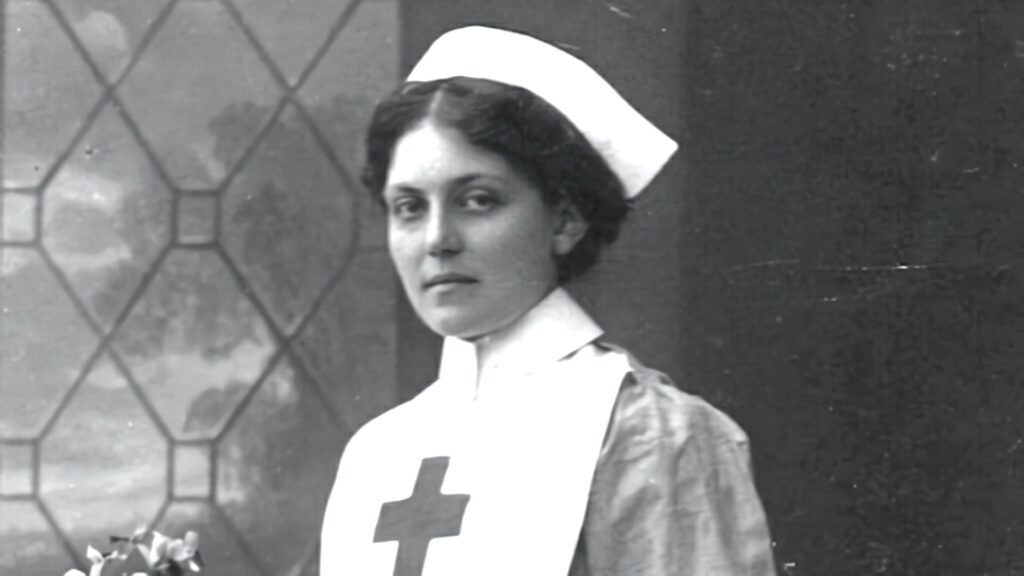
When a massive ocean liner begins to sink into freezing waters, surviving the ordeal is a statistical anomaly. Surviving three distinct catastrophic nautical disasters on three sister ships defies all mathematical probability.
Yet, one woman walked away from the collisions and sinkings of the RMS Olympic, the RMS Titanic, and the HMHS Britannic. This is the documented account of a stewardess who found herself at the center of the early twentieth century’s most infamous maritime emergencies.
A Collision Aboard the RMS Olympic
Born in Argentina in 1887, Violet Constance Jessop moved to England and began a career at sea. Following her mother’s profession, she joined the White Star Line. Her assignment placed her on the RMS Olympic, the largest civilian luxury liner of its era.
On September 20, 1911, just months after its maiden voyage, the Olympic collided with a British cruiser, the HMS Hawke, near the Isle of Wight. The captain, Edward Smith, successfully navigated the severely damaged vessel back to port. Jessop walked away unharmed and continued her employment at sea.
Escaping the Sinking RMS Titanic
On April 10, 1912, Jessop boarded the RMS Titanic as a first-class stewardess. Four days later, on the night of April 14, the ship struck an iceberg in the North Atlantic. Jessop was ordered to the upper deck, where officers instructed her to enter Lifeboat 16 and handed her an infant to hold.
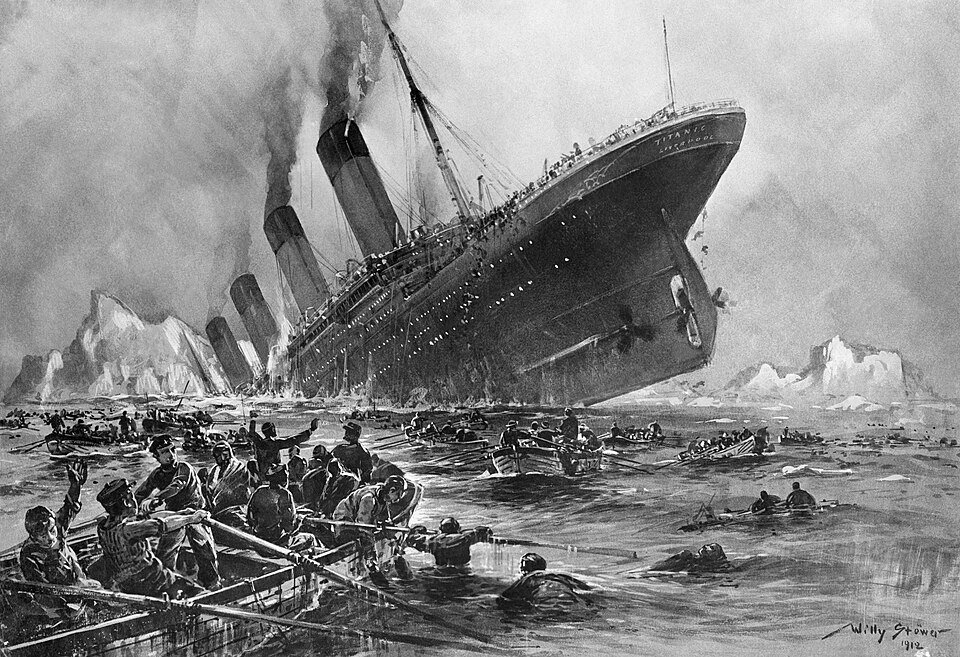
From the lifeboat, she watched the massive ship break in half and slip beneath the surface. The following morning, the RMS Carpathia rescued Jessop and the other survivors. Once aboard the rescue ship, a woman snatched the baby from Jessop’s arms and ran off without speaking. The disaster claimed 1,500 lives.
The HMHS Britannic Mine Explosion
During World War I, Jessop returned to the ocean, this time serving as a stewardess with nursing duties aboard the HMHS Britannic. The White Star Line had converted the sister ship of the Titanic into a floating hospital. On November 21, 1916, while carrying approximately 1,000 people toward Mudros, Greece, the ship struck a German underwater mine.
The vessel began sinking rapidly. Jessop evacuated into a lifeboat, but the ship’s spinning propellers began pulling the small craft inward. The blades killed thirty people. Jessop leaped into the water, struck her head on the ship’s keel, and swam to a different lifeboat as the stern of the Britannic reared hundreds of feet (tens of meters) into the air and plunged into the depths.
A Quiet Retirement on Dry Land
Despite surviving three catastrophic maritime events within five years, Jessop did not abandon her career on the water. She continued working on ships for several more decades. In 1950, at the age of 63, she finally retired from her duties as a stewardess. She spent her remaining years living firmly on land, raising chickens at her home. She died in 1971 at the age of 84.