
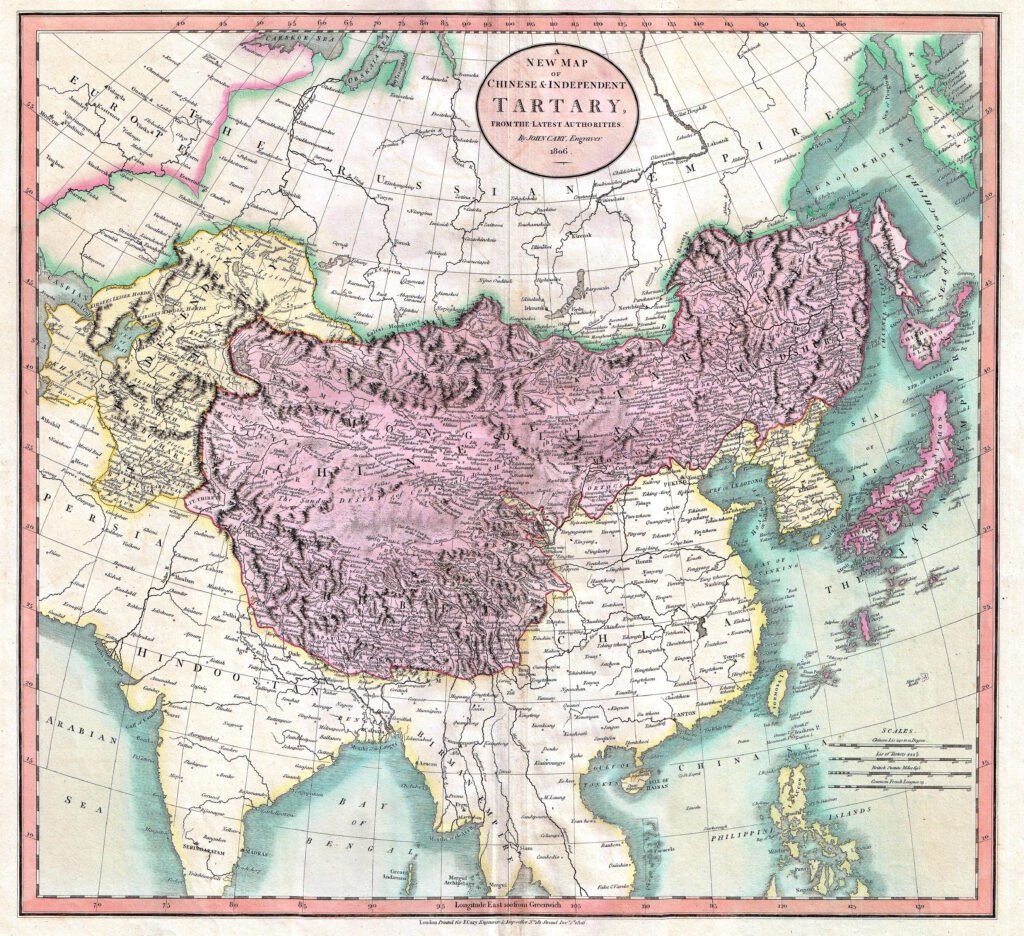
Millions of internet users are currently captivated by claims regarding a technologically advanced ancient civilization known as the Tartarian Empire. Viral videos, generating millions of views across platforms, suggest this global superpower built the world’s most famous landmarks before being wiped out by a catastrophic geological event known as a “mud flood.” Proponents argue that authorities intentionally altered the timeline to hide the truth from the public. Here are the origins of the Tartaria theory, the actual region it takes its name from, and the historical facts surrounding these viral internet claims.
The Real Geography Behind Tartaria
Before becoming an internet phenomenon, Tartary—or Tartaria—was a genuine geographical classification. European cartographers historically utilized the term to describe a massive territory stretching across central Asia and Siberia. This area encompassed modern-day Kazakhstan, sections of Mongolia and China, and the eastern parts of the Russian Empire. Old maps routinely labeled these regions as Tartary, establishing it as a recognized landmass.
The Origins of the Modern Conspiracy
The current online theory originated from Russian concepts developed in the late twentieth century. In the 1970s, mathematician Anatoly Fomenko introduced the “New Chronology,” stating that historical events traditionally dated thousands of years ago actually took place in the Middle Ages. He argued that leaders added a thousand years to the timeline. Later, Nikolai Levashov promoted the concept that a massive Tartarian Empire existed in Central Asia. The Russian Geographical Society officially rejected these assertions. Around 2016, online content creators combined these concepts with architectural anomalies, launching the theory’s current form.
Investigating Mud Floods and Architecture
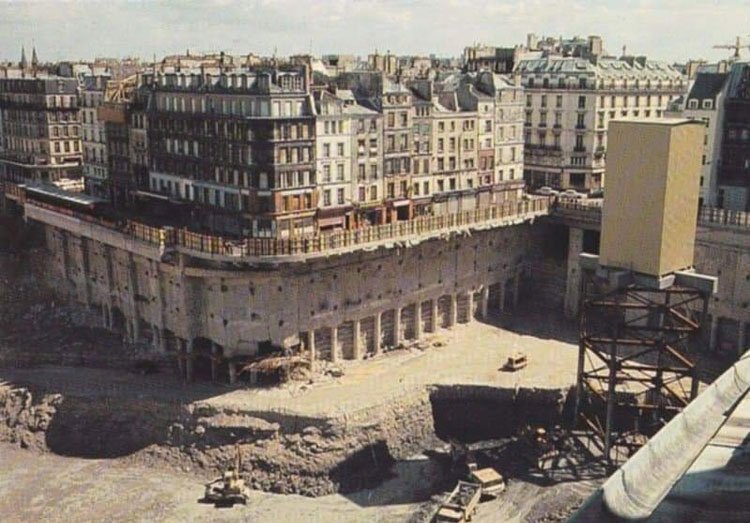
Online proponents attribute structures like the Pyramids of Giza, the Taj Mahal, and the United States Capitol to Tartarian engineers. They argue that nineteenth-century buildings were too complex for the era’s technology and claim that basement windows indicate the existence of global mud floods. Architectural historians provide practical explanations for these structural details. Basement windows in older structures are standard designs for construction on sloped terrain. Furthermore, the muddy appearance of nineteenth-century streets in old photographs is directly attributed to horses churning up dirt and manure.
Scientific and Historical Dating Methods
Believers of the Tartaria theory maintain that the conventional historical timeline is entirely fabricated. However, establishing historical chronology relies on diverse, independent methods of scientific and archaeological evaluation. Radiocarbon dating, stratigraphic analysis, and contemporaneous written records across multiple languages confirm the established historical timeline. Archaeologists and historians rely on these standardized processes to map human history. There is no historical or archaeological data supporting the existence of a highly advanced, global Tartarian Empire.