
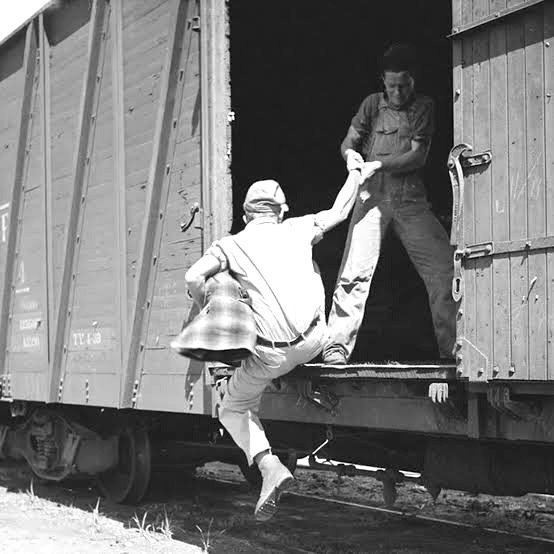
Following the American Civil War in the 1860s, thousands of newly homeless veterans and impoverished migrant workers took to the tracks. These wandering laborers, who became known as hobos, illegally hopped freight trains to cross the country in search of work.
Braving cramped quarters, harsh weather, and constant danger, they lived a perilous life on the margins of society. To survive, these transient workers supposedly created a clandestine communication system. Cryptic drawings began appearing on fences, water tanks, and buildings, directing fellow hobos toward hot meals and away from loaded shotguns.
Hitching a Dangerous Ride
Crossing the United States with no money meant trespassing on railway property. Migrant workers hid inside freight cars, constantly evading railroad police, area residents, and local law enforcement. Between temporary jobs, hobos squatted in abandoned structures or open fields.
Winters were especially brutal, with many men freezing to death in the rail yards. The transient lifestyle required constant vigilance to avoid danger. Sharing localized information rapidly became a literal matter of life and death, prompting rumors of a secret hobo language that would protect the community.
Chalking the Hidden Code
By the 1870s, reports emerged of a secret visual language left behind by these wanderers. The famous hobo code featured specific drawings to convey critical information. A triangle with hands meant the homeowner carried a gun. A horizontal zigzag warned of a barking dog.
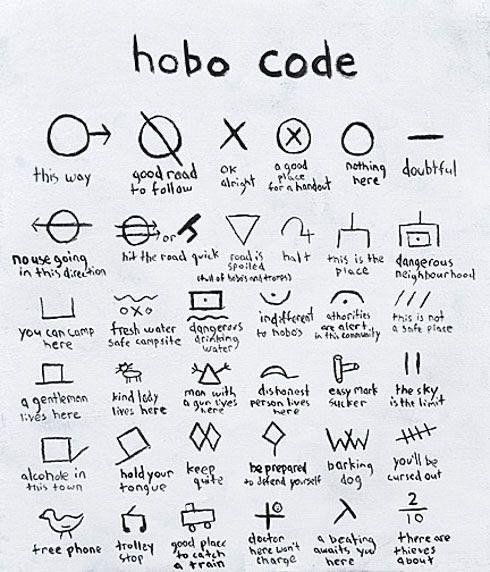
A simple sketch of a cat indicated a kind woman lived inside, while a circle pierced by two parallel arrows was a stark warning to leave town immediately. Writers and newspapers published extensive lists of these chalked warnings right through the Great Depression. The marks supposedly pointed the way to safe drinking water, haylofts for sleeping, and churches that offered food in exchange for a religious lecture.
Investigating the Myth
Despite the widespread publication of these drawings, evidence suggests the visual dictionary may have been highly exaggerated. Sociologist Nels Anderson, who rode the trains himself and studied hobo culture for a 1932 University of Chicago thesis, argued that the elaborate language was an invention.
He believed it was perpetuated by journalists and authors seeking to add color to their stories. Several transients from that era also dismissed the complex hobo signs as popular fiction meant to sell newspapers rather than practical survival tools.
Tracking the Monikers
While the intricate hobo signs remain debated, these travelers did leave physical marks to communicate. Instead of sketches of cats and zigzags, they carved and chalked monikers onto prominent structures like railway water tanks. A hobo passing through town would leave his road name, the current date, and his intended direction of travel so others could follow.
Jack London wrote about using these water tank directories to track down friends across the continent. This tagging practice persisted for decades among train hoppers.