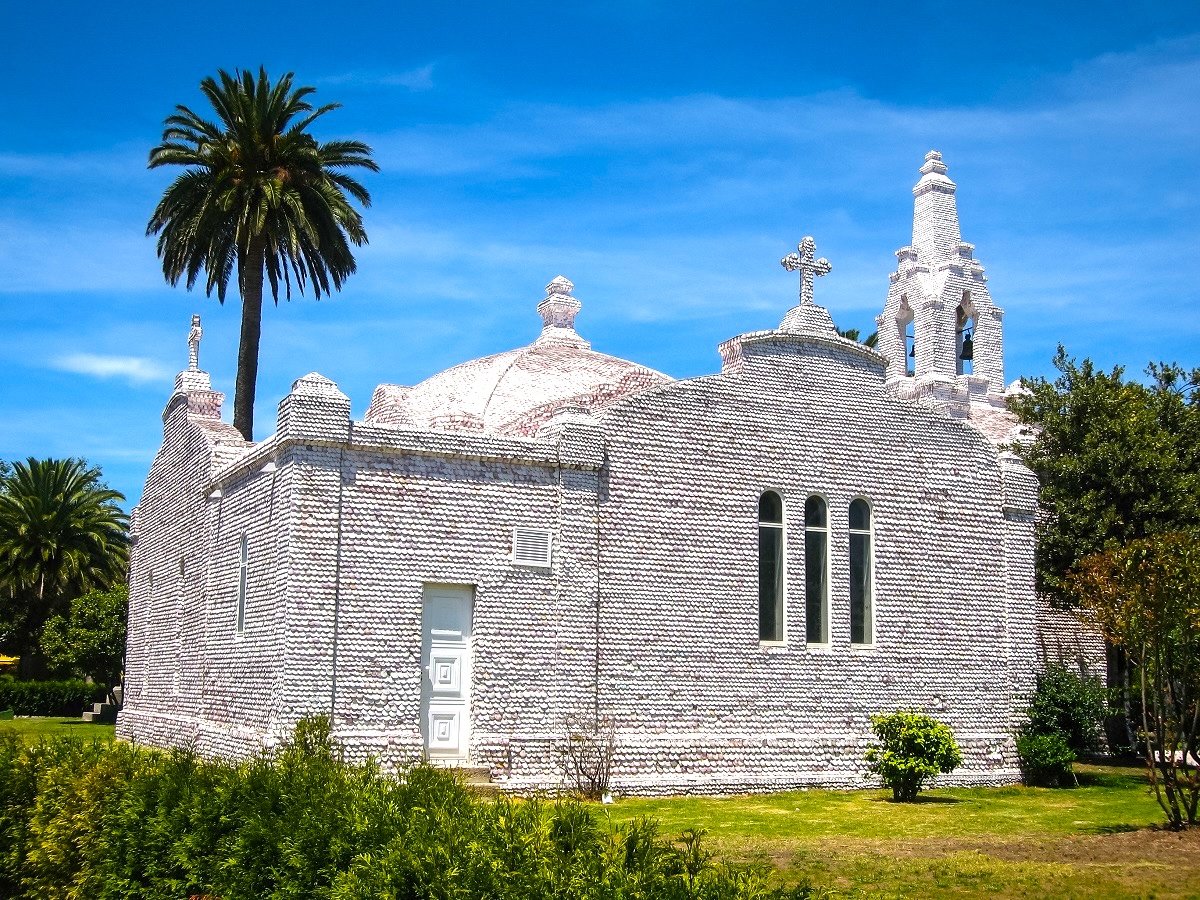
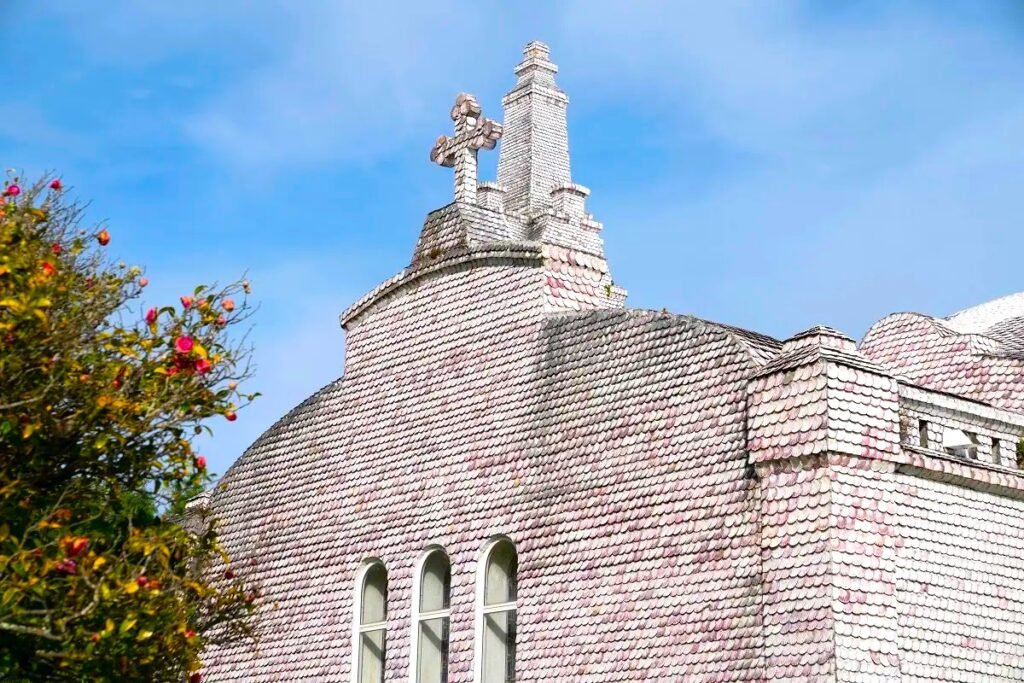
Off the rugged coast of Galicia in northwestern Spain sits a building that looks entirely pulled from the sea. The Ermita de San Caralampio stands out against the green landscape because its exterior walls are completely coated in thousands of tightly packed scallop shells.
Visitors arriving on the small landmass are immediately confronted with this unusual architectural choice that glints in the sunlight. The history of how this peculiar church came to be involves a sudden medical discovery, a patron saint of skin ailments, and a highly practical solution to harsh Atlantic weather.
Discovering the Healing Waters
For centuries, the 1.1-square-kilometer (0.42-square-mile) island of La Toja served mainly as a grazing area for local livestock. That changed abruptly in the mid-19th century when a local farmer abandoned a sick donkey on the island. Months later, the farmer found the animal entirely cured of its skin conditions.
This prompted scientists to test the island’s hot springs, revealing high concentrations of sodium, calcium, iron, and magnesium. The island quickly transformed into a premier European health resort. Wealthy tourists flocked to the area to bathe in the mineral-rich mud and thermal waters.
Practical Marine Architecture
To accommodate the influx of resort guests seeking religious services, the Marquis of Riestra commissioned the construction of a chapel. Built in the late 19th century, the original structure faced an immediate environmental challenge. The coastal Galician climate battered the church with damp, salty ocean winds that easily penetrated traditional building materials.
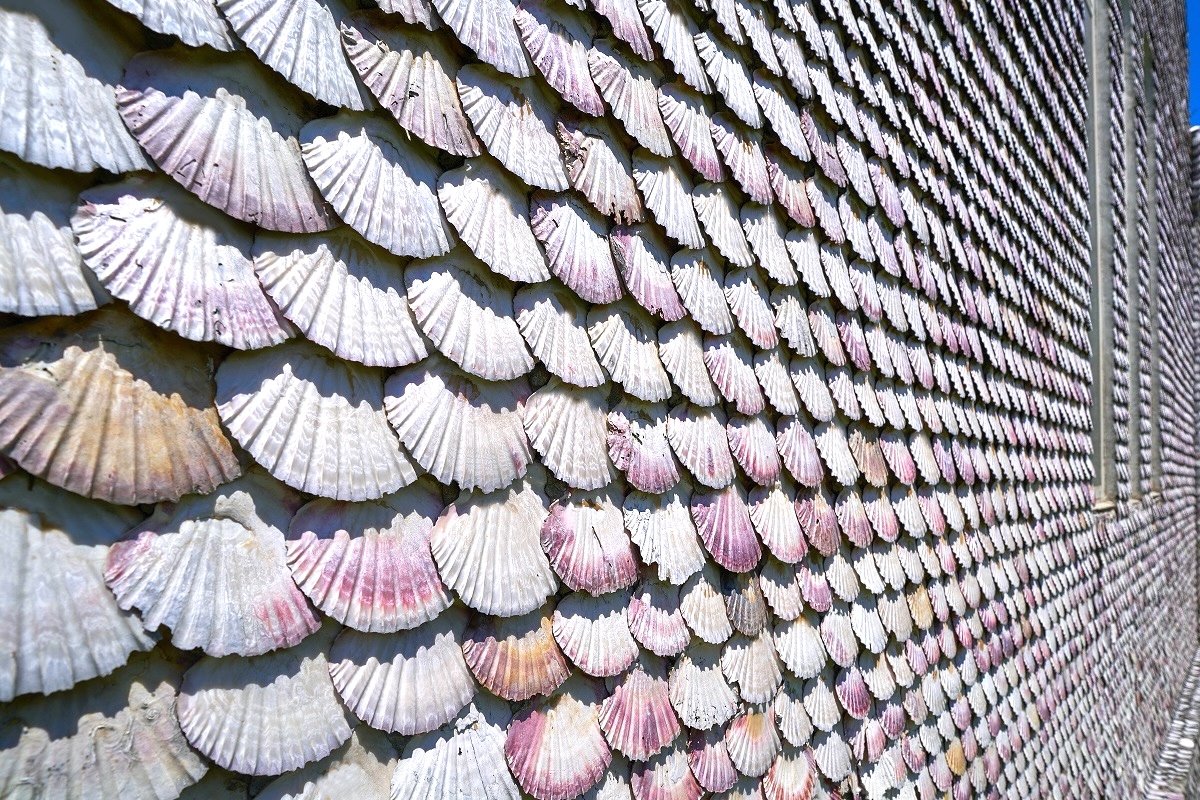
To protect the interior, builders turned to a resource that was abundant in the surrounding Rías Baixas: the scallop shell. Workers applied thousands of convex shells in overlapping horizontal rows across the entire exterior. This created a watertight, natural armor that forced rainwater to cascade harmlessly down the walls and kept the inside completely dry.
A Fitting Dedication
The chapel was dedicated to the Virgin of Carmen, the protector of sailors, and San Caralampio. The choice of San Caralampio was highly specific to the island’s new medical industry. He is recognized in the Catholic faith as the patron saint of skin diseases. Patients undergoing dermatological treatments at the adjacent spa would walk the short distance to the chapel to pray for their recovery. The church remained a functioning place of worship for the spa guests and local residents of the O Grove peninsula.
The Carved Shells
Over the decades, the exterior of the chapel took on an unintended secondary function. Visitors began scratching their names, dates, and short messages into the calcium carbonate surface of the individual scallop shells. Today, almost every shell within human reach bears a carving.
When the mortar degrades or shells crack from the coastal elements, maintenance workers replace them with fresh, blank scallops sourced from the local seafood industry. The new shells are then quickly filled with new carvings from tourists visiting the historic thermal spa.