
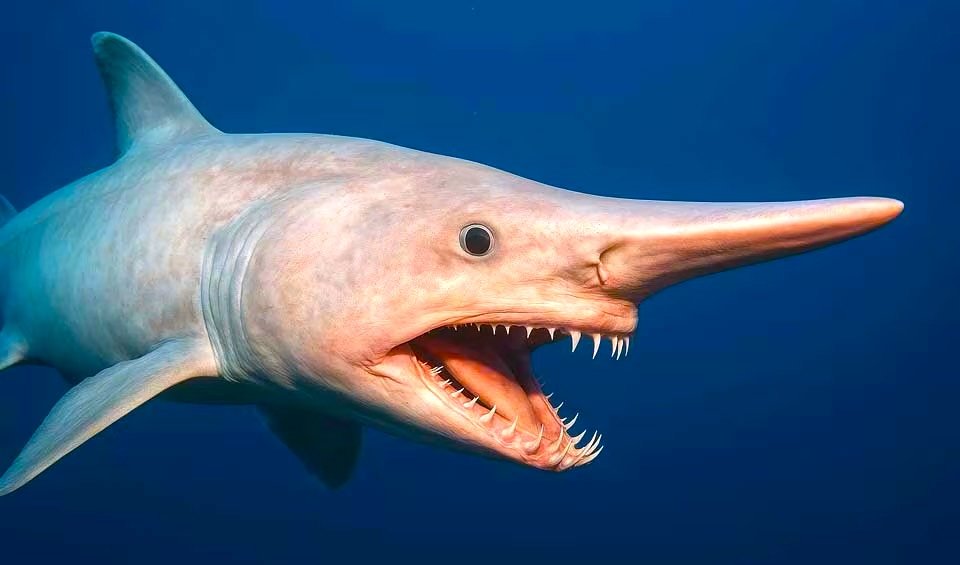
Deep beneath the ocean surface, a pink-skinned marine animal with a blade-like snout and catapulting jaws hunts in total darkness. The goblin shark is a rare deep-sea fish from a lineage dating back 125 million years.
With a flabby body and a jaw that snaps forward at astonishing speeds, this ancient creature fascinates marine biologists. From its initial identification off the coast of Japan to recent captures of massive pregnant females, the facts surrounding this deepwater hunter are stranger than fiction.
Identifying the Mythical Deep Sea Fish
In 1898, American ichthyologist David Starr Jordan published the first official description of the goblin shark. A shipmaster named Alan Owston acquired an immature 42-inch male caught in Sagami Bay, Japan, and gave it to Professor Kakichi Mitsukuri.
Jordan named the species Mitsukurina owstoni to honor both men. The common name comes from its traditional Japanese title, tenguzame. A tengu is a Japanese mythical creature characterized by a long nose and a red face, matching the shark’s elongated snout and pinkish coloration caused by blood vessels visible beneath its translucent skin.
Electric Tracking and Ambush Tactics
Because of its poorly calcified skeleton and small fins, the goblin shark is a slow swimmer. Instead of chasing prey, it acts as an ambush predator in submarine canyons at depths up to 6,560 feet. The shark uses its large, oily liver to remain neutrally buoyant, drifting silently toward teleost fishes, squid, and crustaceans.
Since vision is limited in the dark ocean depths, the shark relies on its elongated snout. This structure is covered with ampullae of Lorenzini, specialized pores that detect minute electric fields generated by nearby animals.
The High-Speed Protruding Jaws
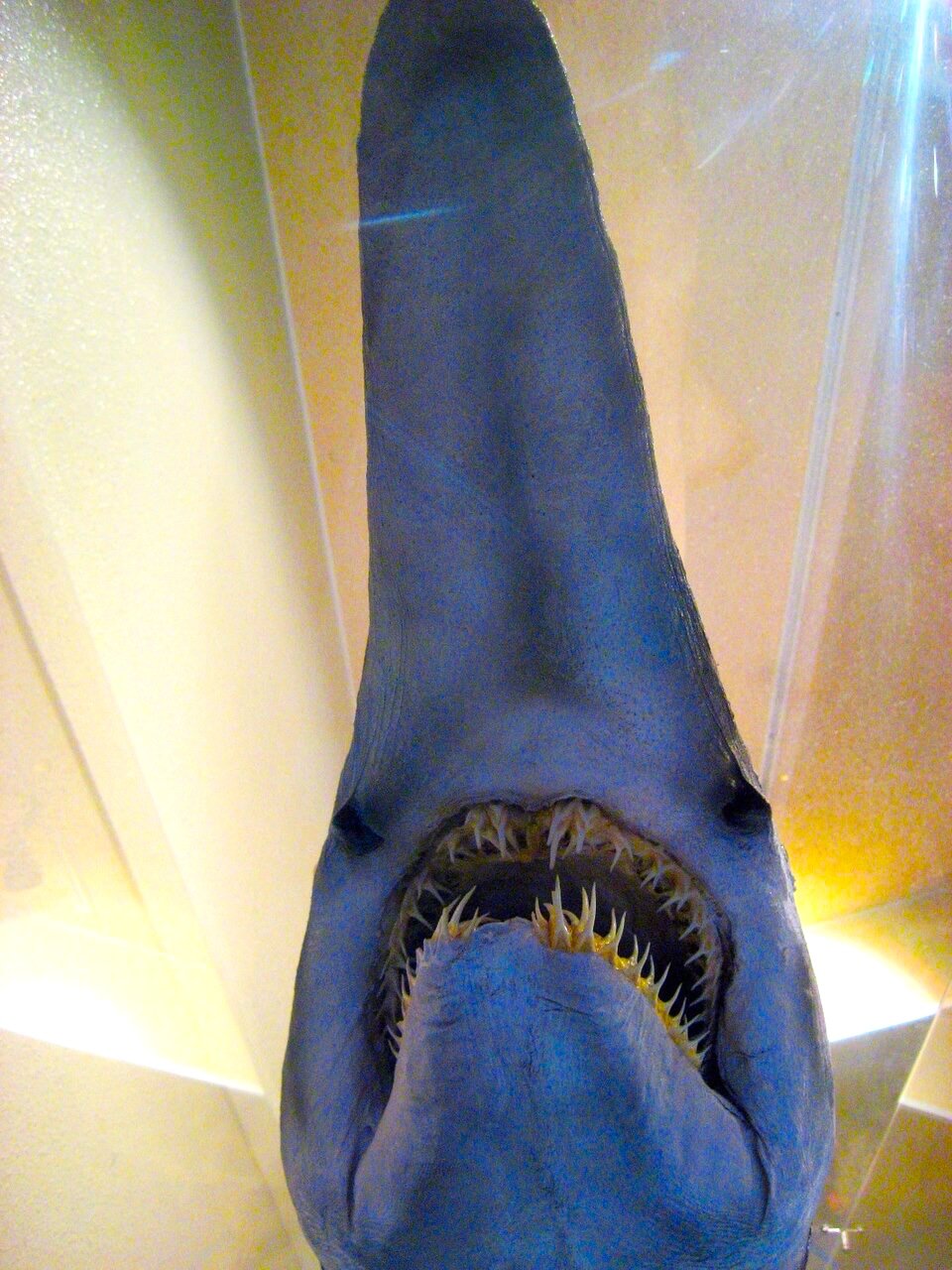
Once the goblin shark detects a meal, it utilizes a feeding mechanism completely unique among sharks. Its mouth contains elastic ligaments that remain tightly stretched when the jaw is resting. When it strikes, these ligaments release tension, launching the entire jaw forward to grab prey.
Recorded on video for the first time in 2008, this jaw protrusion reaches velocities of 10.3 feet per second. The lower jaw swings upward during the strike, making the jaws up to 9.5 times more protrusible than those of any other shark species.
Record-Breaking Deep Ocean Captures
While adult goblin sharks typically measure 10 to 13 feet long, modern captures prove they grow much larger. In 2000, a massive female was caught measuring an estimated 20 feet. Later, in 2023, fishermen in Taiwan landed a 15-foot pregnant female weighing 1,800 pounds.
This specific shark carried six pups, confirming that the species gives birth to live young. Despite occasional captures, the International Union for Conservation of Nature categorizes the species as Least Concern, as most of its population remains isolated in unfished deepwater environments.