

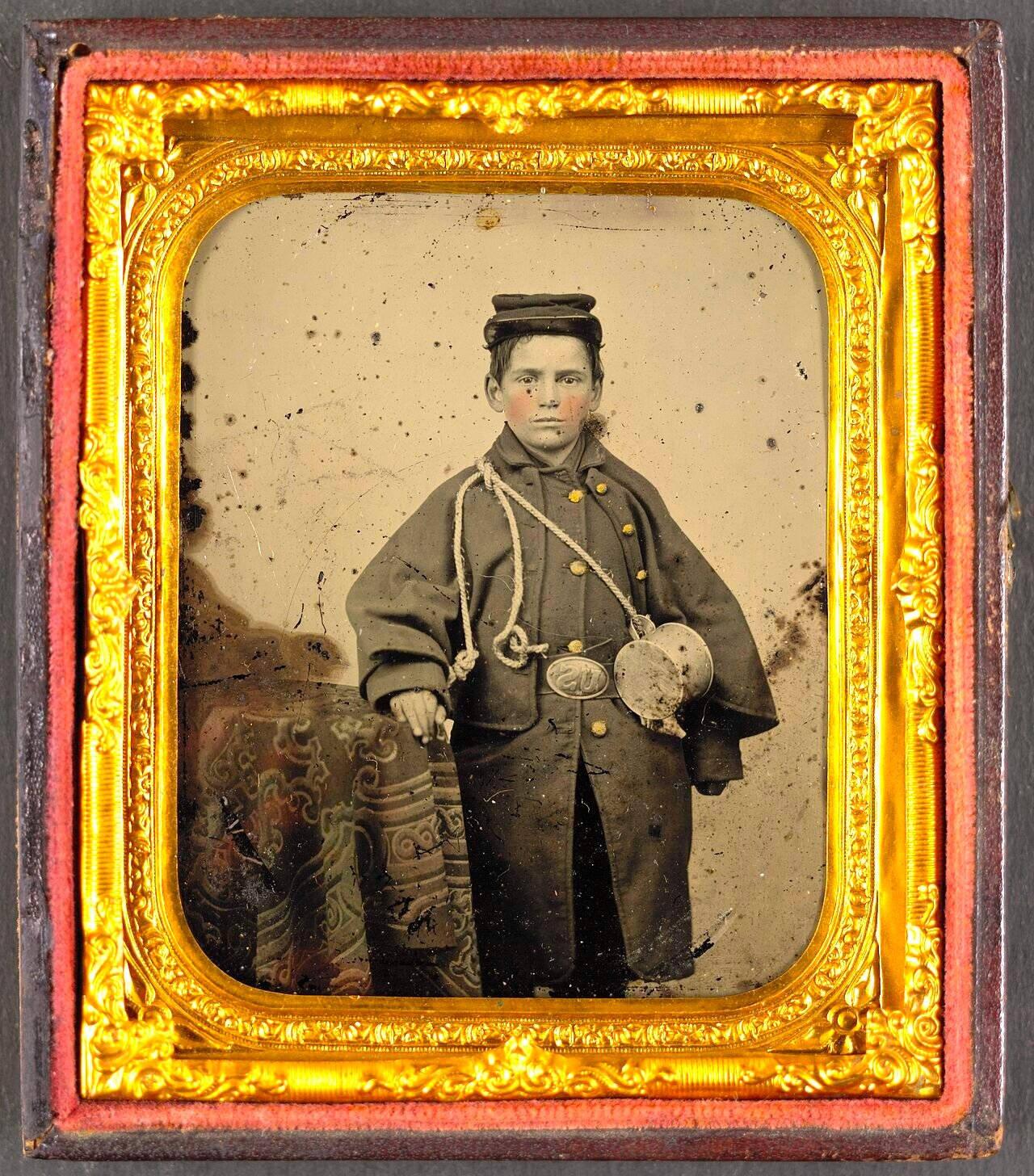
Hundreds of thousands of children marched into the bloodiest conflict in United States history. While history books focus on commanding generals, the reality of the American Civil War includes boys as young as seven holding rifles on the front lines.
To escape tedious farm work or abusive homes, an estimated 250,000 to 420,000 underage youths bypassed military age restrictions. These boys tricked desperate recruiters, survived on rotting rations, and faced the same battlefield executions and prison camps as adult men.
How Underage Youths Tricked Army Recruiters
The official enlistment age for both armies was 18. Yet, as casualty numbers skyrocketed, recruiters anxious to meet quotas frequently looked the other way. Boys used clever workarounds to bypass the rules. A teenager would write the number “18” on a piece of paper, place it inside his shoe, and truthfully tell the recruiting officer, “I am over 18.”
Others enlisted through an adult’s endorsement or secured one of the 40,000 non-combat positions available in the Union Army, joining as drummers, buglers, or stretcher-bearers. Few joined to fight over slavery; most simply wanted to defend their territories or escape rural life.
Starvation Rations and Stolen Uniforms
The boys quickly discovered that military life was plagued by severe logistical failures. Supply chain breakdowns meant soldiers went days without meals. They relied heavily on hardtack, a thick cracker so stale that boys joked the letters “B.C.” stamped on the boxes meant they were baked before the Christian era.
To avoid starvation, young soldiers sneaked out of camp to steal crops from local farmers. Clothing was equally inadequate. Boys were issued adult-sized uniforms that hung loosely on their small frames. To find garments that fit, they bartered food with locals for tailoring or stripped uniforms from dead bodies.
Andersonville Prison and Combat Horrors
Any romantic illusions of military glory evaporated under the blistering sun of endless marches and the deafening roar of cannon fire. Child soldiers suffered the same violent injuries and brutal captures as adults. Conditions were especially severe for boys sent to Confederate prison camps like Andersonville in Georgia.
Sixteen-year-old Michael Dougherty, the sole survivor of his company at Andersonville, documented the horrific environment. He described starving, soot-covered prisoners wandering entirely naked, their skin pulled tight over their exposed ribs and shoulder bones, surrounded by the dead and dying.
Military Punishments and Firing Squads
Officers did not spare underage soldiers from strict military discipline. Boys who committed offenses like gambling, theft, or falling asleep on guard duty faced the exact same physical punishments as grown men.
Offenders were forced to carry heavy logs, stand on barrels all day, or endure being tied up by their thumbs. For desertion, youths faced death by firing squad or hanging, sentences carried out directly in front of their regiments.