
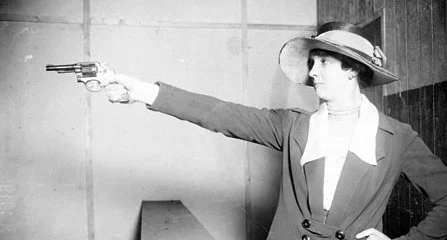
In August 1913, amid a graduating class of nearly 100 new Chicago police detectives, stood a single woman who would soon become famous for kicking down doors in custom gowns while brandishing a tommy gun. Alice Clement commanded crime scenes with a booming voice that frequently announced her presence before she even drew her weapon: “Back! Line up! Right against that wall!”
She refused to sacrifice her femininity to fit into a male-dominated department, famously sleeping each night with her hair in rollers and her service weapon tucked beneath her pillow.
Breaking Down Doors and Social Barriers
Clement owned her appearance, and the press eagerly documented her stylish bob haircuts, glittering jewelry, and fur coats. Her progressive views extended far beyond the police precinct. She publicly advocated for women’s voting rights, campaigned for the repeal of Prohibition, and filed for divorce from her first husband on the grounds of “desertion and intemperance.” After a four-year legal battle, she married her second husband in a ceremony officiated by a female pastor.
Her massive popularity with the Chicago press corps did not translate to support from her immediate superiors. The constant media attention surrounding Clement and the growing influx of female officers drove her commanding officer to resign in protest. Yet, detectives in the field quickly realized that female officers were invaluable for infiltrating criminal operations that male officers could not access.
The Case of the Poisoned Dulcimer
Clement’s sharp investigative instincts solved numerous high-profile crimes, including a bizarre murder that later inspired Agatha Christie’s serial “The Dulcimer.” When a young heiress died of typhoid fever, male detectives dismissed the death as an unfortunate consequence of prostitution.
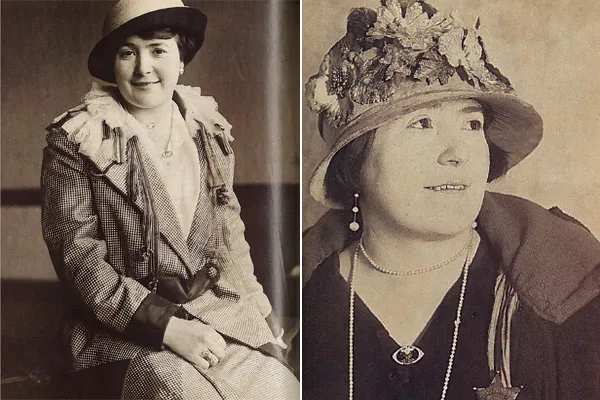
Clement disagreed. She discovered the victim’s aunt had deliberately contaminated the strings of the victim’s dulcimer with typhoid bacteria, knowing the girl habitually licked her fingers while playing.
When Clement arrived to arrest the aunt, she secured a partial confession. Before Clement could transport her to the precinct, the aunt produced a hidden penknife and fatally stabbed herself in the neck.
From the Harbor to the Silver Screen
Clement frequently waded into Lake Michigan in her dresses to rescue passengers from capsized boats and walked the roughest streets of Chicago to pull destitute girls away from danger. Drawing on these experiences, she created a feature film titled Dregs of the City. The movie played successfully in theaters across the country, except in Chicago, where city officials banned it.
The resulting media battle further destroyed her relationship with the police department brass. By the mid-1920s, the department demoted her. Shortly after, the severe complications of diabetes forced her onto medical leave. She died the day after Christmas in 1926 at age 49. Though her male colleagues attended her massive funeral, she was buried under a plain, unmarked stone that lacked the police star she had earned.