
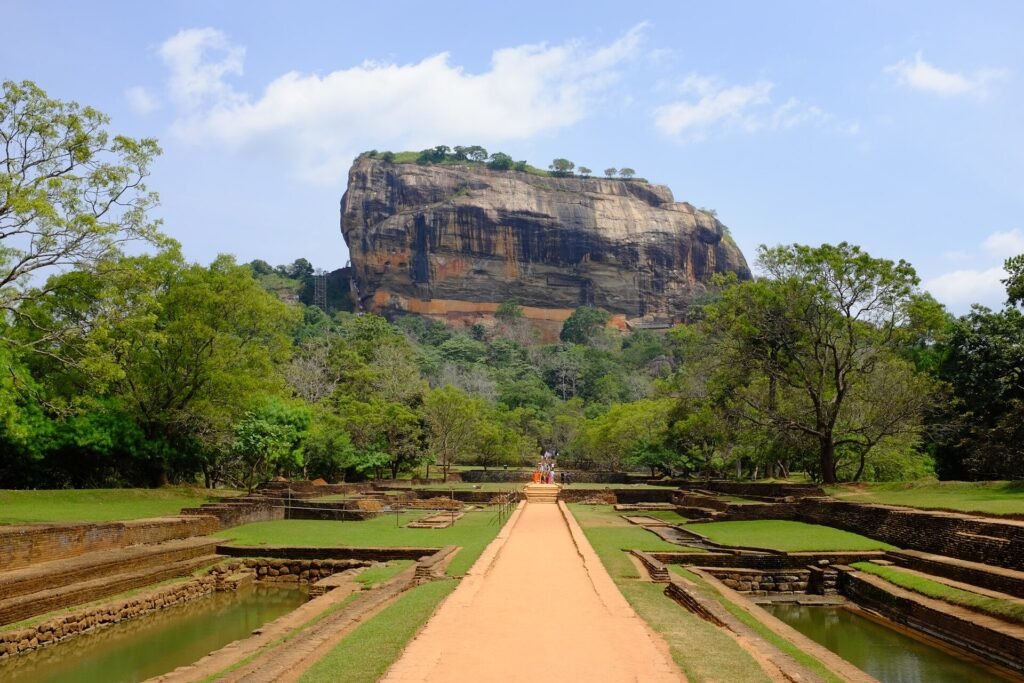
Rising nearly 600 feet out of the dense Sri Lankan jungle, an enormous column of granite known as Sigiriya, or Lion Rock, holds the remnants of an ancient, violent family feud. In 477 CE, a brutal royal coup drove a paranoid king to abandon his traditional capital and build an impenetrable palace atop an extinct volcano.
Today, this massive geological formation stands as one of the most remarkable examples of ancient urban planning in the world, holding the secrets of a ruler who walled up his own father alive to seize a throne he was never meant to inherit.
A Usurper’s Violent Ascent
The story of Sigiriya’s golden age began with a gruesome murder. Kashyapa I, the son of King Dhatusena and a non-royal consort, seized power in a coup with the help of the army commander. To secure his grip on power, Kashyapa imprisoned his father and had him walled up alive. The rightful heir, Kashyapa’s half-brother Moggallana, managed to escape the bloodbath and fled to South India, vowing to return and avenge his father’s murder.
Terrified of the inevitable retaliation, Kashyapa fled the traditional capital of Anuradhapura. He searched for a location that was completely unassailable and found a massive granite inselberg jutting out of the central plains. For nearly two decades, Kashyapa transformed this sheer rock face into a complex, heavily fortified city.
Engineering a Sky Fortress
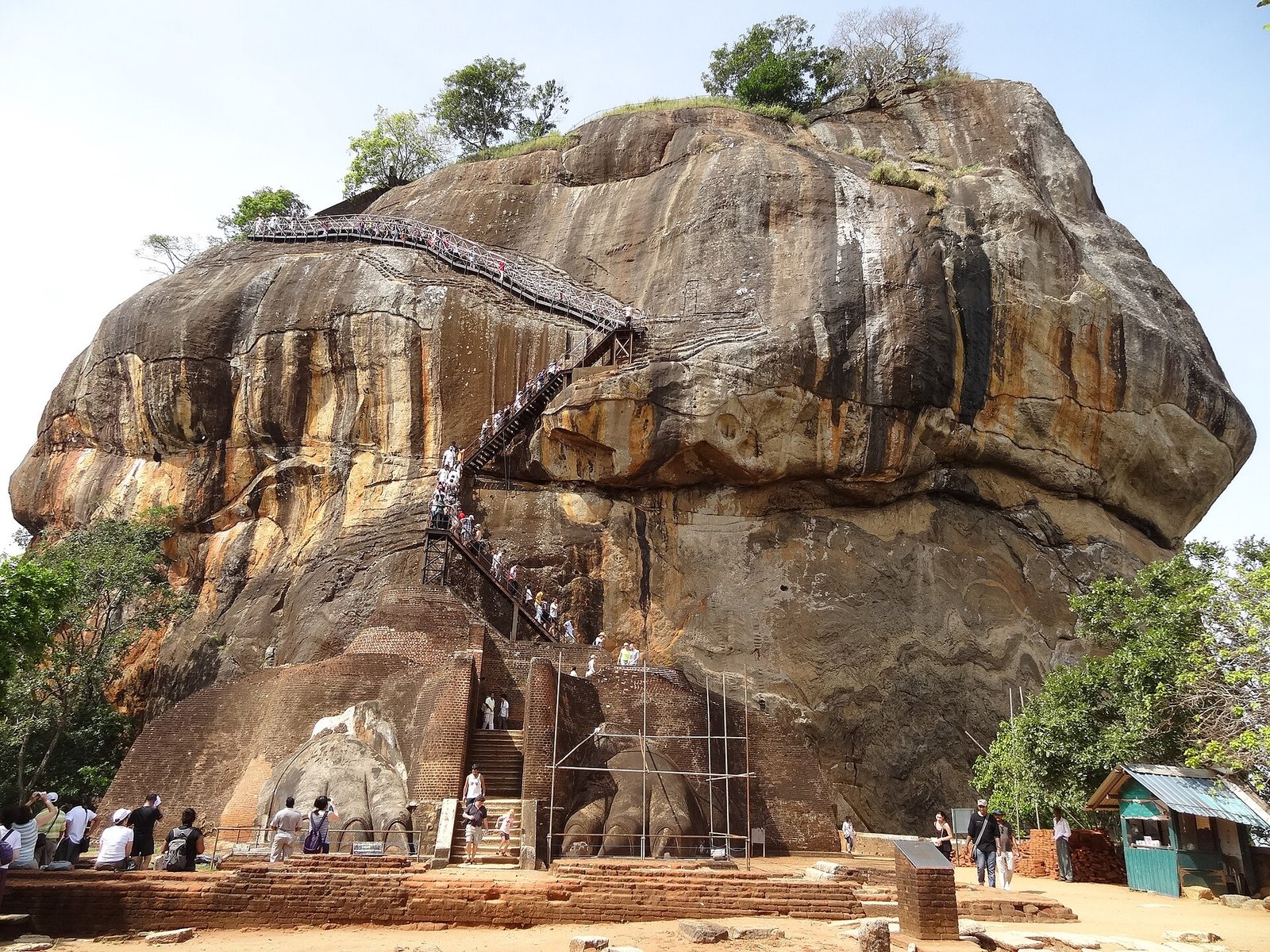
Kashyapa’s engineers completely reshaped the landscape. They constructed intricate, symmetrical water gardens at the base of the rock with sophisticated hydraulic systems that still function during the rainy season. A series of steep limestone staircases wound through boulder gardens and up the sheer cliff face.
Halfway up the rock, on a small plateau, the king built an enormous gateway shaped like a massive lion, giving the fortress its name, Sinhagiri. A highly polished “mirror wall” lined the pathway, and brightly colored frescoes of mysterious women covered large sections of the western rock face. At the very summit, Kashyapa built his lavish royal palace, complete with cisterns carved directly into the solid rock to capture rainwater.
The Final Battle and the Fall
The impregnable fortress could not save Kashyapa from his brother’s revenge. In 495 CE, eighteen years after fleeing into exile, Moggallana returned with an army and declared war. In a twist of fate during the final battle, Kashyapa’s war elephant unexpectedly changed direction to seek a strategic advantage. The king’s army misinterpreted the movement as a retreat and abandoned him on the battlefield.
Too proud to surrender to his brother, Kashyapa drew his dagger, cut his own throat, and died on the field. Moggallana immediately moved the capital back to Anuradhapura. He converted the sprawling fortress and the palace in the sky into a Buddhist monastery, which survived in that form until the fourteenth century.