
In February 1896, a prominent French physicist locked a photographic plate and some uranium-heavy rocks inside a pitch-black desk drawer. He expected the rocks to immediately stop emitting energy without direct sunlight to fuel them. Days later, he developed the plate and uncovered a strange, intense shadow.
That single, unmistakable shadowy imprint broke the known laws of physics and exposed an invisible energy source radiating from deep within the rocks themselves. The accidental finding triggered a global race to completely rethink atomic structure.
A Failed Experiment in the Sun
Henri Becquerel was deeply focused on investigating phosphorescence. He hypothesized that uranium salts absorbed sunlight and re-emitted it as X-rays. To test this scientific theory, he placed uranium crystals on top of photographic plates securely wrapped in thick black paper and set them outside in the bright Parisian sun.
The sun activated the salts, which then left clear silhouettes on the photographic plates. When the weather unexpectedly turned cloudy for several consecutive days, Becquerel packed his materials away into a dark desk drawer, planning to wait for much clearer skies.
The Foggy Plates That Changed Physics
On March 1, Becquerel decided to develop the unexposed plates anyway. He fully anticipated seeing only faint images from a tiny amount of residual energy. Instead, he found stark, dark, and perfectly defined outlines of the uranium crystals. The heavy stones had continuously emitted high-energy rays in complete darkness.
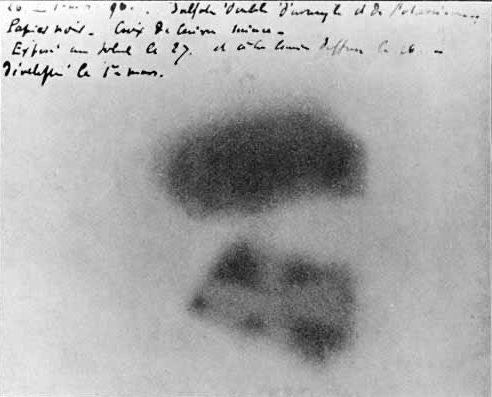
The energy absolutely did not come from the sun. It came directly from the atomic core of the uranium itself. Becquerel published his exact findings within days, heavily documenting the entirely spontaneous emission of radiation.
Marie Curie Enters the Shed
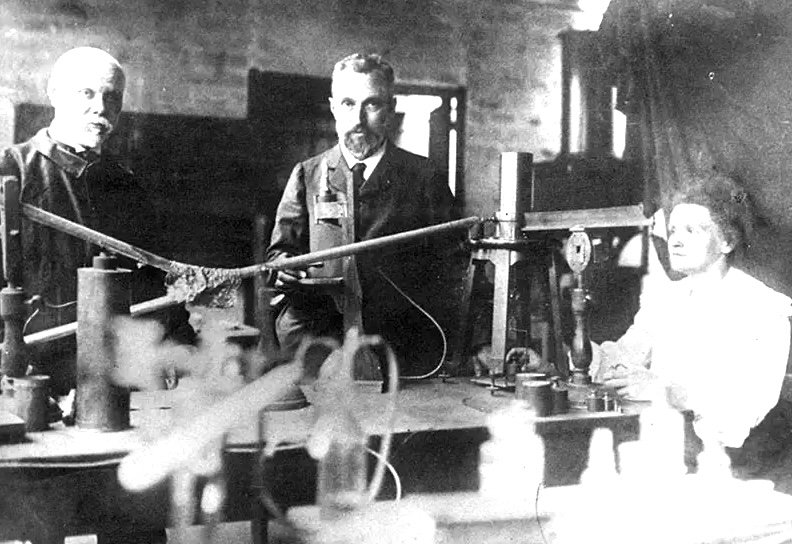
Two years later, Marie Curie chose to aggressively investigate these mysterious rays for her doctoral thesis. Working in a drafty, damp, and unheated shed, she utilized a highly sensitive electrometer invented by her husband Pierre to measure the faint electrical currents generated by uranium.
Curie successfully proved that the strength of the radiation depended solely on the quantity of uranium present, completely independent of its chemical state. She coined the exact term “radioactivity” to describe this newly observed atomic behavior.
The Hunt for New Elements
Curie quickly noticed that a specific uranium ore called pitchblende was four times more radioactive than pure uranium. She logically deduced that the raw ore must contain undiscovered, highly active elements. Pierre abandoned his own academic research to join her physical labor.
Together, they manually boiled and chemically dissolved roughly 1,000 kilograms (2,204 pounds) of pitchblende. By July 1898, they isolated a brand new element they named polonium. Just five months later, they successfully extracted a second element called radium, fundamentally expanding the periodic table.