
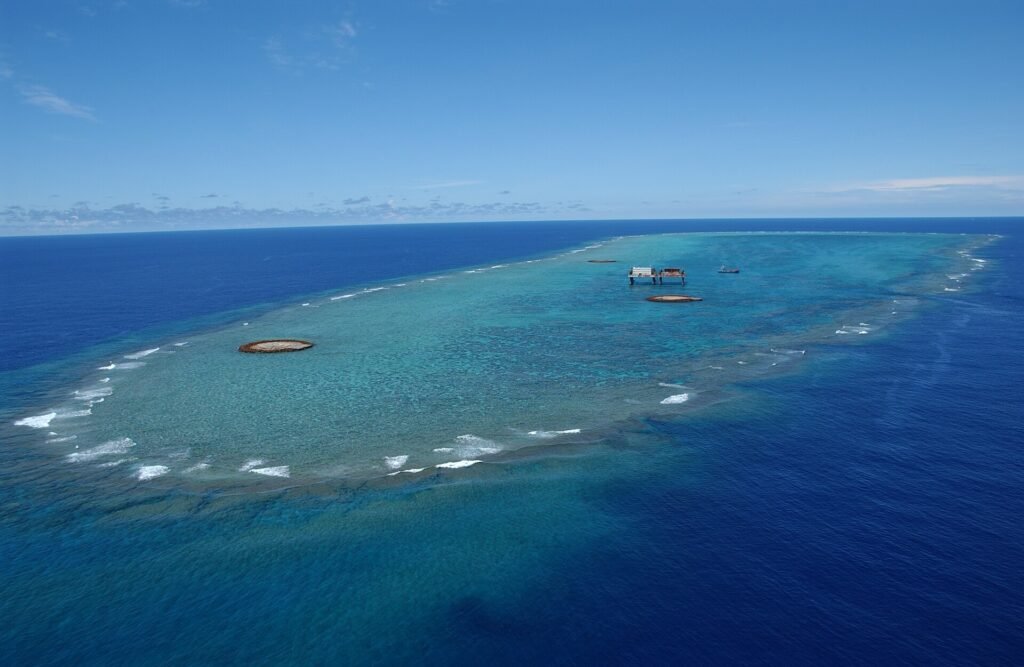
Deep in the Pacific Ocean, a tiny, uninhabited coral reef sits just above the water line. It spans a mere 16 square meters (172 square feet) at high tide. Despite its microscopic size, the Japanese government has spent over $600 million since 1987 to protect this specific rock from eroding into the sea.
This massive engineering effort involves steel, heavy concrete barriers, and permanent monitoring. This extraordinary operation secures a massive area of the ocean for the country.
The Geography of Okinotorishima
Okinotorishima consists of two barren rocks located over 1,000 kilometers (621 miles) south of Tokyo. Naturally, ocean waves constantly batter these small fragments, threatening to submerge them entirely. Under international maritime law, a recognized landmass that remains above water at high tide grants the administering country control over the surrounding ocean.
If these rocks were to vanish below the surface, the associated territorial claims would disappear with them. Because of this, Japan treats the preservation of Okinotorishima as a strict national priority.
Securing the Exclusive Economic Zone
The main reason for this massive financial expenditure is the Exclusive Economic Zone, or EEZ. By maintaining Okinotorishima as recognized land, Japan legally projects an EEZ covering approximately 400,000 square kilometers (154,440 square miles).
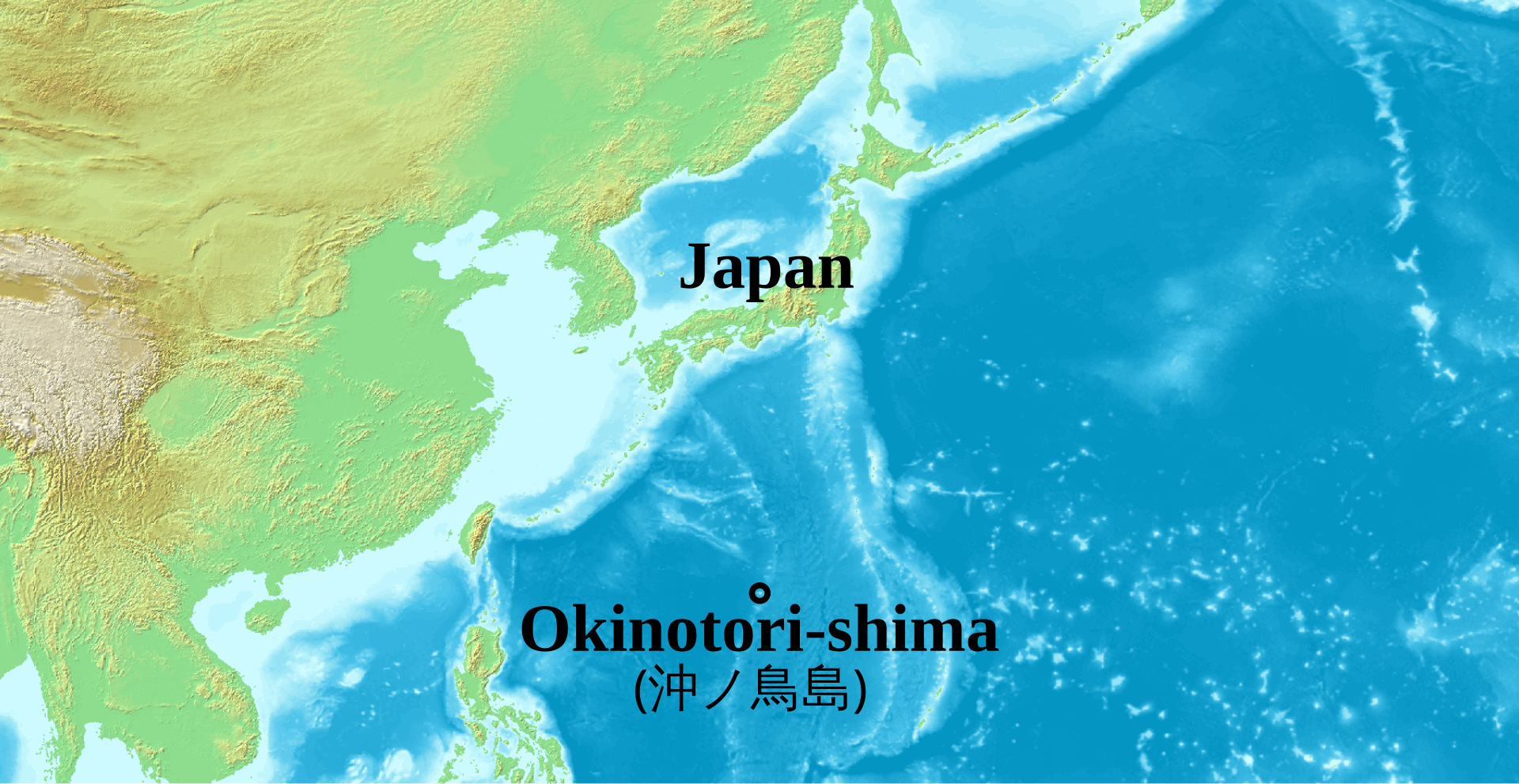
This vast area is larger than the Baltic Sea and essentially doubles Japan’s exclusive maritime territory. Within this 370-kilometer (230-mile) radius around the rocks, Japan holds the exclusive rights to fish, harvest natural resources, and explore the seabed for potential oil, gas, and mineral deposits.
Engineering Against the Ocean
To keep Okinotorishima above the water, engineers designed a massive physical defense system. Workers encased the original rocks in concentric concrete barriers and titanium nets. They surrounded the core structure with hundreds of massive, four-legged concrete blocks known as tetrapods.
These protective layers absorb the impact of typhoons and constant wave action. The Japanese government also maintains continuous monitoring systems and deploys maintenance teams to repair any damage to the artificial outer shell.
The Ongoing Financial Commitment
Protecting this microscopic landmass requires continuous funding and logistical support. The initial 1987 construction phase required ferrying heavy materials and construction crews across vast stretches of the Pacific Ocean. The harsh marine environment degrades the concrete and steel structures over time, necessitating regular upgrades and repairs.
Japan continues to allocate funds to maintain the tetrapod defenses and ensure the rocks never slip beneath the waves, thereby preserving their claim over the surrounding 400,000 square kilometers (154,440 square miles) of ocean.