
Around 3,600 years ago, an entire Mediterranean island ripped itself apart in one of the most violent geological events in human history. The Minoan eruption of Thera, known today as Santorini, sent a towering column of ash into the stratosphere and triggered massive tsunamis that battered coastlines over a hundred kilometers away.
It instantly buried advanced Bronze Age settlements under meters of pumice and fundamentally altered the geography of the Aegean Sea. Today, this cataclysm remains a fiercely debated subject among archaeologists and volcanologists trying to pinpoint exactly when the mountain exploded.
Warning Signs and A Fleeting Escape
Geological evidence shows the Thera volcano had a long history of cyclic eruptions and collapses. Months before the main blast, the ground began to shake. Severe earthquakes rattled the local settlements, and a minor precursory ash fall blanketed the area.
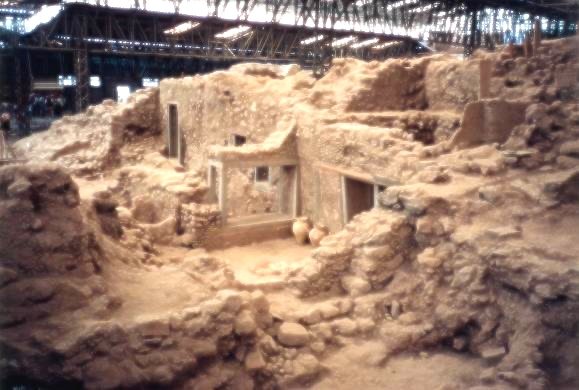
This thin layer of ash, preserved under later deposits without signs of winter erosion, indicates a brief window of a few months between the initial tremors and total destruction. No human remains have been found at the nearby town of Akrotiri, suggesting the preliminary volcanic activity terrified the population enough to flee the island completely before the magma chamber collapsed.
Plumes, Ash, and Raging Waters
When the primary eruption finally occurred, it was a cataclysm of the highest magnitude. Volcanologists classify it as a Plinian eruption. The blast sent an eruption column shooting 30 to 35 kilometers into the sky. Magma breached the shallow marine embayment, causing violent phreatomagmatic explosions.
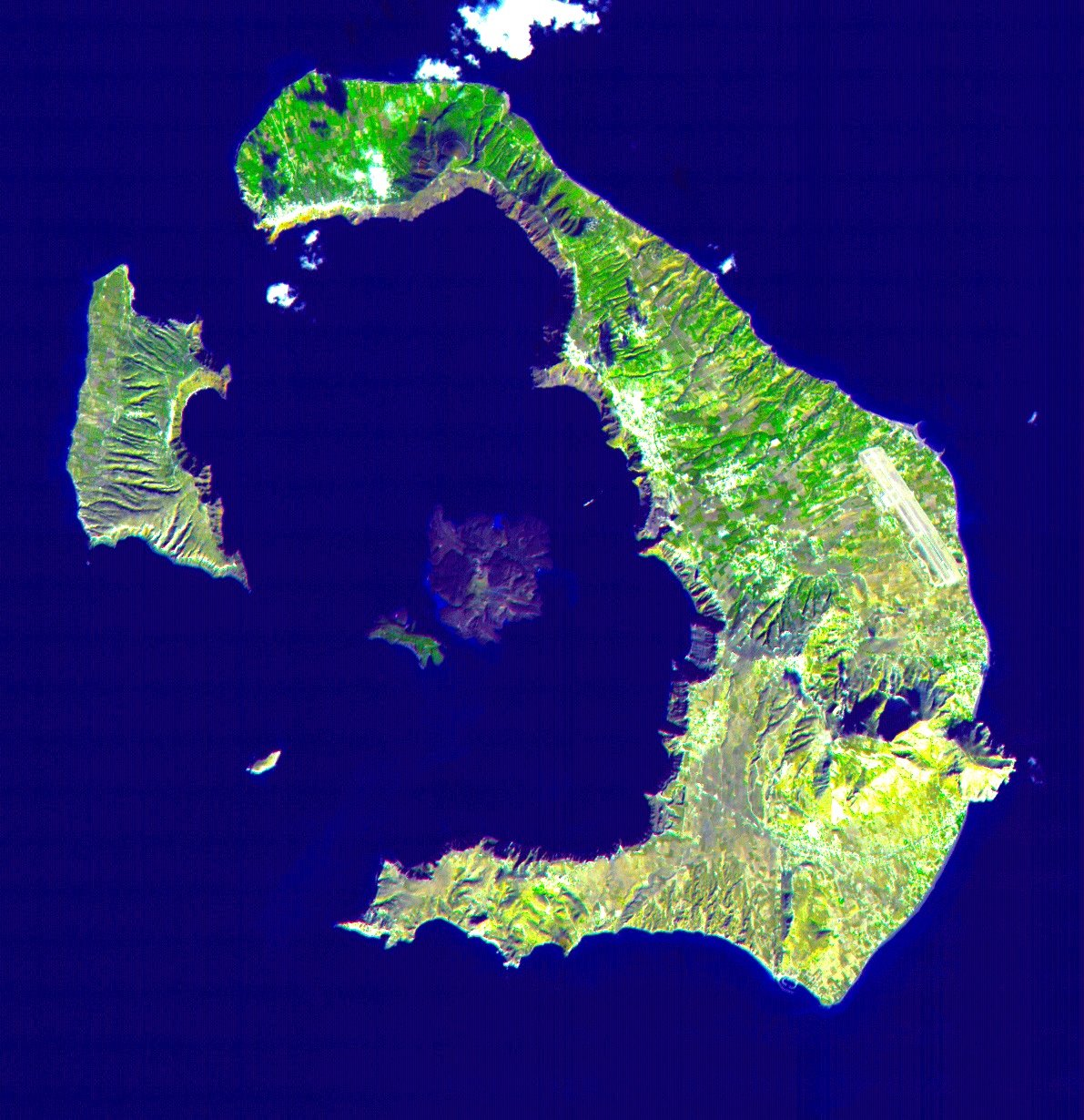
The total volume of ejected material reached between 28 and 41 cubic kilometers. As the caldera completely collapsed into the sea, it unleashed colossal tsunamis measuring up to 150 meters high. These walls of water surged southward, devastating coastal towns on the island of Crete, knocking massive stone buildings out of alignment.
A Bronze Age World Entombed
The immediate surroundings of Thera were completely buried. At Akrotiri, the intense magmatic activity dropped up to seven meters of pumice and ash over the man-made structures. The landscape of the island itself was entirely reconfigured, with older coastlines vanishing under thick layers of tuff.
Across the Mediterranean, ash fell heavily toward the east and northeast, leaving a distinct white marker horizon in archaeological sites.
The Unsolved Chronological Mystery
While the physical destruction is clear, the exact year the volcano blew remains heavily disputed. Traditional archaeologists dating Late Bronze Age pottery styles aligned the eruption with Egyptian chronologies between 1550 and 1480 BC.
However, radiocarbon dating of olive trees buried alive in the pumice, along with ice core samples and tree ring data showing massive global climate disruptions, pointed to an older date in the late 17th century BC. Despite modern calibration adjustments, scientists are still working to resolve this century-long gap.