
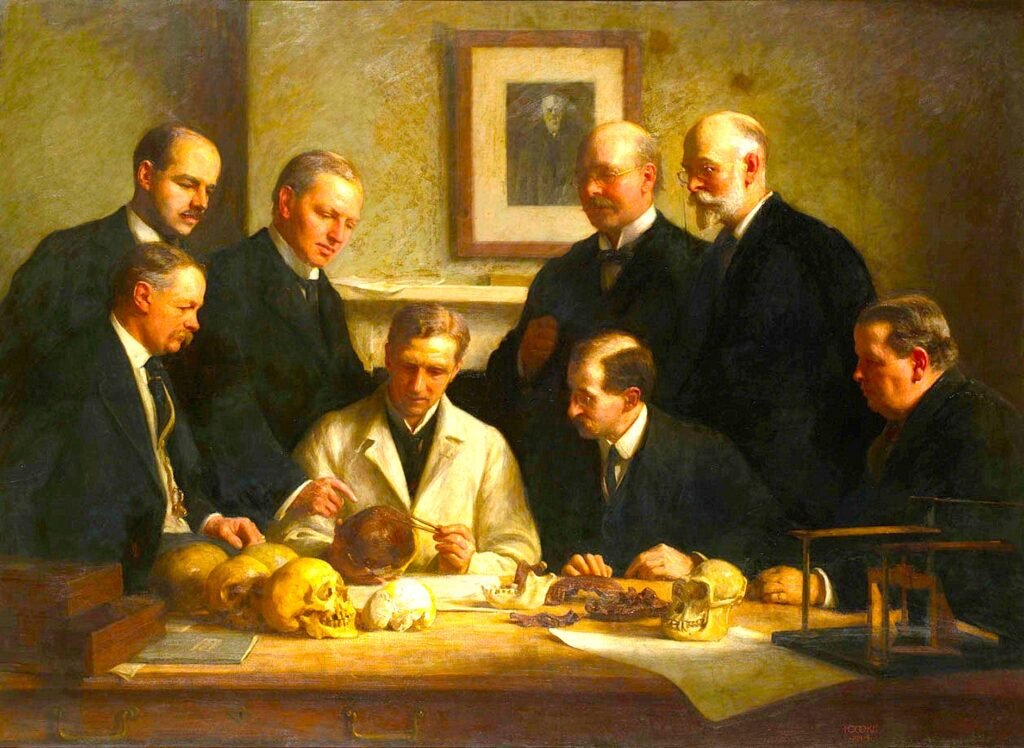
In December 1912, an amateur archaeologist presented a shattered skull that rewrote human history, only for modern science to later reveal it as a meticulously crafted patchwork of mismatched bones. The discovery at a gravel pit in East Sussex captivated researchers and fueled decades of fierce academic debate over human origins. Yet, beneath the stained bone fragments and filed teeth hid a calculated deception that remained undetected for 41 years.
The Discovery of a Missing Link
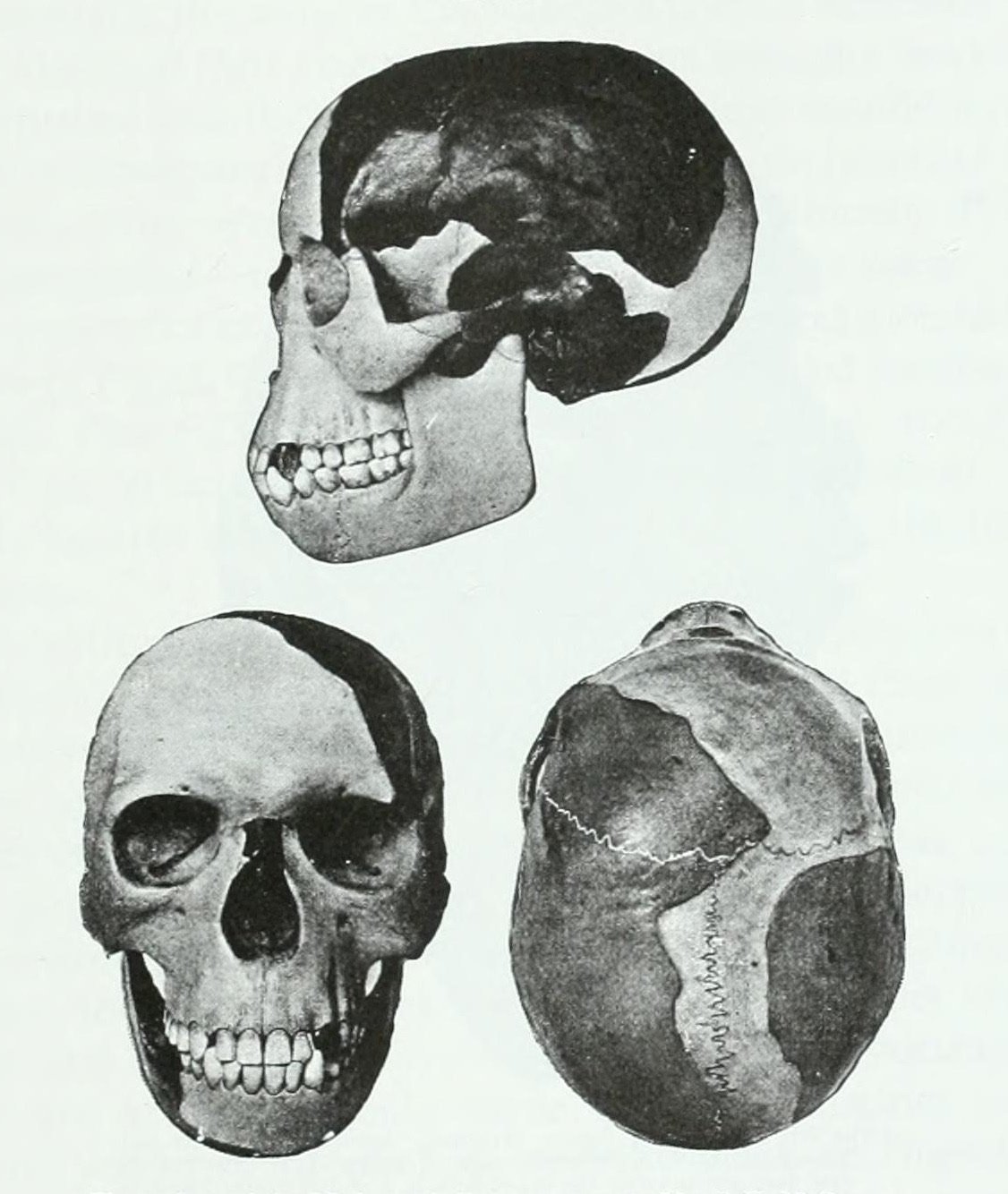
Charles Dawson contacted Arthur Smith Woodward of the Natural History Museum, claiming a workman found a skull fragment in a Pleistocene gravel pit in Piltdown. Between June and September 1912, Dawson recovered a human-like cranium and an ape-like lower jaw. Woodward reconstructed the fragments, estimated them to be 500,000 years old, and named the species Eoanthropus dawsoni. He presented the specimen as the evolutionary transition between apes and humans.
Doubts and the Second Find
Skepticism emerged immediately. In 1913, David Waterston concluded the sample was simply an ape mandible paired with a human skull. Anatomist Arthur Keith pointed out that the jaw’s canine prevented the side-to-side chewing motion required to produce the wear on the molars. To counter these mounting criticisms, Dawson produced fragments of a second skull in 1915, found 3.2 kilometers (2 miles) from the original site. This new material temporarily silenced critics by lowering the statistical probability of a coincidental mix-up.
The Fluorine Test Exposure
The deception held until 1953, when scientists Kenneth Oakley, Wilfrid Le Gros Clark, and Joseph Weiner applied a new chemical technique called fluorine absorption dating. The tests showed the cranial bones absorbed significant fluorine, while the jaw and teeth had absorbed very little. Researchers discovered the cranium belonged to a medieval human, the jaw to a 500-year-old orangutan, and the teeth to a chimpanzee. The bones had been artificially aged with an iron solution and chromic acid, and the teeth bore microscopic file marks.
DNA Unmasks the Forger
While suspects over the decades included Arthur Conan Doyle, a comprehensive scientific review in 2016 pinpointed Dawson as the sole perpetrator. Researchers found that Dawson’s collection contained at least 38 other faked antiquities. DNA analysis confirmed that the orangutan teeth from the first and second Piltdown sites came from the exact same animal. Dawson had packed crevices with local gravel and used dentist’s putty to secure the teeth, fabricating the entire assemblage to gain professional recognition.