
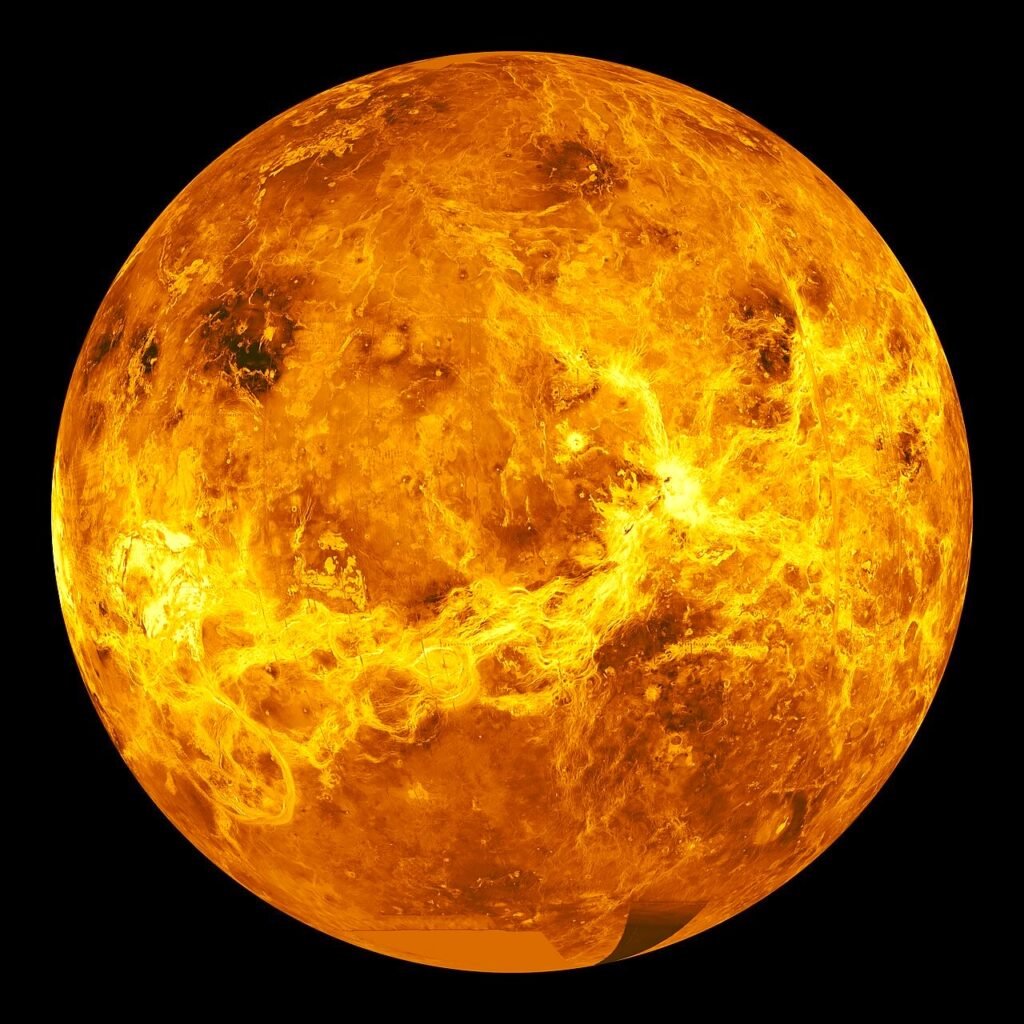
The planet Venus spins so slowly that a single day lasts longer than its entire orbit around the sun. While Earth completes a daily rotation in 24 hours, the second planet from our sun takes a staggering 243 Earth days to rotate once on its axis.
Meanwhile, its yearly journey around the sun takes only 225 Earth days. A recent astrophysical study reveals exactly why this physical anomaly happens. The answer lies in a dense layer of toxic gas that actively alters the rotation of a rocky world.
The Crushing Weight of Toxic Skies
Venus matches Earth in size but sits closer to the sun, orbiting at roughly two-thirds the distance of our planet. The surface experiences a runaway greenhouse effect, trapping heat and driving temperatures to an extreme 900 degrees Fahrenheit (475 degrees Celsius).
A thick mixture of carbon dioxide and sulfuric acid surrounds the solid ground. Astrophysicist Stephen Kane from the University of California demonstrated that this extreme atmosphere is not just a detached gas layer. It operates as an integrated physical force that directly controls how fast the planet spins.
Escaping the Sun’s Gravitational Lock
Planets orbiting close to a massive star normally succumb to tidal locking. This gravitational mechanism forces a celestial body to synchronize its rotation with its orbit, causing one day to equal one year. The locked body constantly shows the exact same face to its host star, exactly like Earth’s moon does.
Kane calculated the mass, gravity, and size of Venus to determine its natural locking timeline. His math showed the sun should have tidally locked Venus in just 6.5 million years. Considering the solar system formed 4.5 billion years ago, Venus should have stopped spinning independently long ago.
High-Speed Winds Acting as Brakes
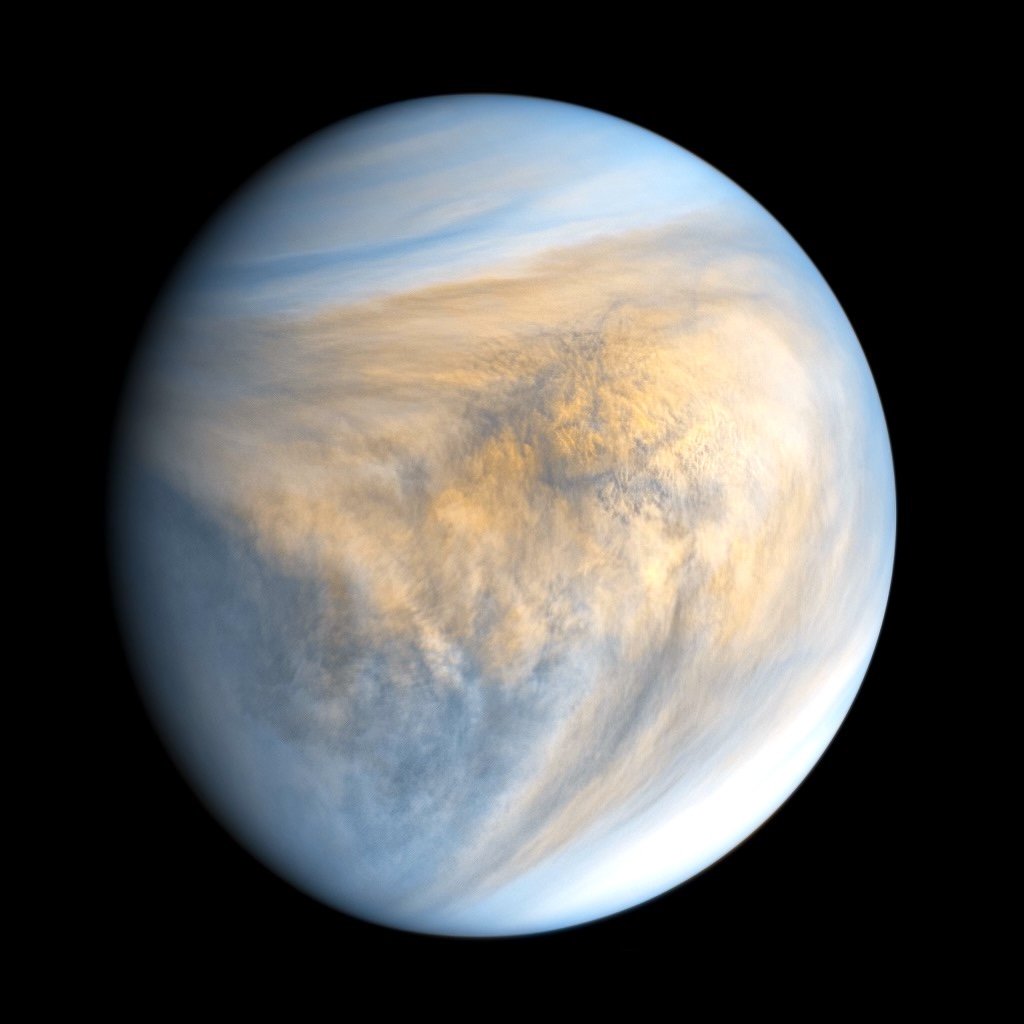
The dense Venusian atmosphere stops the sun from fully halting the planet’s rotation. Solar energy continuously hits the atmosphere, driving highly dynamic, high-speed winds. As these heavy winds circulate, they drag heavily along the rocky surface.
This massive atmospheric friction physically slows the planet down while simultaneously loosening the gravitational grip of the sun. The sun creates a structural paradox. Its gravity attempts to lock the planet into a synchronized orbit, while its thermal energy fuels the wind systems that block the planetary lock from taking hold.
Mapping Future Exoplanet Discoveries
Astronomers rely on data from our local planets to analyze distant star systems. Researchers hunt for exoplanets using indirect techniques, measuring how unseen planets affect their host stars. Space observatories like the James Webb Space Telescope require precise baseline models to distinguish between a potentially habitable Earth-like world and a toxic Venus-like environment.
Tracking how an atmosphere forces a planetary body out of a tidal lock gives astrophysicists direct mathematical data. These formulas allow researchers to calculate exact rotation rates and atmospheric conditions for newly discovered worlds deep in space.