
It sounds like the plot of a horror movie. For over two centuries, accounts of soap manufactured from human body fat have horrified the public, sparking international scandals, wartime investigations, and modern art installations.
From the overcrowded cemeteries of 18th-century France to the battlefields of World War I and the courtrooms of Nuremberg, this macabre subject has blurred the line between actual historical events and psychological warfare. Here is the documented history of human soap production.
Exhuming Paris and the First Human Soap
In 1780, Paris closed the Holy Innocents’ Cemetery due to severe overuse. When workers exhumed the site in 1786 to move the bones into the Catacombs, they made a grotesque discovery. Many bodies had not fully decomposed, instead reducing into large deposits of fat. Workers collected this biological material and converted it into candles and soap. The following year, a French manufacturing inspector officially proposed a scheme to the Academy of Lyons to convert the fat of the dead into lamp oil.
Wartime Rumors and Propaganda
The concept reappeared during World War I, this time as a military rumor spread by the British and Belgian press. In 1917, The Times of London published a major story claiming that Germany operated a corpse factory, rendering dead soldiers into glycerine and soap. After the war, the British Foreign Secretary officially admitted the story was entirely untrue.
During World War II, Germany experienced a severe fat shortage.
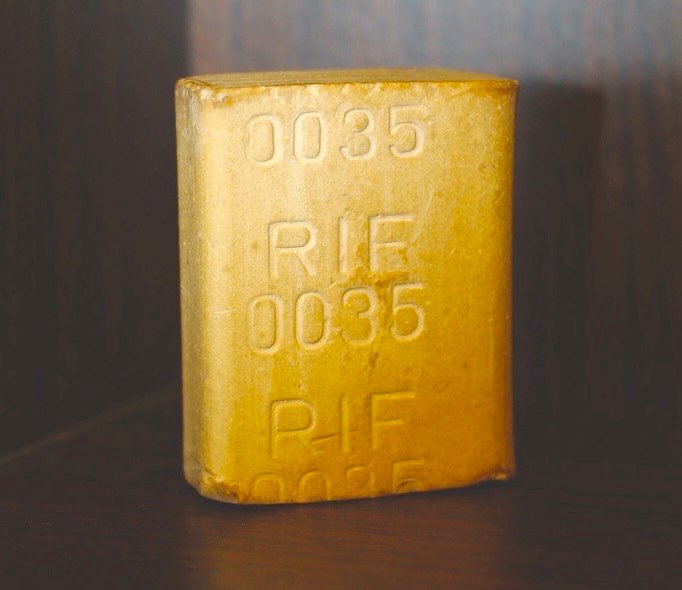
The state distributed a low-quality substitute stamped with the letters RIF, standing for the National Center for Industrial Fat Provisioning. A rumor quickly spread through the concentration camps that the acronym actually meant “pure Jewish fat.” In reality, RIF soap contained no biological fat at all. Historians have thoroughly investigated these accounts and confirmed that the mass production of human soap during the Holocaust never happened.
The Danzig Anatomical Institute Byproduct
During the Nuremberg trials, a laboratory assistant stated under oath that Dr. Rudolf Spanner manufactured human soap at the Danzig Anatomical Institute. Modern investigations by the Institute of National Remembrance revealed the facts. Spanner created anatomical models using German cadavers.
The bone maceration process produced a soapy grease byproduct, which was injected into the flexible joints of the models and occasionally used for laboratory cleaning. Spanner was officially exonerated by the denazification program in 1948.
Modern Liposuction Art
In recent years, human soap has appeared in contemporary art. In 2004, artist Gianni Motti acquired stolen liposuction fat from Italian Prime Minister Silvio Berlusconi. Motti molded it into a bar of soap, named it after an Italian anti-corruption investigation, and sold it to a Swiss collector for 15,000 euros. Twelve years later, Dutch artist Julian Hetzel created an installation titled Schuldfabrik, utilizing soap manufactured from donated human fat.