
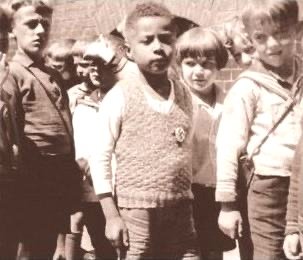
In 1930s Hamburg, a young boy proudly wore a brown uniform with a swastika, eager to join the Hitler Youth. He was German-born and spoke the language flawlessly. Yet, when his teacher tallied the registry, he was explicitly excluded. The boy was Hans Massaquoi, the son of a German nurse and a Liberian diplomat. Trapped inside the Third Reich, he navigated an existence where racial laws dictated daily life, escaping the deadliest aspects of the regime through a bureaucratic loophole, before ultimately becoming an American paratrooper and a legendary journalist.
A Loophole in the Nuremberg Laws
Born on January 19, 1926, Massaquoi spent his early years living at the Liberian consulate. His grandfather, Momolu, served as Liberia’s consul general in Germany. When Momolu returned to Africa, Hans and his mother remained. Under the 1935 Nuremberg Laws, Massaquoi was classified as a non-Aryan. Because the black population in Germany was extremely small, the regime had not explicitly codified them for mass extermination. This omission allowed him to avoid the concentration camps, though he was permanently barred from higher education and forced into an apprenticeship as a laborer.
Daily Life Under the Third Reich
His skin color subjected him to public abuse. At the Hamburg Zoo, a crowd mocked him while pointing at an African family exhibited inside an animal cage. Jewish teachers vanished from his school, and signs banning non-Aryans appeared in local parks. Relationships with white women were strictly forbidden. When he secretly dated a white girl, he was detained by the SD, the SS intelligence branch. He escaped severe punishment only because a local officer recognized him as an apprentice and vouched for his grueling work schedule.
Draft Rejection and Surviving the War
As World War II erupted, the German army denied his military service. The regime refused to grant him citizenship, and recruiters deemed him underweight. Being barred from the armed forces ultimately kept him away from the catastrophic casualties of the Eastern Front. He and his mother survived the heavy Allied bombing of Hamburg by sheltering in a basement secured with the help of a half-Jewish friend who had managed to survive the war in hiding.
Emigration to the United States
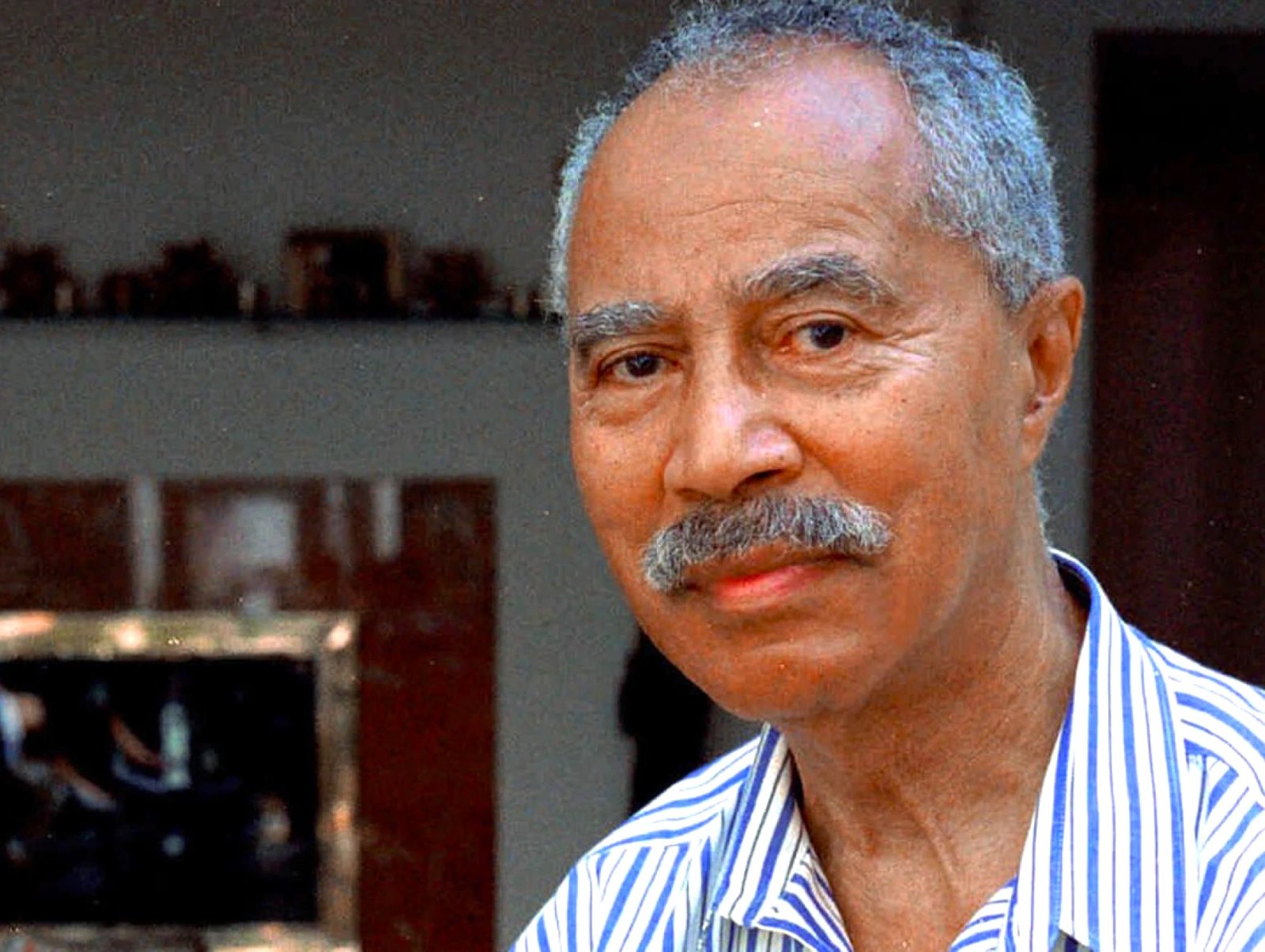
Massaquoi left Europe after the war. In 1948, he traveled to Liberia to visit his father before emigrating to the United States in 1950. He was drafted by the U.S. Army, serving as a paratrooper in the 82nd Airborne Division during the Korean War. Utilizing the GI Bill, he earned a journalism degree at the University of Illinois. Massaquoi spent the next four decades working as a writer, eventually becoming the managing editor of Ebony magazine, where he interviewed major historical figures before publishing his autobiography.