
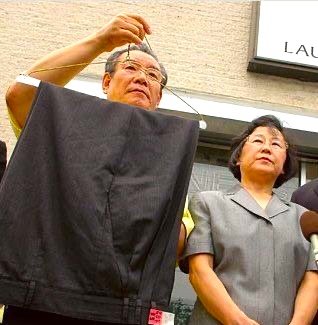
In May 2005, Roy L. Pearson, an administrative law judge in Washington, D.C., dropped off a pair of gray suit pants for alteration at Custom Cleaners.
When he returned two days later, the pants were missing. The owners, Jin, Soo, and Ki Chung, immigrant business owners who did not speak fluent English, could not locate the trousers. This seemingly minor inconvenience soon snowballed into an unprecedented and internationally publicized legal battle over a missing garment.
A Demand for Millions
Several days after the initial drop-off, the Chungs presented Pearson with a pair of charcoal gray pants. Pearson steadfastly refused them, claiming they were not his. He originally demanded over $1,000 for the pants. When the Chungs refused to pay, Pearson filed a lawsuit in the Superior Court of the District of Columbia.
He originally demanded an astonishing $67 million in damages, a figure he later reduced to $54 million. Pearson justified this massive sum by claiming $2 million for mental distress, $500,000 for attorney’s fees, and $15,000 for the cost of renting a car every weekend to drive to a different dry cleaner. The remaining millions, he claimed, would fund a foundation to help other dissatisfied consumers sue businesses.
The “Satisfaction Guaranteed” Argument
During the trial in June 2007, Pearson represented himself pro se. He shifted his legal focus away from the missing pants themselves and instead targeted the “Satisfaction Guaranteed” and “Same Day Service” signs displayed in the dry cleaner’s window.
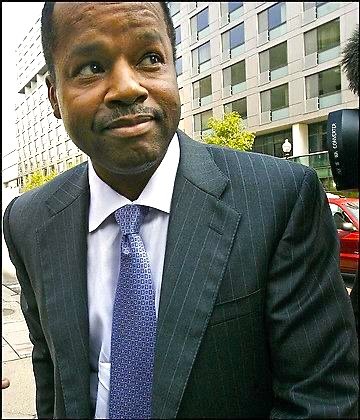
Pearson argued that these signs represented fraud because his satisfaction was not met. The Chungs’ attorney, Chris Manning, successfully countered that a reasonable person would not interpret such advertising signs as an absolute, unconditional promise. The trial featured an emotional moment where Pearson broke down in tears while recounting the frustration of losing his pants, forcing the judge to declare a short recess.
The Court’s Decision and the Aftermath
On June 25, 2007, Judge Judith Bartnoff ruled entirely in favor of the Chung family. Following the intense media scrutiny and the financial burden of the lawsuit, the public rallied around the Chungs, raising nearly $100,000 to cover their legal fees. Due to the immense emotional strain and loss of revenue, the Chungs eventually sold the specific dry cleaning location involved in the dispute.
Pearson’s professional career also suffered. A commission subsequently declined to renew his ten-year term as an administrative law judge, citing the lawsuit as evidence of a lack of “judicial temperament.” Pearson lost his job and his $100,512 salary. Furthermore, the D.C. Board of Professional Responsibility eventually suspended Pearson from legal practice for 90 days for engaging in frivolous litigation, marking the end of a bizarre legal saga that made international headlines as the ultimate example of the Great American Pants Suit.