
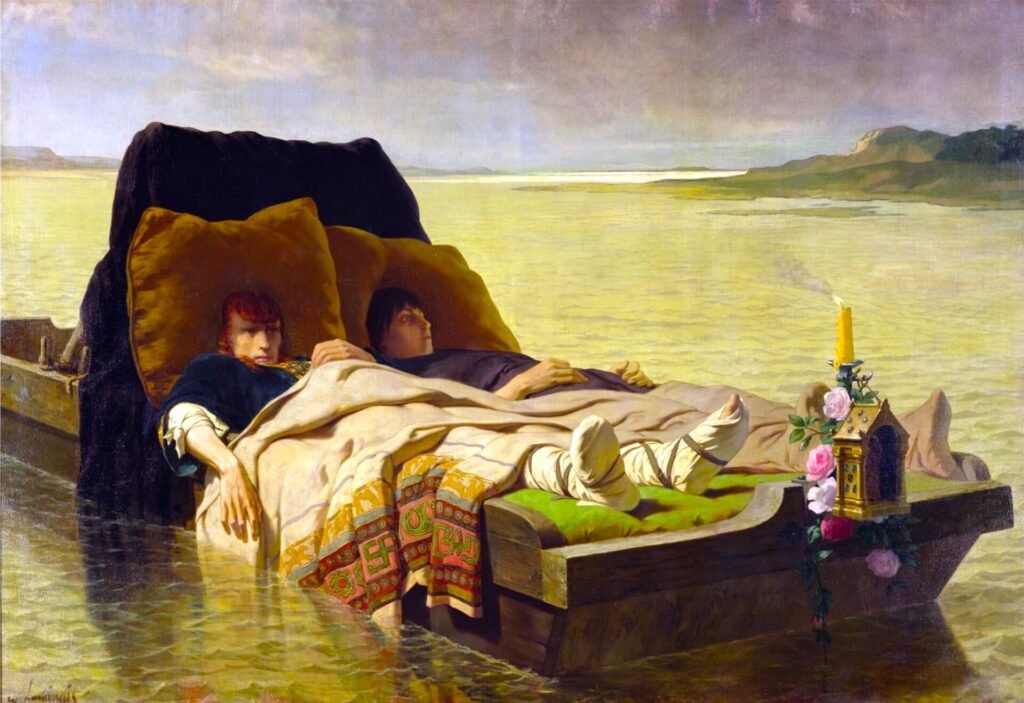
Imagine two paralyzed royal princes, adrift on a wooden raft down the Seine River, their leg tendons intentionally burned by their own parents. This striking image forms the core of the “Énervés de Jumièges” (The Enervated of Jumièges), a famous medieval tale involving Merovingian King Clovis II.
Dating back to the 12th and 13th centuries, this historical narrative weaves together a violent family rebellion, a ruthless physical punishment, and a mysterious river journey. However, the actual history behind these drifting royals reveals a very different reality about the monks of Jumièges Abbey.
A Royal Rebellion and a Ruthless Punishment
The story claims that around 660, King Clovis II left for the Holy Land, leaving his wife Bathilde as regent over their eldest son. The son and his younger brother staged a violent uprising against their parents. Clovis II returned to France, crushed the rebellion, and prepared to execute his children.
Instead, Bathilde proposed a specific physical punishment: burning the tendons in their legs. This literal destruction of their nerves gave them the title “énervé,” which historically meant physically paralyzed and incapacitated, rather than the modern definition of being angry.
Drifting Down the Seine River
Now physically disabled, the two brothers requested to become monks. Bathilde placed her paralyzed sons on an unmanned wooden raft in Paris and pushed it into the Seine River, leaving their destination to chance. The river currents carried the raft all the way to Jumièges, near Rouen.
Saint Philibert, the founder of Jumièges Abbey, spotted the drifting boat, recognized the royal garments of the two disabled men, and took them into the monastery. King Clovis II and Bathilde later visited the abbey, granting the monks vast lands and expanding the buildings.
The Historical Reality Behind the Myth
Historical records contradict this medieval narrative. King Clovis II died at a young age, meaning his sons were entirely too young to wage a war against him. He never traveled to the Holy Land. His three actual sons—Clotaire, Childéric, and Thierry—all ruled as kings, and none suffered tendon destruction or became monks.
In the 17th century, monk Jean Mabillon documented a different explanation, stating the figures were actually Duke Tassilon of Bavaria and his son Théodon, who were punished after revolting against Charlemagne.
Archaeology and Abbey Property
The narrative aligned perfectly with the material interests of Jumièges Abbey. Monks utilized the story of the royal princes to demonstrate the regal origins of the lands they owned when facing property disputes. In 2019, modern archaeological research provided new physical data about the site.
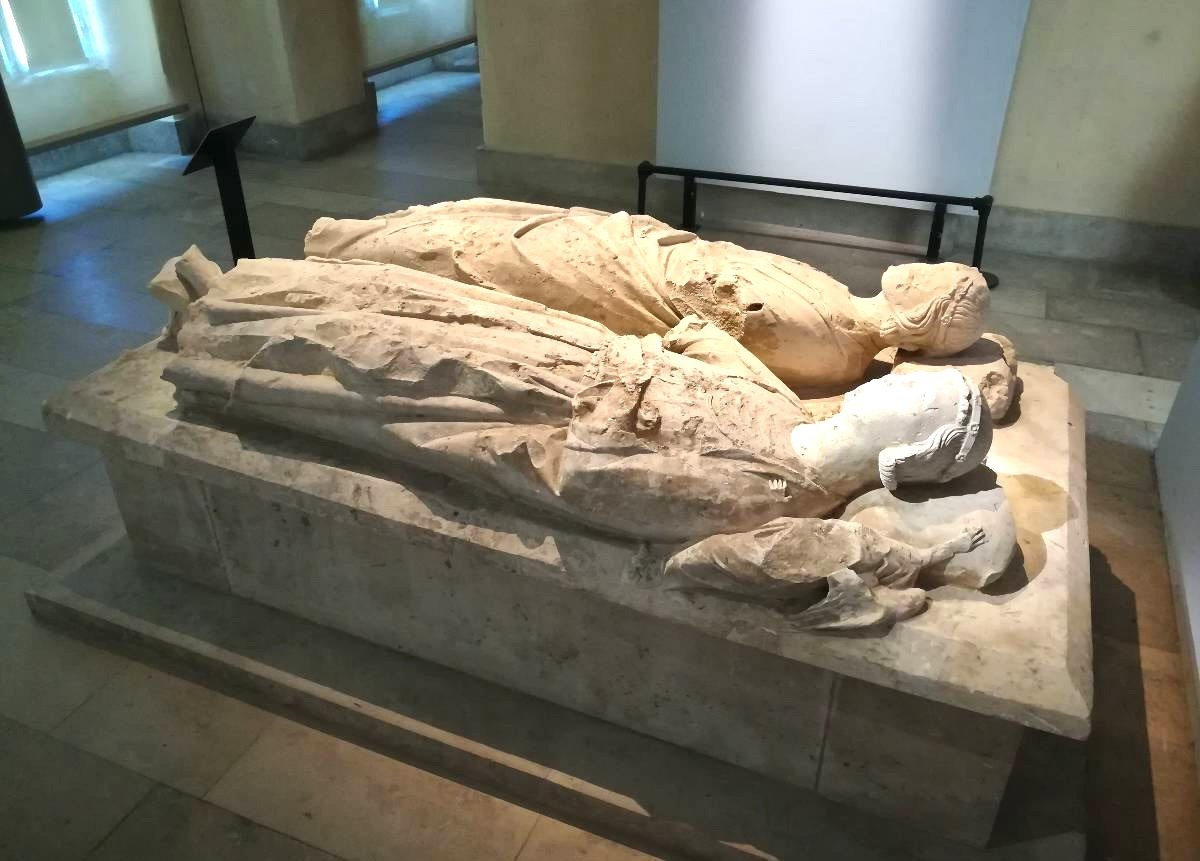
Excavators located the original position of the famous stone effigies (gisants) of the two brothers, placing them directly in the axis of the nave at the Gothic transept, where they protected a double ossuary.