

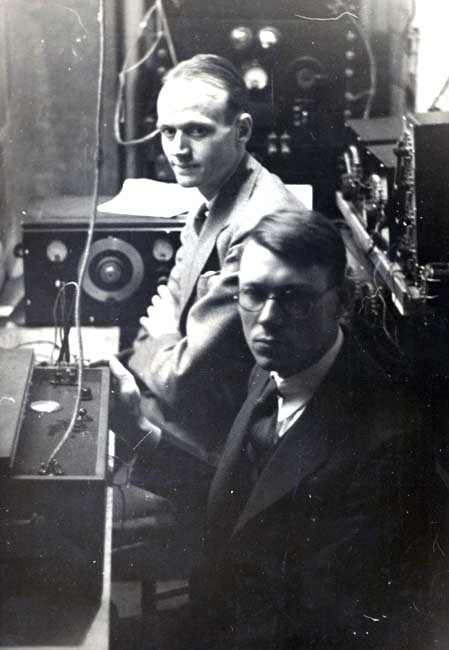
In 1929, two researchers at Princeton University conducted an experiment that sounds like science fiction. Professor Ernest Glen Wever and his assistant Charles William Bray successfully converted a living animal into a functioning communication device. They wanted to understand how the auditory nerve perceives sound.
To achieve this, they acquired a live cat, sedated it, and set up a bizarre trial that directly connected the animal’s internal biology to standard electronic hardware. The results of this peculiar procedure fundamentally changed auditory science and eventually led to the creation of modern hearing technology.
A Sedated Feline and a Telephone Wire
Wever and Bray started the surgical procedure by opening the skull of the sedated feline to reach its auditory nerve. They attached one end of a standard copper telephone wire directly to this nerve. The opposite end of the wire was hooked up to a regular telephone receiver.
Wever then walked into a soundproof room located fifty feet away to listen. Back in the laboratory, Bray leaned in and spoke directly into the cat’s ears. Through the receiver in the isolated room, Wever distinctly heard his assistant’s voice transmitted through the animal’s auditory system.
Proving the Frequency Theory of Hearing
At the time, scientists theorized that as a sound became louder, the pitch received by the ear would be higher. As Bray increased the pitch of the sounds he made, the frequency Wever heard increased perfectly in tandem. To verify their findings, the researchers moved the wire to different tissues and nerves, which produced no sound.
They also restricted blood circulation to the head of the cat, causing the audio transmission to cease immediately. These trials proved that the frequency of the response in the sensory nerve directly matches the frequency of the incoming sound.
World War II Sonar and Military Research
For their work, the duo received the first Howard Crosby Warren Medal from the Society of Experimental Psychologists in 1936. During World War II, both men applied their expertise to military operations. Bray directed civilian psychological research for the National Defense Research Council and the Navy.
Wever served as a consultant on anti-submarine warfare. He discovered that men with musical backgrounds made the most effective sonar operators because their ears were already trained to identify specific frequencies and pitches.
The Pathway to Modern Hearing Devices
Wever and Bray cared primarily about developing testing protocols rather than practical applications. However, physicians quickly adopted their techniques to study human hearing. The 1929 trial laid the direct groundwork for the development of cochlear implants.
These modern medical devices function on the exact same premise as the telephone wire in the feline auditory nerve, converting sound vibrations into electrical signals sent straight to the brain.